Stucco House Colors
Stucco takes color differently than siding. The texture holds shadow in a thousand tiny pockets, so every color lands a shade deeper and slightly mottled than the chip in your hand. Five schemes below, built for that texture, with exact paint codes and a preview on a photo of your own house.
Try "paint the stucco Alabaster with Iron Ore windows" · Free previews every day · No app to download
Five Stucco Schemes That Work
Each scheme is complete — body, secondary surfaces, and accents — in verified Sherwin-Williams, Benjamin Moore, and Behr colors. Screens approximate paint, and stucco texture shifts it again, so treat the chips as a starting point and the preview on your own photo as the real test.
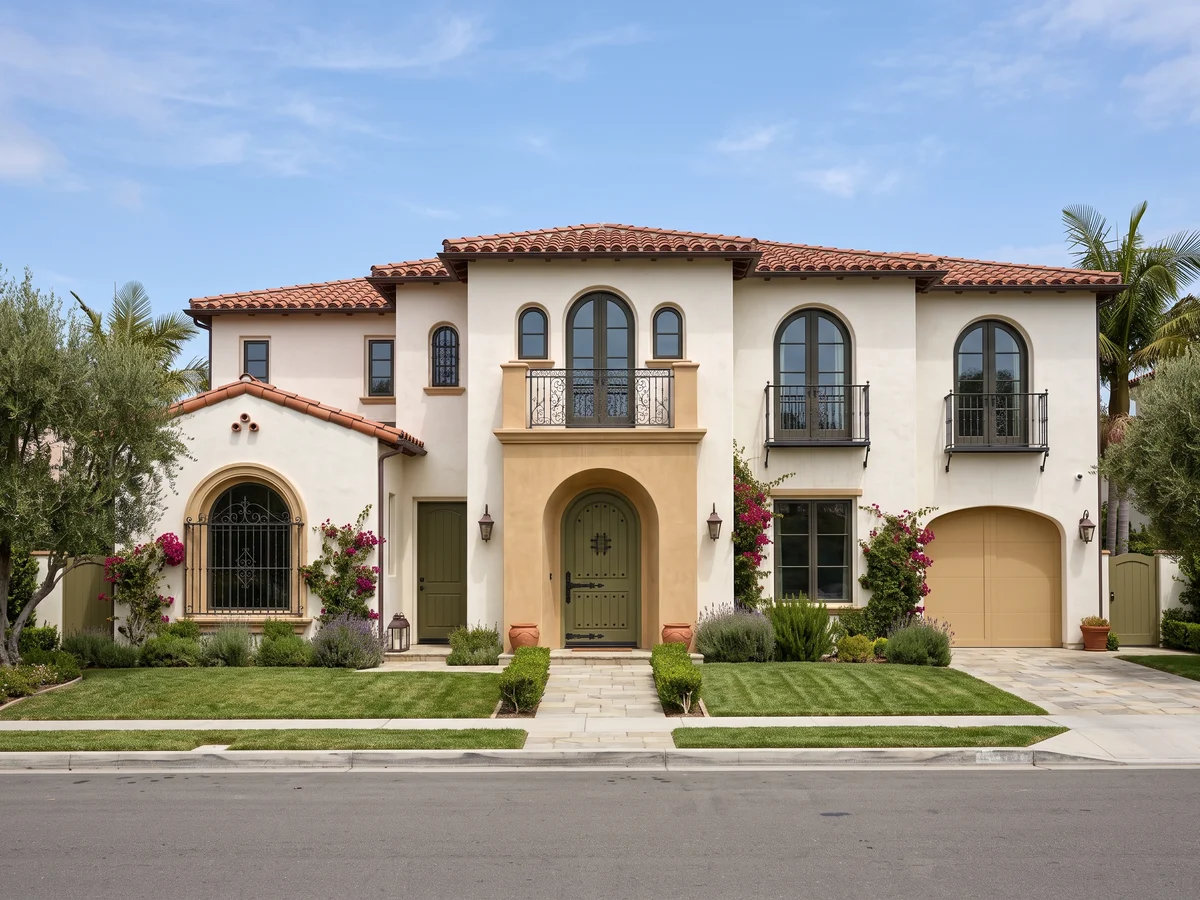
Warm White Modern
The scheme behind most of the modern stucco photos people save: a warm white body, a slightly deeper white on any recessed volume or garage wall, and black-bronze steel around windows and the door. On textured stucco the shadows do the decorating — the white never reads flat or clinical the way it can on smooth siding.
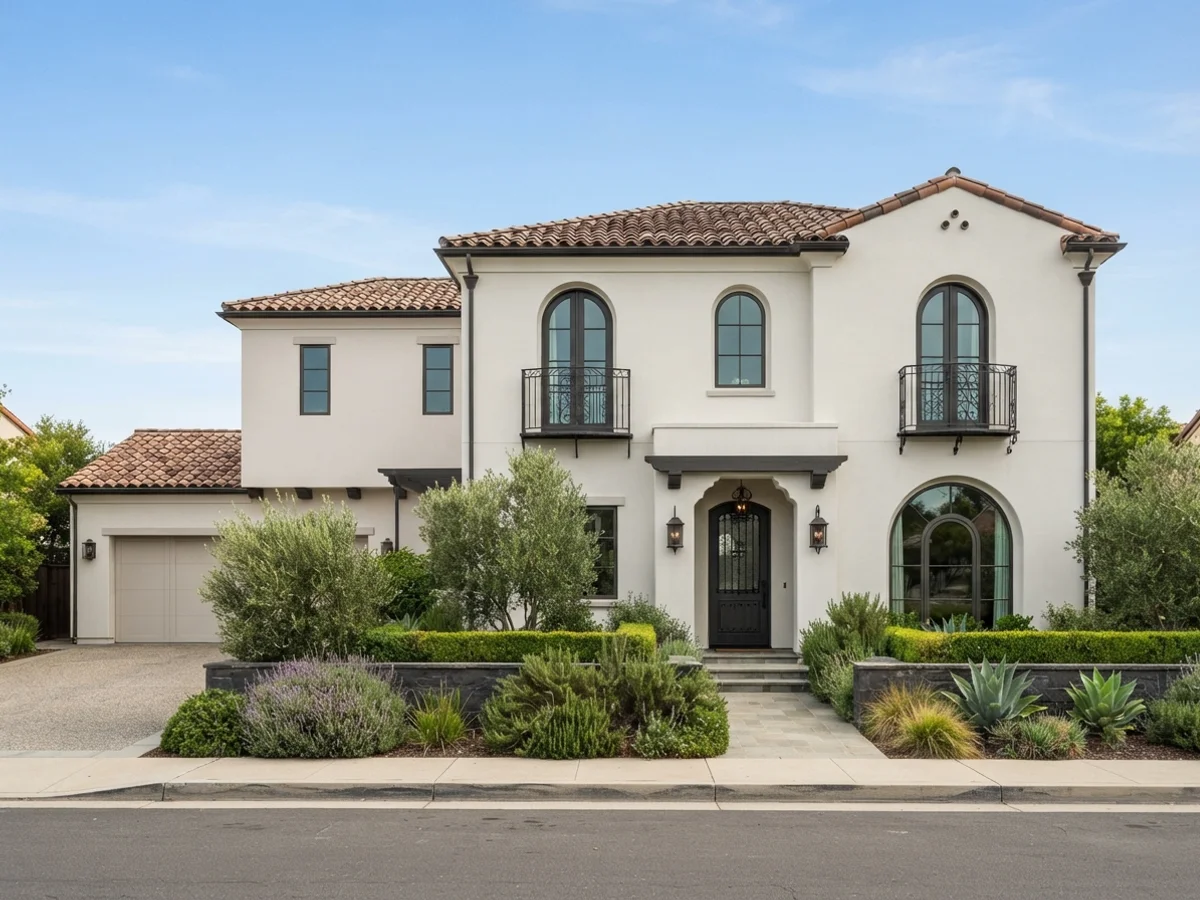
Desert Earth Tones
Stucco started as an earth material, and sand-and-clay colors still sit on it more naturally than anything else. Canvas Tan carries the big walls, Accessible Beige handles a second volume or courtyard wall, Redend Point brings the clay warmth in on an entry surround, and Urbane Bronze grounds the windows. Made for full-sun lots where bright white would glare.
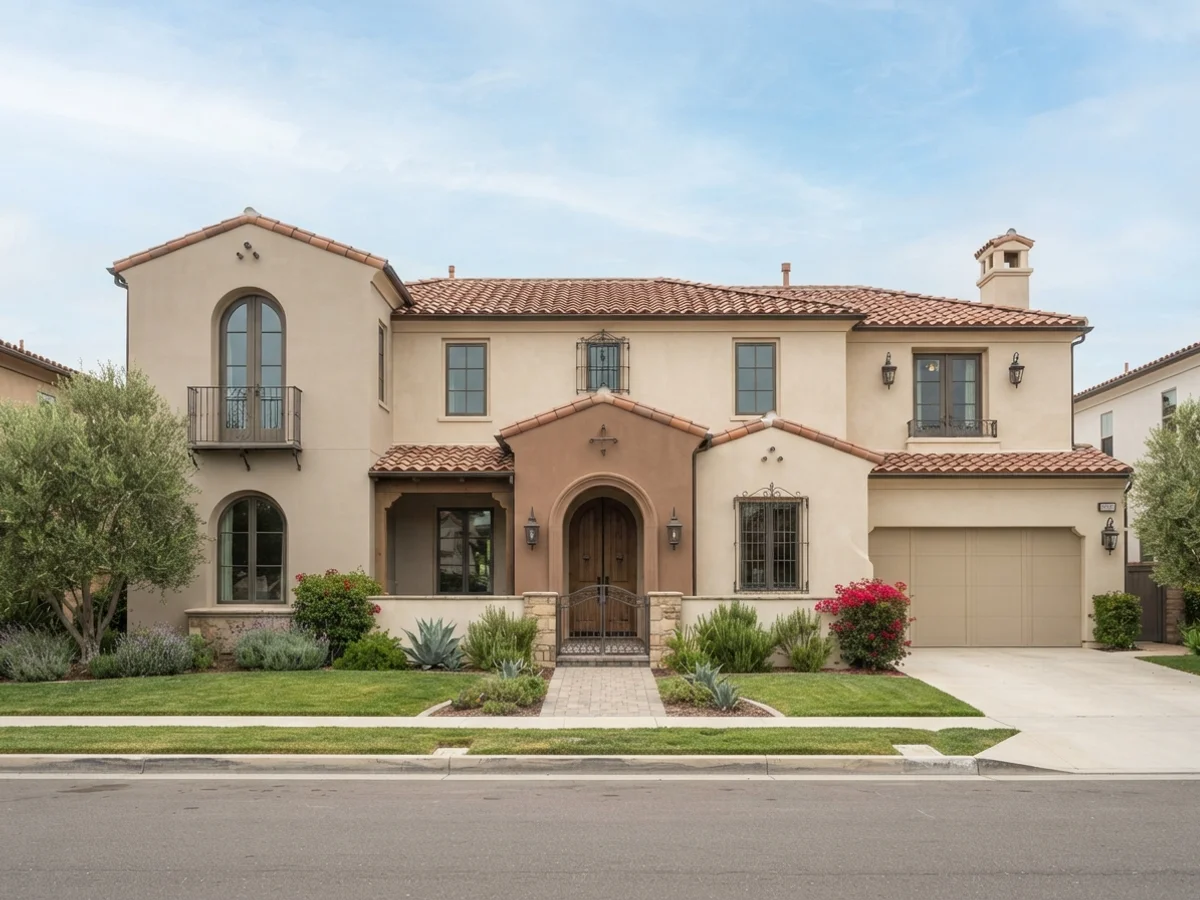
Greige + Black Windows
The safest way to update a 90s beige stucco house without repainting it something risky. Agreeable Gray is the most-bought greige in America for a reason — warm enough for sun, gray enough to look current. Revere Pewter is the slightly deeper Benjamin Moore take, Wheat Bread the Behr budget match, and Tricorn Black on windows and the door supplies all the contrast the scheme needs.
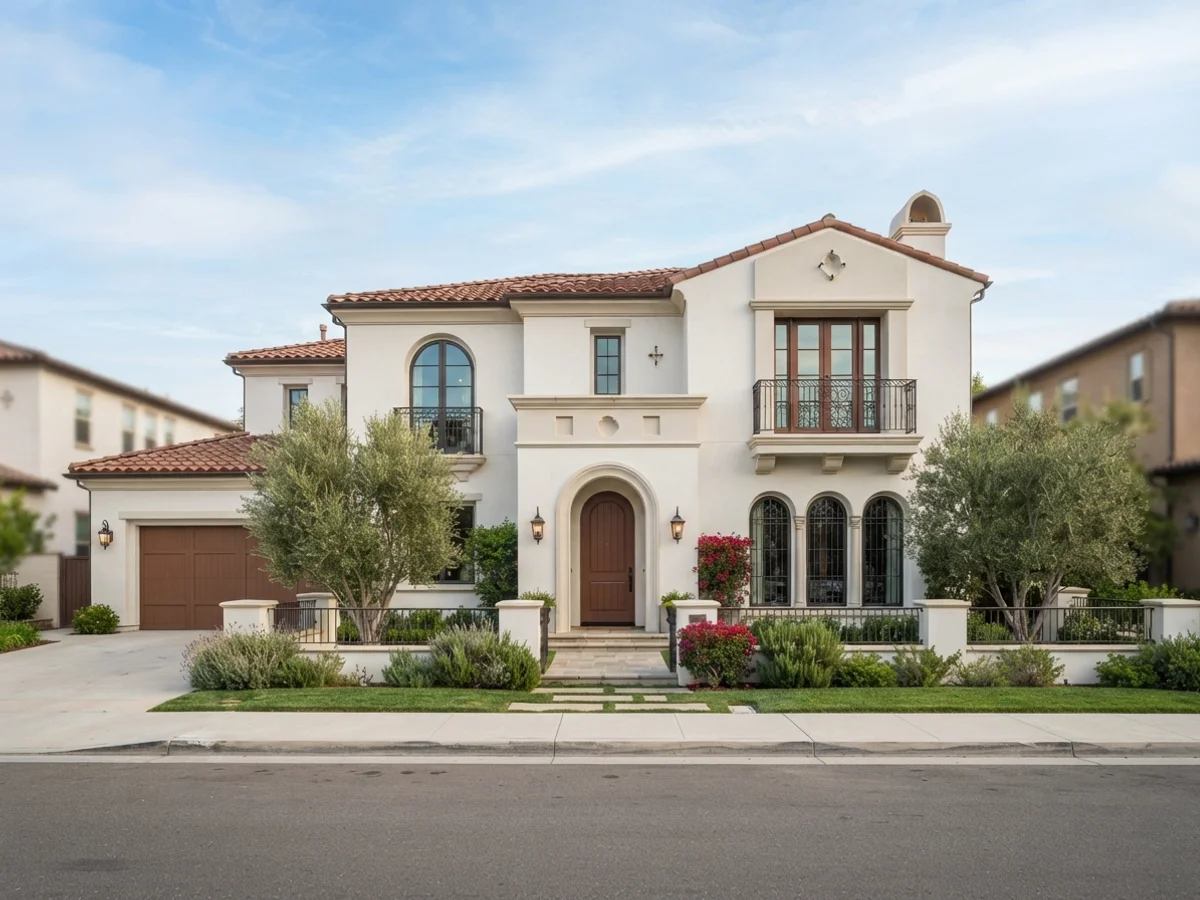
Spanish Mediterranean
Warm white walls, terracotta accents, wrought-iron details — the scheme stucco was practically invented for. White Dove or Swiss Coffee on the body (both creamy, neither yellow), Cavern Clay echoing the roof tile on a garden wall or chimney, and Audubon Russet on the front door so the entry glows against all that white.
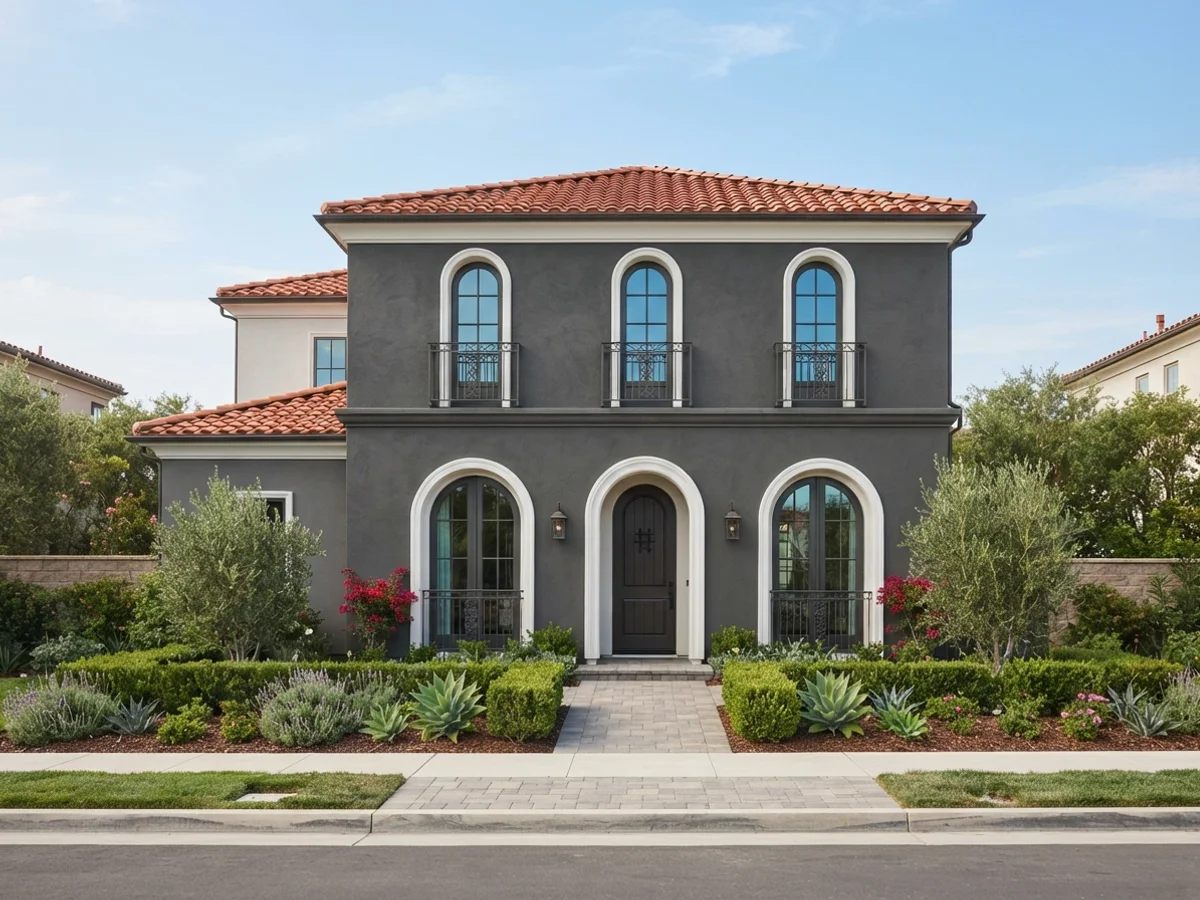
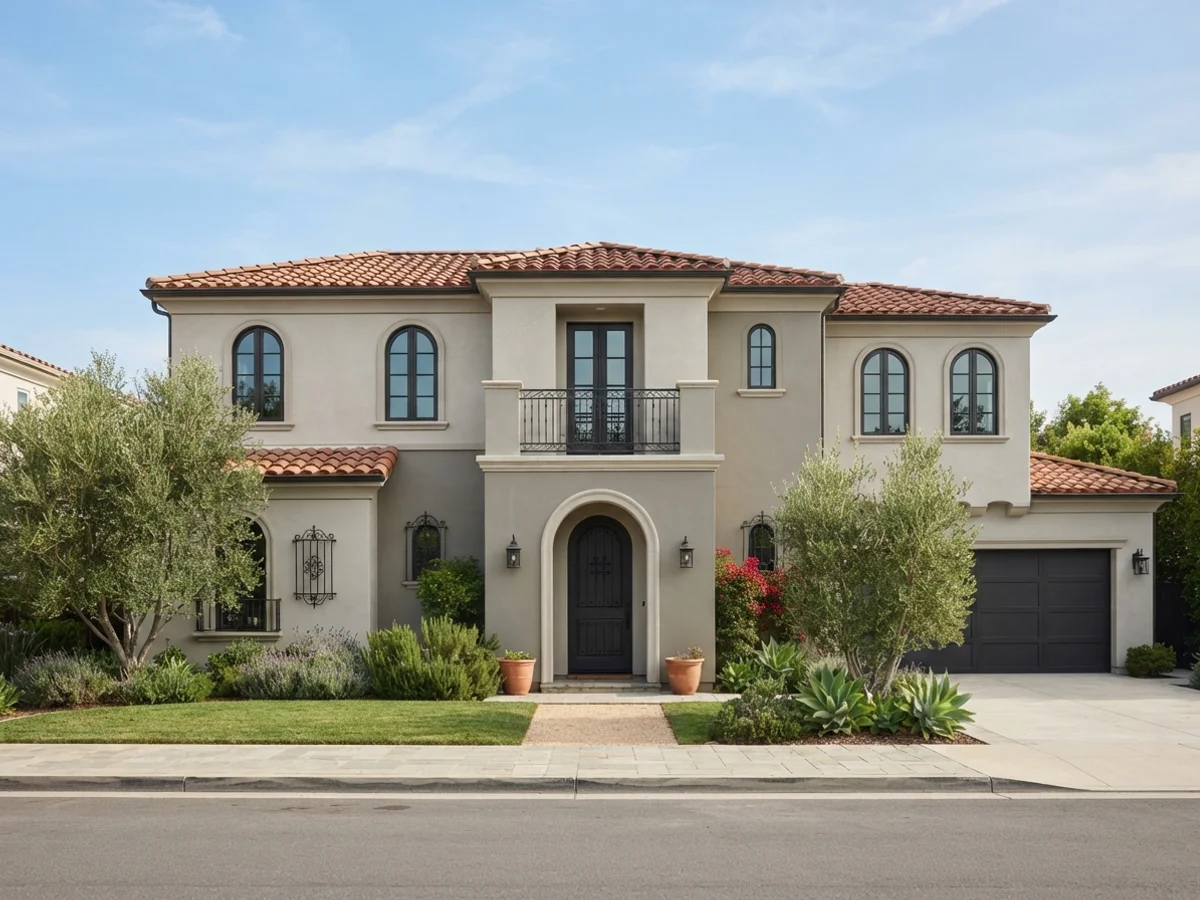
Dark Modern
A charcoal stucco house is the boldest look on this page and one of the most photographed. Wrought Iron is the classic soft black — it keeps a hint of gray so texture still reads in shade. Peppercorn is the step lighter if a full dark body feels like too much, Cracked Pepper the Behr equivalent, and Snowbound keeps soffits and reveals crisp. Preview this one before you commit: dark stucco is stunning or oppressive depending on your light.
Body, Accent Volume, and the Windows
Stucco has little literal trim, so a second, slightly deeper white usually stands in for it — painted on a recessed volume or a garage wall, not on casings.
Upload the photo. The visualizer paints the body, the accent volume, and the windows separately, and you can swap any one slot without starting over.
Five Stucco Looks, Rendered
Curated looks from our exterior render set. Each one opens the visualizer with its body, accent and window colors already loaded.
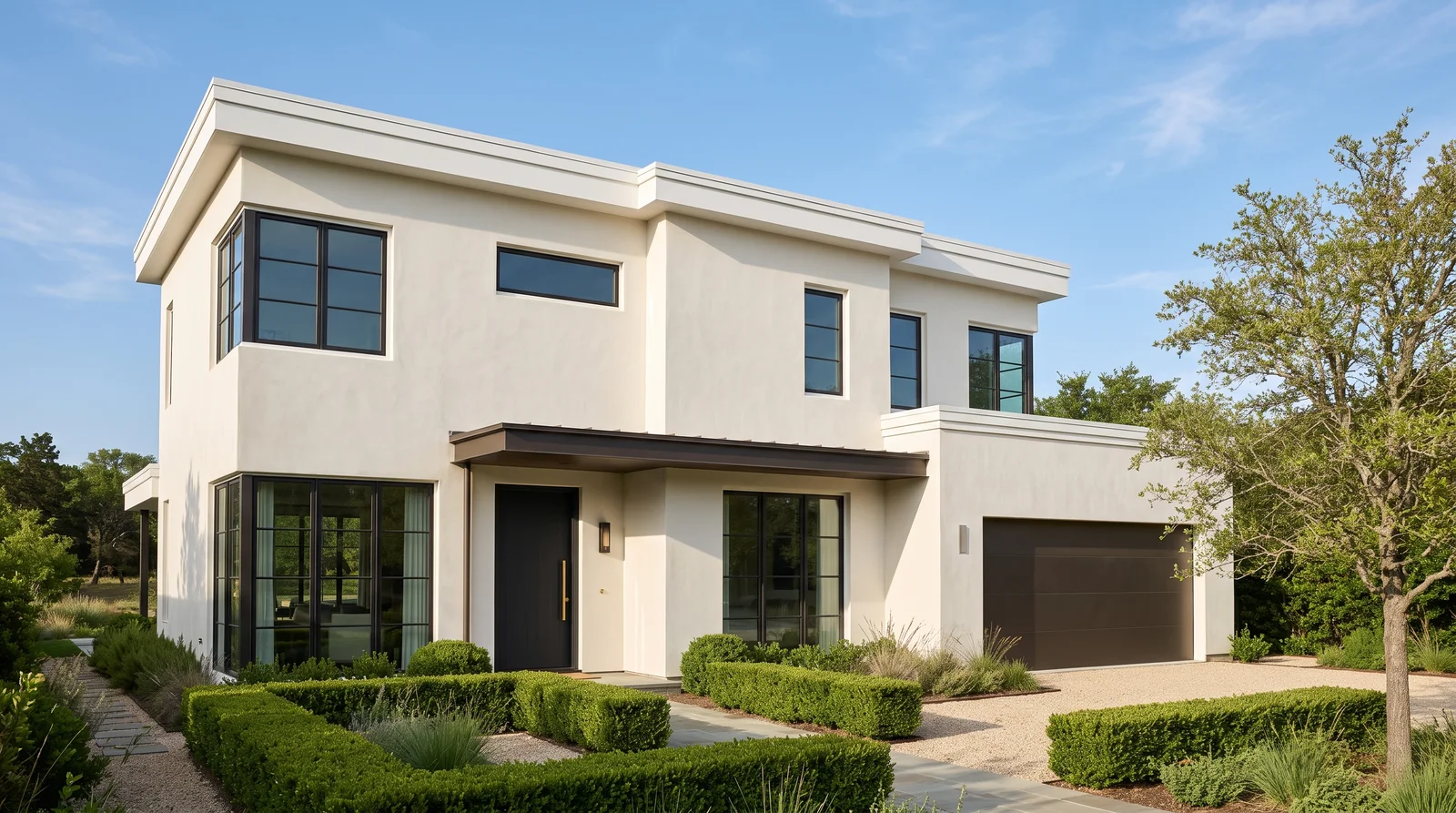
A soft white body with black steel windows — the cleanest way to make a stucco box look designed instead of plain.
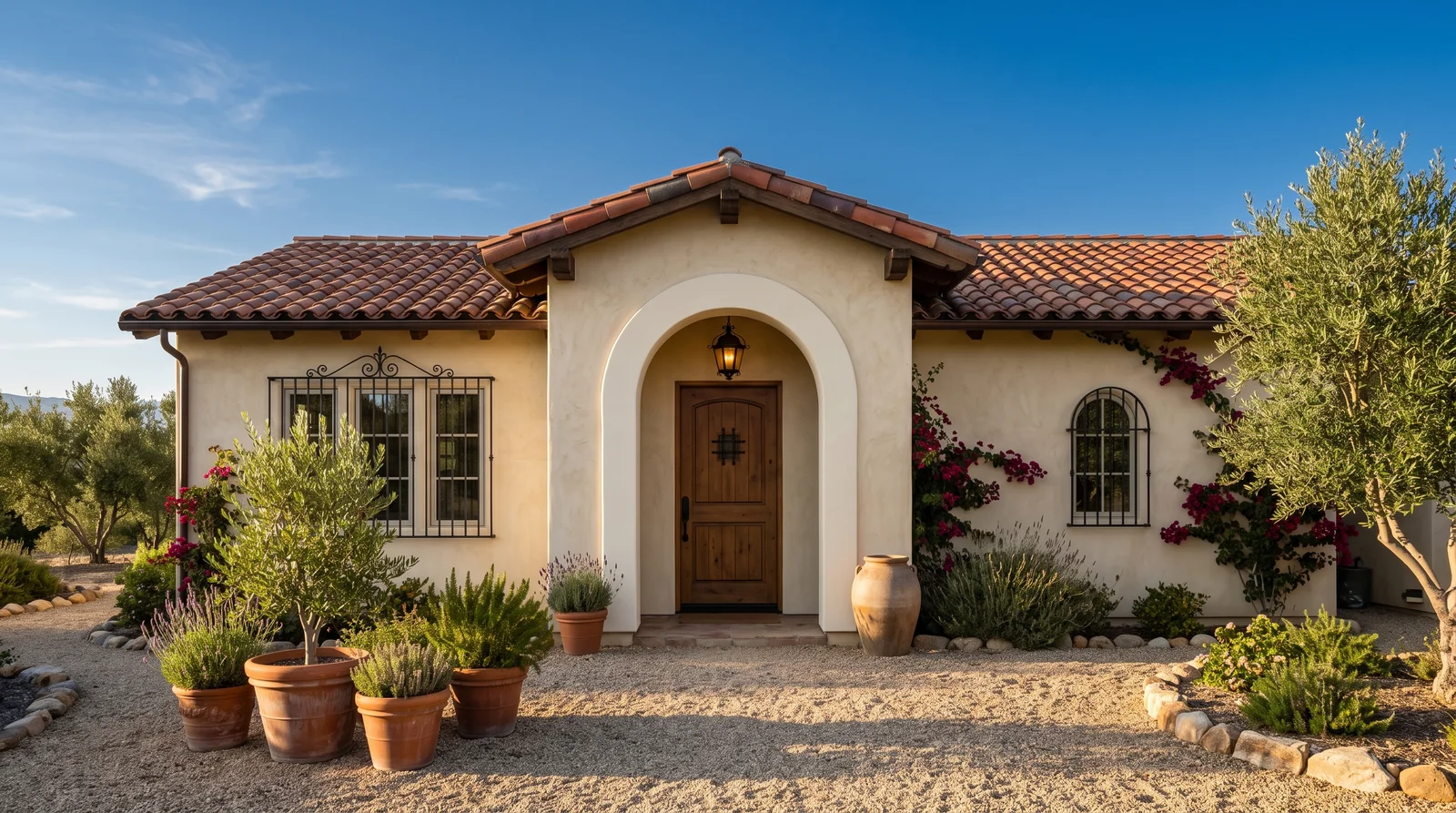
A creamy sand body under a clay tile roof, with a spice-brown door and black iron doing the accent work.
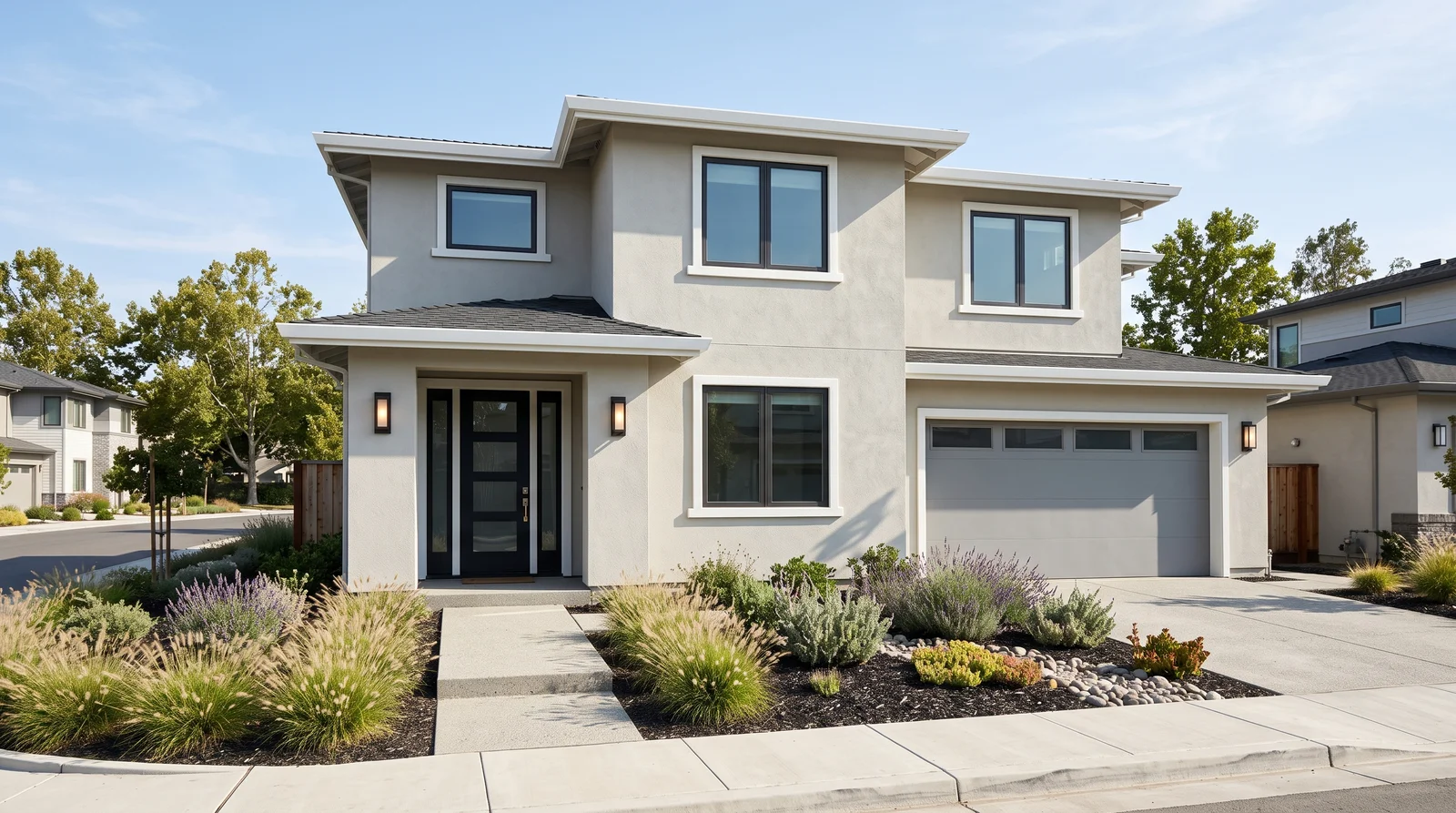
The quiet middle color that hides dust, hides patches, and still looks current ten years from now.
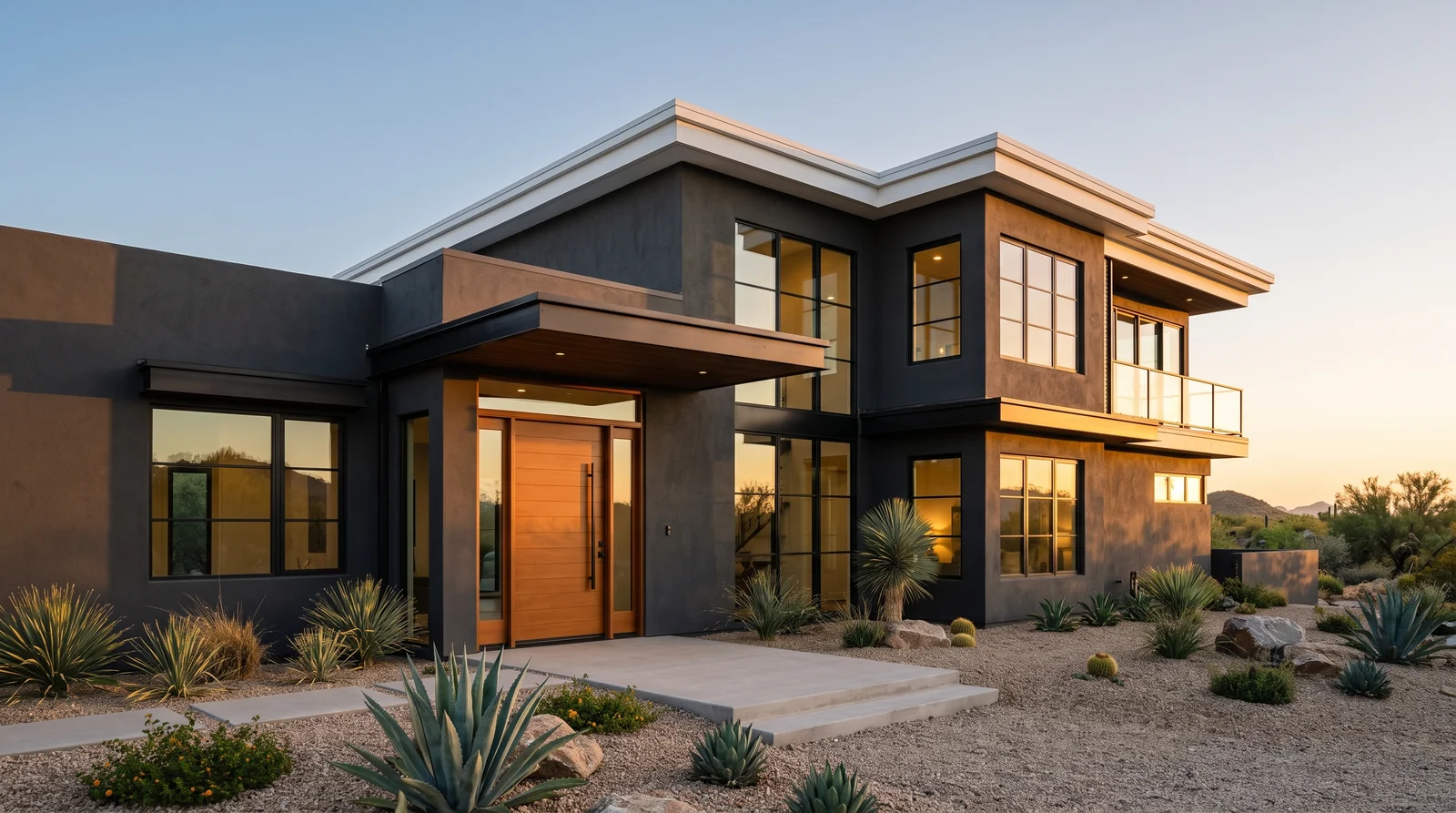
Charcoal walls, white reveals, and a warm wood-toned door — the most photographed stucco look right now.
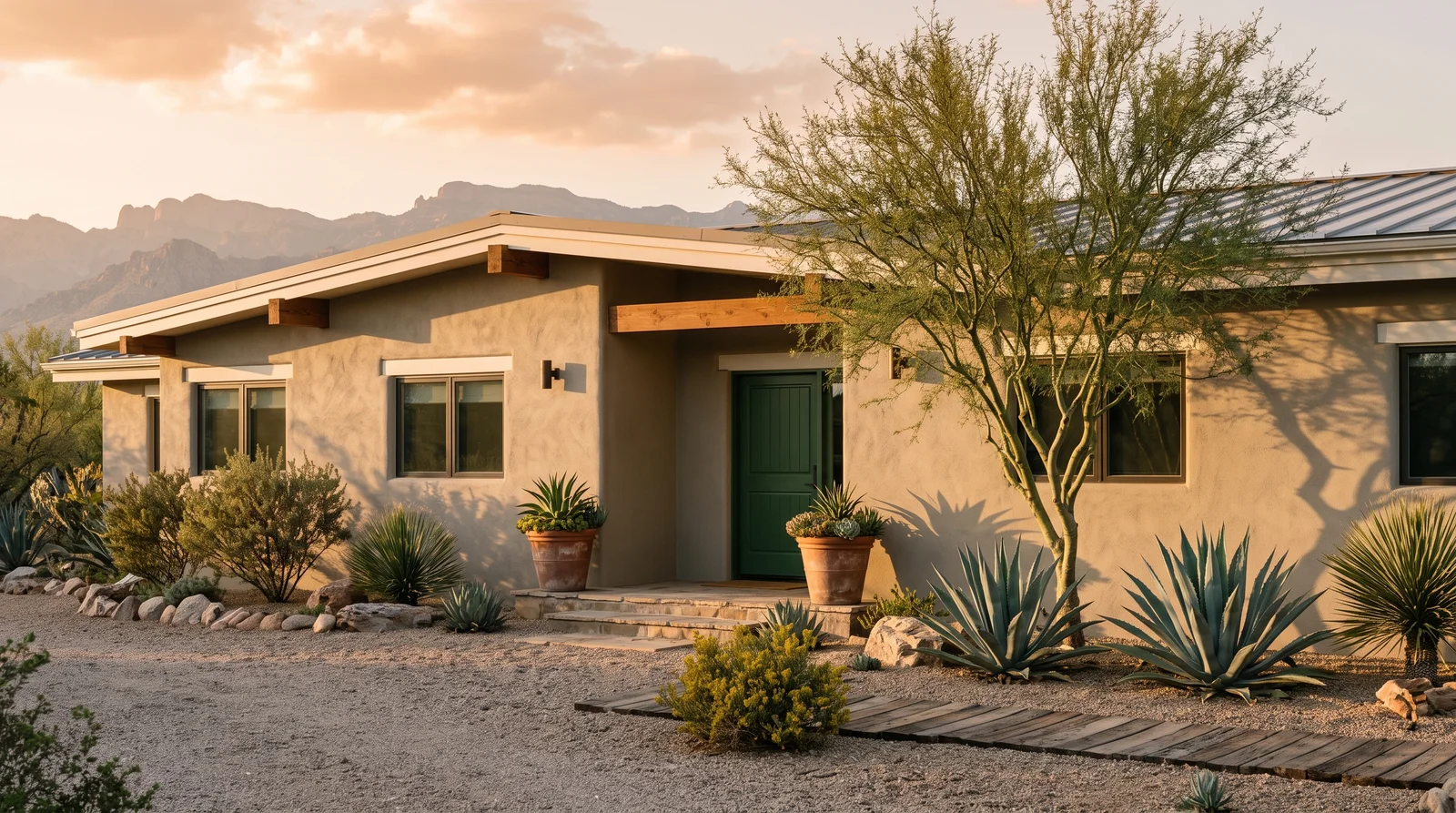
A warm sand body with a deep green door — desert color that looks like it belongs to the ground it sits on.
From Alabaster to Wrought Iron
Pick a body from the middle of the strip, an accent one or two steps darker, and windows from the far end. Hover for the name, click to try it.
What Makes Stucco Different
LRV Matters More
Stucco walls are big, unbroken planes in full sun — no lap lines to break the color up. Alabaster (LRV 82) stays bright without glare, Canvas Tan (64) reads as soft sand, Wrought Iron (LRV 8) absorbs nearly everything, which is exactly why some warranties and HOAs set an LRV floor.
Color Shifts With Light
In direct sun a color reads one to two shades lighter than the chip; in shade the texture holds shadow and it reads darker and more mottled. Mid-tones with one strong undertone mottle the worst — budget for two full coats, since one coat reads blotchy even applied perfectly.
Sheen Is Always Flat
On smooth siding a satin body is defensible; on stucco any sheen turns raking light into a spotlight on every trowel ridge and repaired crack. Flat is standard across every major brand, and touch-ups vanish into it.
Paint Stucco Like Masonry, Because It Is
Stucco is cement, sand, and lime — a masonry wall, not a siding product — and the coating has to respect that.
Ordinary exterior paint sits on stucco as a film, and films on masonry peel. Acrylic masonry paint is the baseline spec because it breathes: moisture vapor moves through it instead of pushing it off. If the wall shows hairline cracking — and most stucco does after its first decade — step up to an elastomeric or a high-build masonry coating; both go on thick enough to bridge the cracks and flex with the wall instead of reopening along every line.
Two more rules the paint store will not volunteer. New stucco has to cure before its first coat — about a month — because fresh cement is alkaline enough to attack paint from behind. And chalky white streaks on the surface are efflorescence: minerals carried out by water moving through the wall. That is a moisture problem, and no paint fixes a moisture problem — coat over it and the water simply shoves the new film off. Find the source first, wash the salts, then paint.
Trim and Accents on a Stucco House
Most stucco houses have little or no trim — no corner boards, no window casings, often just a stucco return that wraps straight into the window frame. That changes the whole accent strategy. Instead of a body-plus-trim contrast, stucco schemes work by color blocking: paint one volume of the house — a garage mass, a courtyard wall, a recessed entry — a step deeper than the main body, the way the Desert Earth Tones scheme uses Accessible Beige against Canvas Tan. The architecture provides the lines; the paint just fills the shapes.
With trim mostly absent, the front door becomes the accent — often the only painted feature on the whole facade, which is why a russet door on a white Spanish house or a natural wood door on a charcoal modern one carries so much weight. Window frames do the rest: black or bronze frames against light stucco, or frames matched to the body on a dark house so the glass reads as openings in a monolith. The front door visualizer page covers that choice on its own — and because the tool works from one photo, you can test body, windows, and door as a single scheme instead of three separate guesses.
Stucco shows up across several house styles, and the palettes shift with them: the ranch version leans mid-century and earthy, the beach house version goes lighter and cooler, and stucco-over-brick houses need the masonry undertones to agree. If your house mixes materials, browse all house styles and preview against the one that matches yours.
More Stucco Colors That Work
Eight more stucco-proven colors — warmer whites, deeper sands, and a couple of bold accents. Each one is a verified code you can preview on your own photo.
Stucco Color FAQ
Why does stucco paint look different than the chip?
Sunlight bouncing off a big unbroken wall washes color out — in direct sun a color reads one to two shades lighter than the chip, while in shade the texture holds shadow and it reads darker and more mottled. Mid-tones with one strong undertone mottle the worst, which is why the balanced neutrals on this page keep getting chosen.
What sheen should I use on stucco?
Flat, always. Any sheen turns raking morning or evening light into a spotlight on every trowel ridge, patch, and repaired crack. Flat masonry finishes are the standard across every major brand, and touch-ups disappear into flat almost invisibly.
Do I need special paint for stucco?
Yes — acrylic masonry paint is the baseline because it breathes, letting moisture vapor move through instead of trapping it. If the wall shows hairline cracking, step up to an elastomeric or high-build masonry coating that bridges cracks and flexes with the wall. New stucco also needs about a month to cure before its first coat.
Where does trim go on a stucco house?
Most stucco houses have little or no trim, so the accent strategy shifts to color blocking — painting one volume, a garage mass, a courtyard wall, a recessed entry, a step deeper than the main body. With trim mostly absent, the front door becomes the accent that carries the most weight.
Related Styles and Surfaces

Mid-century and earthy, one story
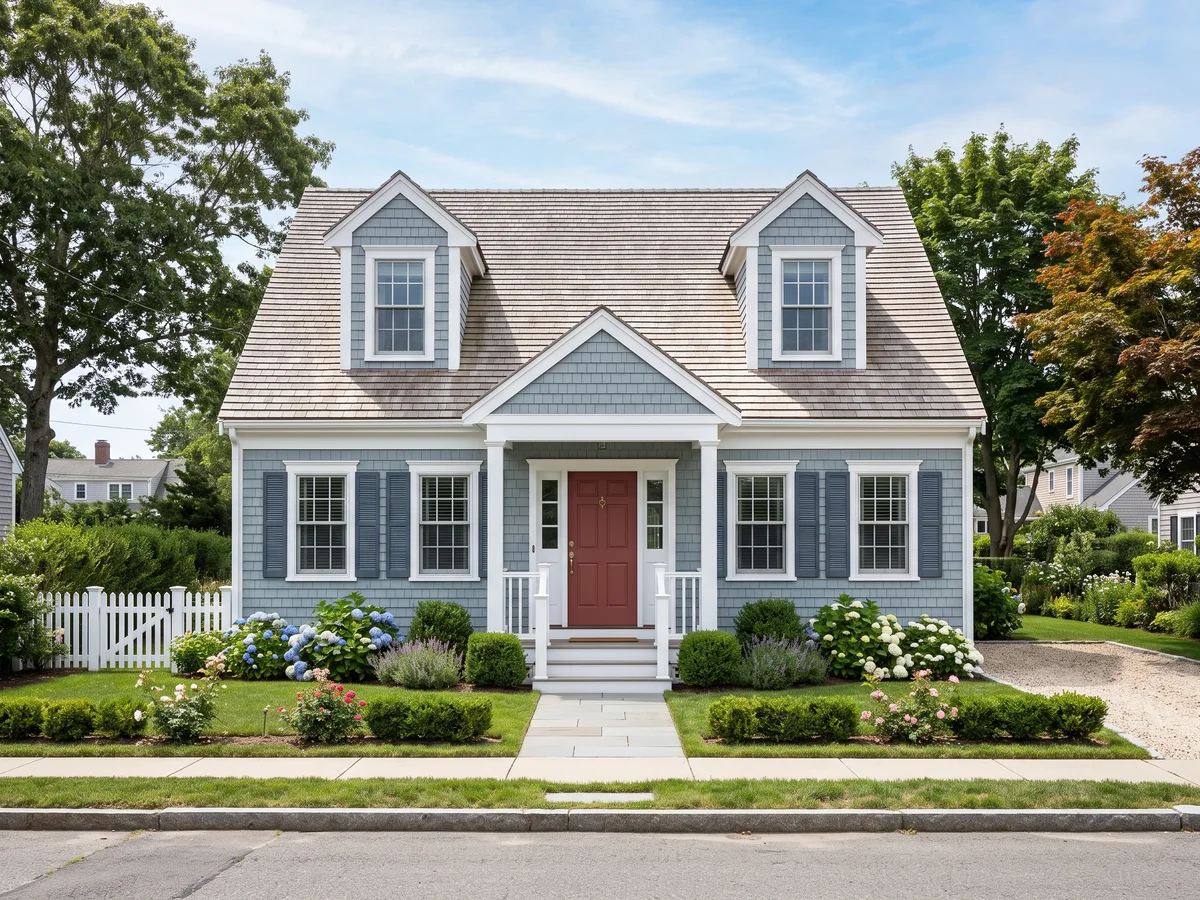
Lighter, cooler coastal stucco
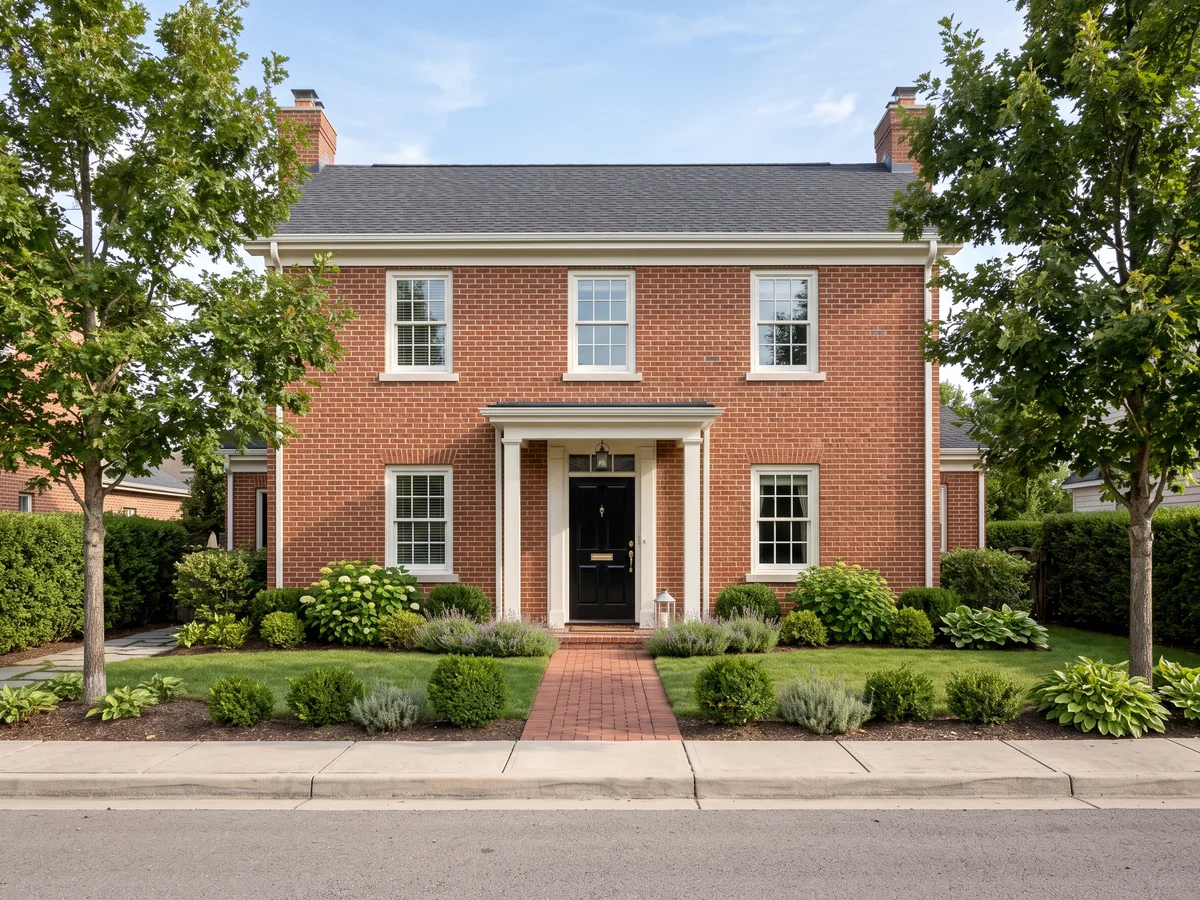
When stucco and brick undertones have to agree
One photo of your house, every scheme on this page — free to start.