Colonial House Colors
A colonial is a symmetrical box with a centered door, and that symmetry is the whole design. Color has one job: keep the body calm and put every bit of contrast on the shutters and the door. Here are five complete schemes with real paint codes, and a way to see each one on your own house.
Five Complete Colonial Schemes
Every one is a full body, trim, shutter and door set. Codes are exact, from Sherwin-Williams, Benjamin Moore and Behr. Screen swatches are approximations, so judge the scheme on a photo of your house, not on this page.
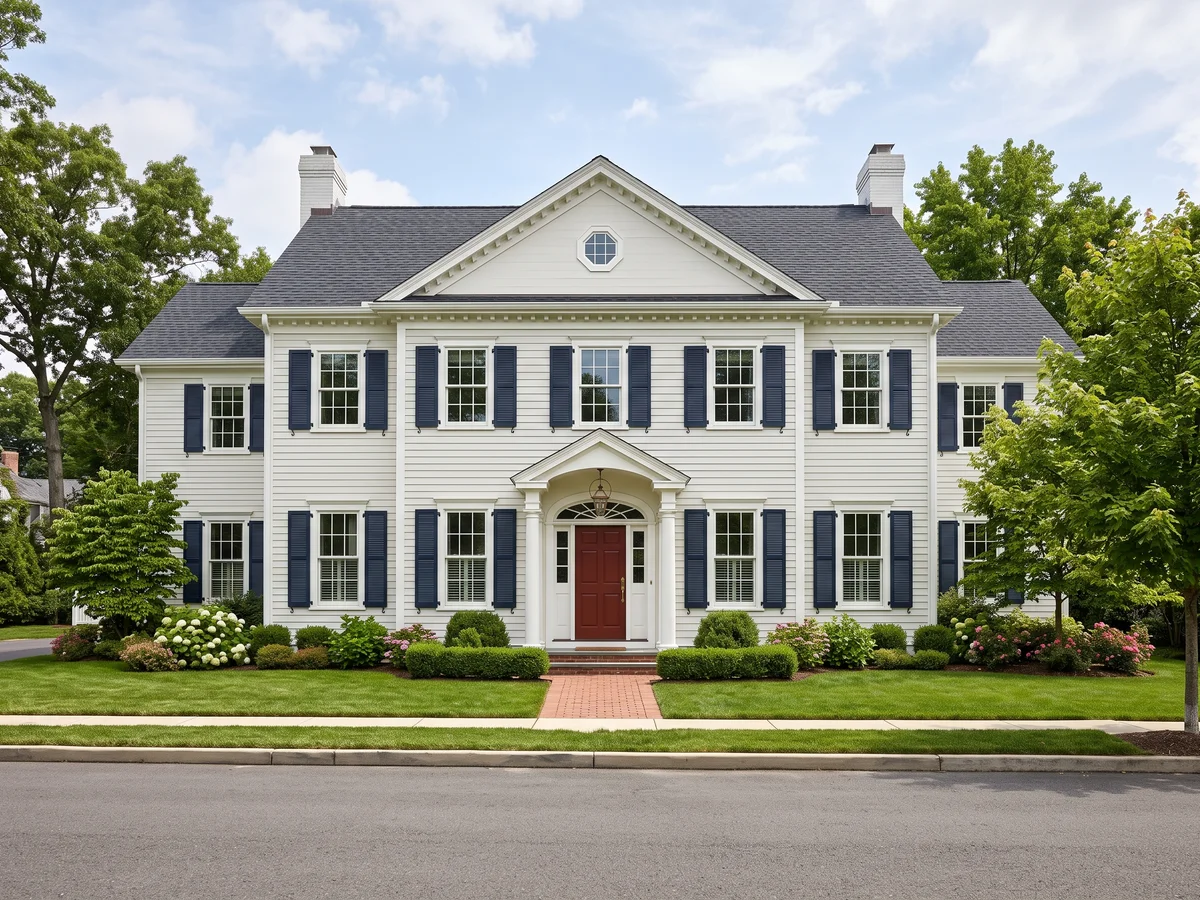
Cream, Navy & a Red Door
The scheme on the photo above, and the safest good answer for a two-story colonial. A warm cream body instead of a stark white, trim a half-step brighter so the casings still read, navy on the shutters, and a muted brick red on the door. Navy does the job black does without going hard on a sunny street.
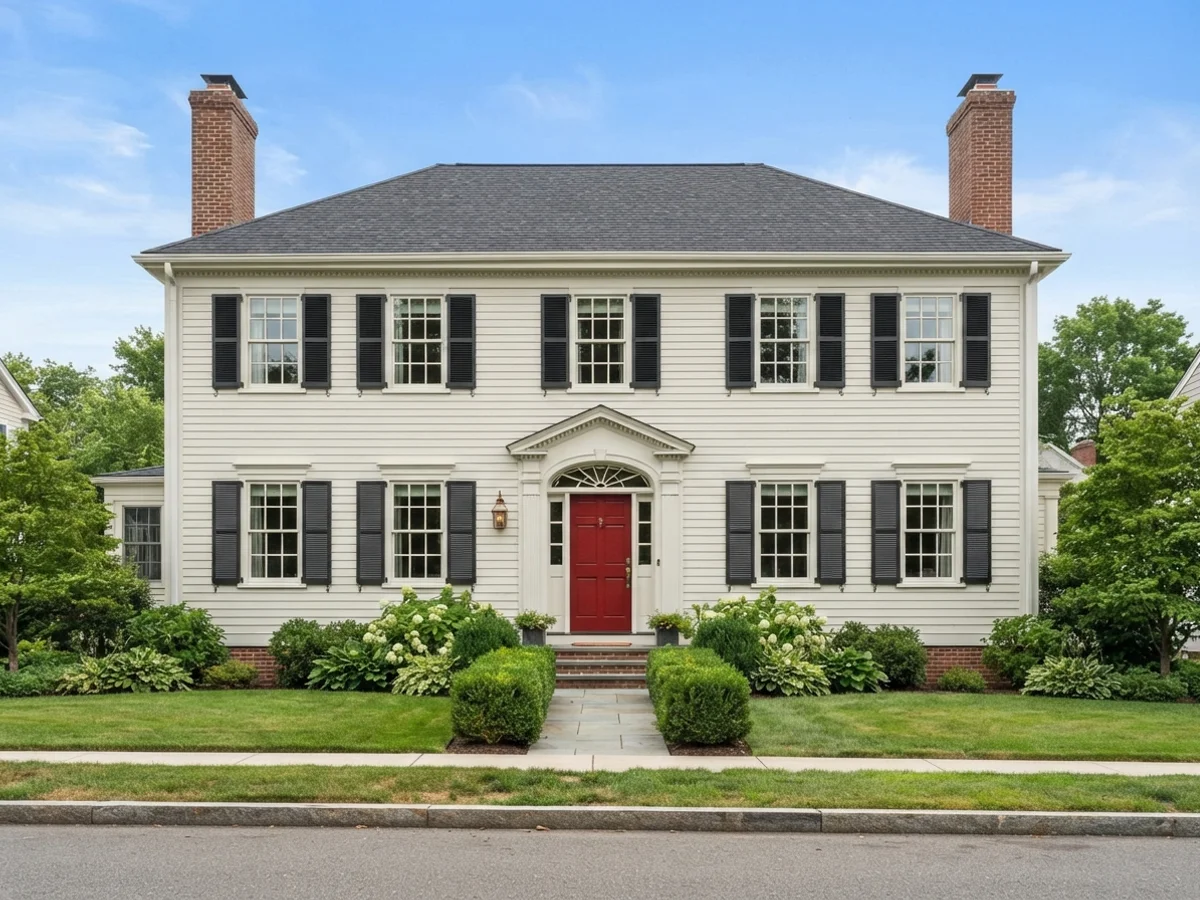
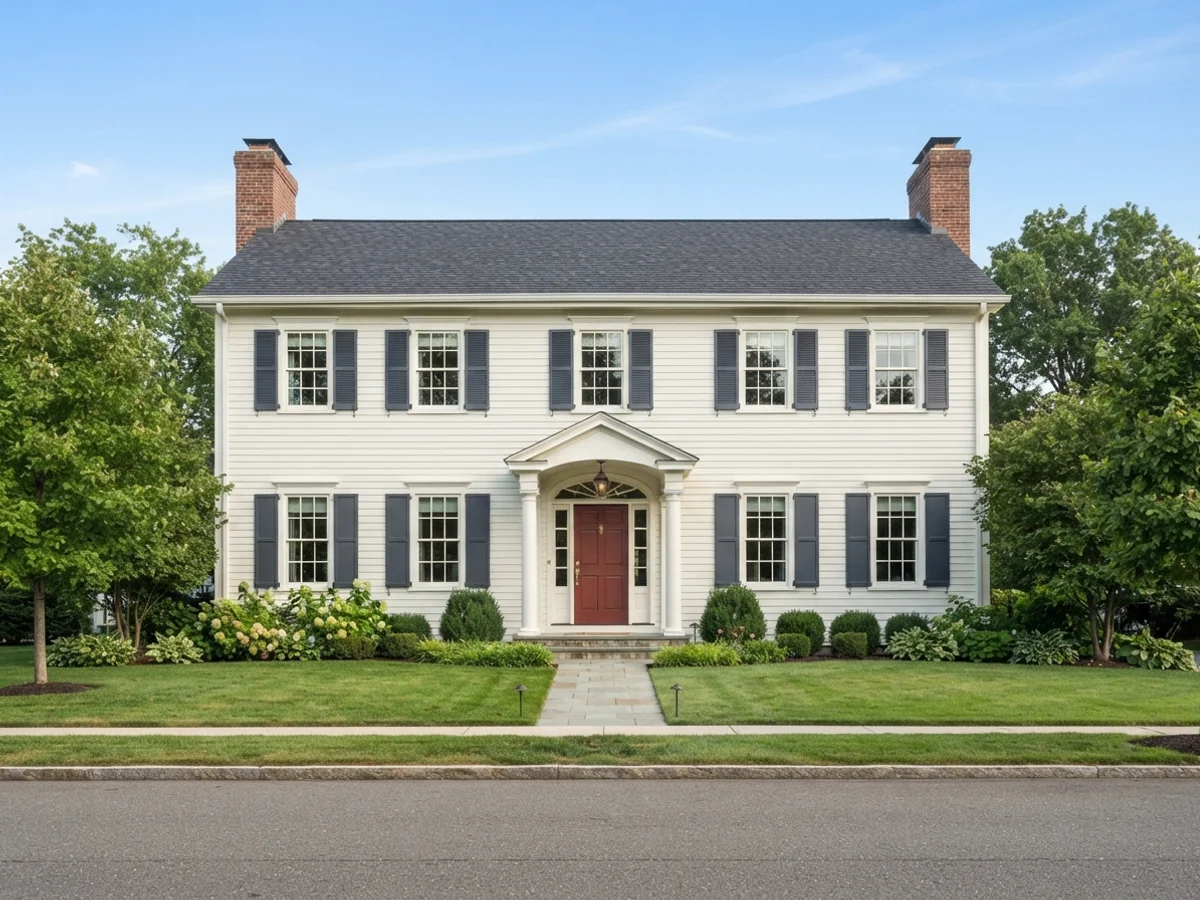
White With Black Shutters
The scheme everyone pictures when they hear "colonial". Body and trim are two close whites, not one: Alabaster carries enough warmth to keep the siding from looking like primer, and Pure White on the casings and cornice gives the trim a clean edge. All of the contrast lives in the black shutters and the red door.
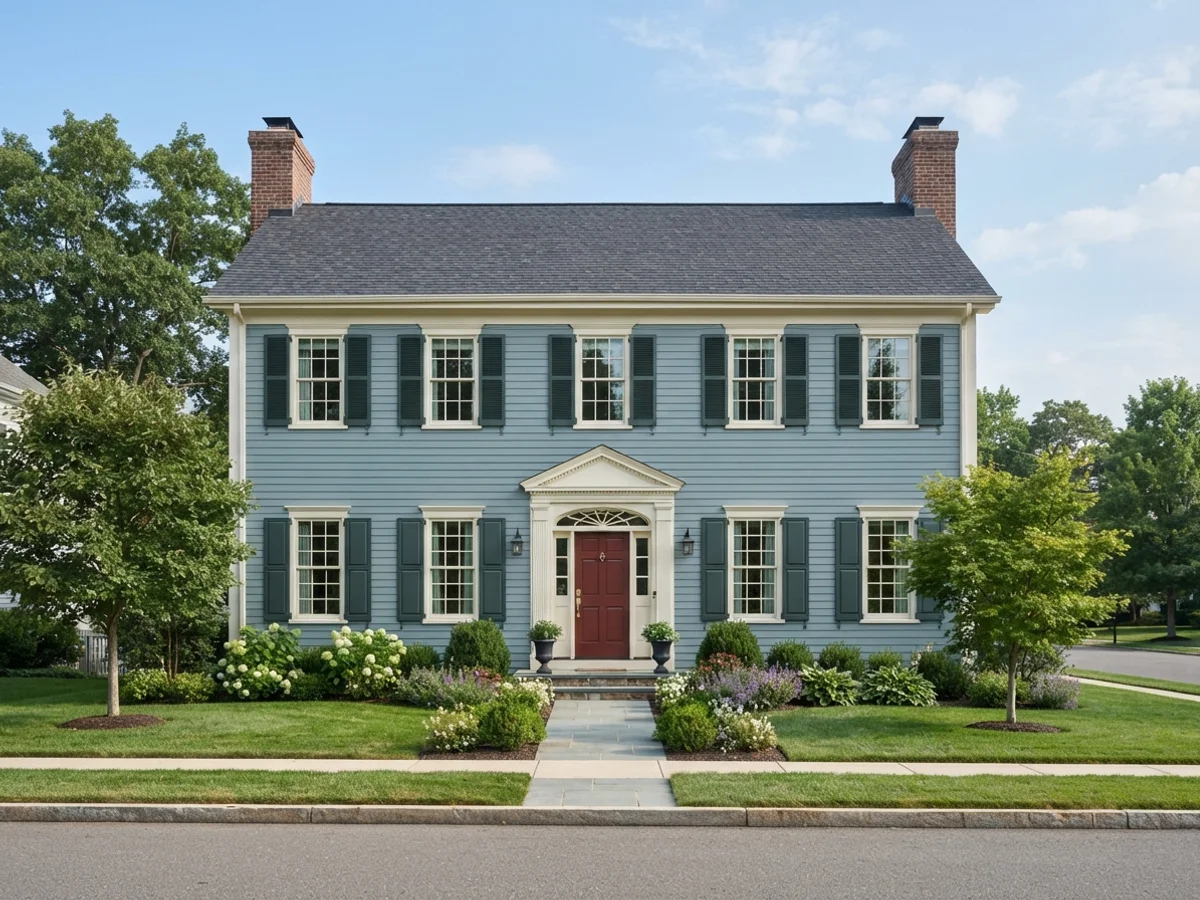
Williamsburg Blue & Cream
The chalky blue-green that people mean by "Williamsburg blue". Benjamin Moore developed the Williamsburg collection with the Colonial Williamsburg Foundation, working from surviving paint and pigment evidence, and the research found the original colors more saturated than the faded ones suggested. It wants a cream trim, not a bright white, near-black green shutters and a brick-red door.
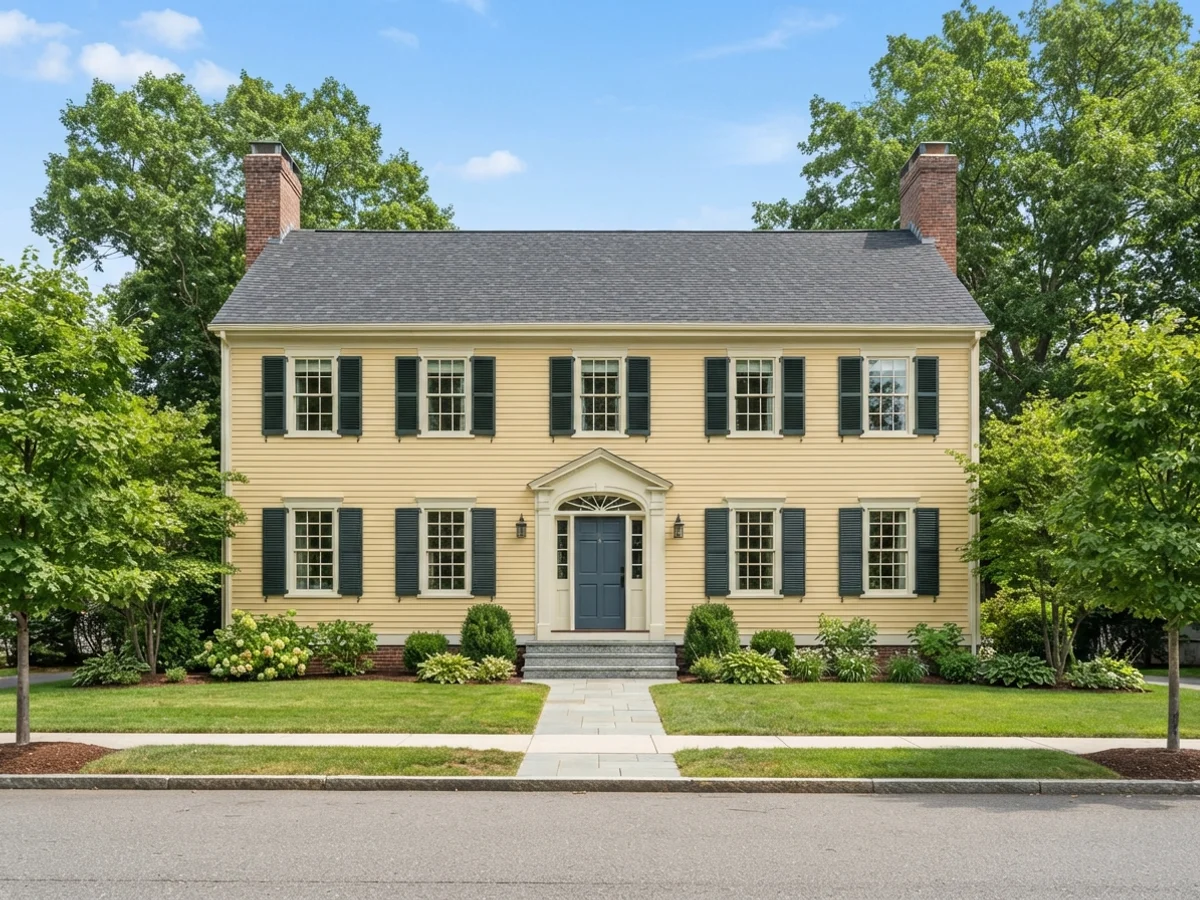
Colonial Yellow & Deep Green
Yellow ochre was one of the two cheap earth pigments colonial painters actually had, and a soft buttery body is still the friendliest colonial on the block. Keep the yellow pale: Hawthorne Yellow at LRV 71 reads as light, not as a school bus, once it covers a whole two-story facade. Green-black shutters and a deep blue door keep it from turning sweet.
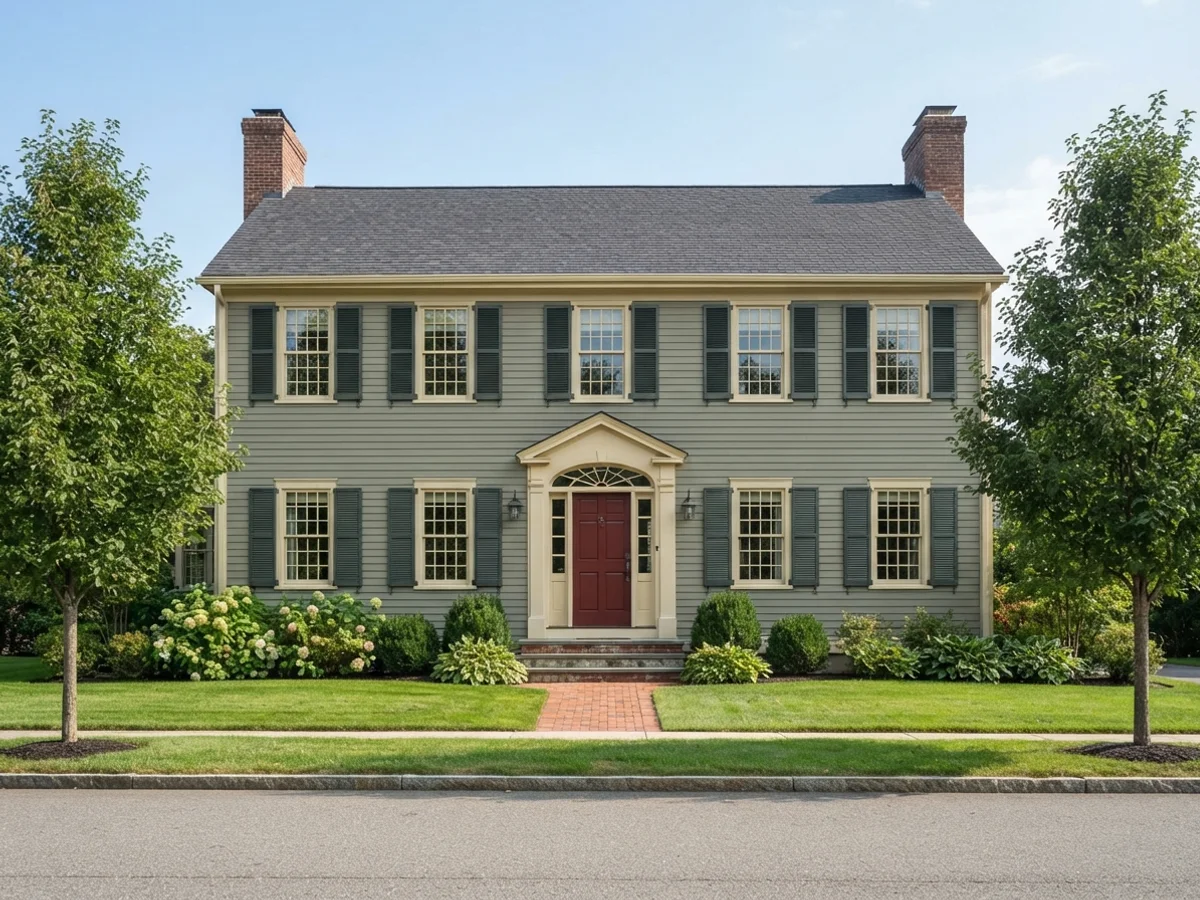
Moss Green & Cream
The quietest scheme here and the one that looks best with mature trees around it. Louisburg Green is a grayed moss, not a garden green, so it sits down instead of shouting. Cream trim keeps the whole thing warm, the shutters go one long step darker in the same family, and an oxblood door is the single point of color.
Body, Trim, Shutters, Door
A colonial usually runs on three colors, not four. The body takes most of the wall, the trim is a close relative of it, and the two dark things — shutters and door — carry the whole look.
The body color covers the clapboard or the shingles and, on most colonials, the garage doors too. Painting garage doors in the trim white is the fastest way to make the widest, flattest part of the house the first thing anyone sees. The trim color goes on the corner boards, the window and door casings, the cornice and any dentil molding under the eaves, and the pediment over the entry. On a white-body colonial the trim is usually the same white or one clean step brighter, which is why these houses read as quiet even up close.
The window sash is the one place a colonial parts company with a Craftsman. Here the sash and muntins are painted the trim color, so the grid of small panes stays light and the windows look like they belong to the wall. Dark sash makes a colonial look like a different, later house.
That leaves the shutters and the front door to do all the work. They are roughly a tenth of the surface and close to all of the personality, which is also why they are the cheapest part of the house to change your mind about.
Upload the photo. The visualizer paints siding, trim and door separately, and you can swap any one slot without starting over.
From Simply White to Black Forest Green
Colonial bodies live at either end and almost never in the middle: a warm white above LRV 70, or a grayed mid-tone in the 30s. The shutter and door colors all sit under LRV 15. Hover for the name, click to try it.
Colonial Era vs. Colonial Revival
Both are honest colonial color. One comes from what eighteenth-century painters could buy, the other from how the style was revived and sold. Pick the story you want the house to tell.
Earth pigments, saturated
- Exterior color, when there was any, was mixed on site from yellow ochre or iron-oxide red with white lead and linseed oil
- Benjamin Moore built the Williamsburg collection with the Colonial Williamsburg Foundation from surviving paint evidence, and the originals turned out more saturated than the faded survivors looked
- Trim and sash went lighter than the body, not darker
- Right for a documented early house or a historic district with a review board
White body, dark shutters
- After independence exterior color went lighter, and white and creamy white became the common shades
- Body and trim are two close whites; the contrast is saved for shutters and door
- The door carries the only real color: red, navy or deep green
- What almost every post-1900 colonial in America was built to wear, and the easiest scheme to sell to a buyer
The mistake that kills either version is the count. Two colors leave a colonial flat, because a symmetrical box with no dark accents has nothing to look at. Four or more colors turn the facade busy and fight the symmetry the house is built on. Three is the number: body, trim, and one strong color shared between the shutters and the door, or split between them.
Plenty of colonials are brick, and then the decision is smaller and harder: the brick is already your body color and it is not changing. Warm the trim to a cream so it does not read as primer next to the red, and let the shutters and door go dark. Our brick house page works through the trim, shutter and door colors that flatter brick instead of fighting it.
On the timeline, colonial color sits one room away from two neighbors on this site. The white-and-black farmhouse look borrows the same body-and-accent logic with harder contrast, and the Victorian houses that came later threw the three-color rule out entirely and painted every bracket.
Where the Contrast Belongs
On a symmetrical house, every dark thing is a pair. Get these four right and the color scheme is done.
Shutters
The strongest color on most colonials. They should also look like they could close: half the window width, the same height. Undersized shutters read as stickers.
Front door
One clear color in satin or gloss, framed by the trim white. Red, navy and deep green are the three that have never gone out of style.
Cornice and casings
Dentil molding, the entry pediment and the window casings all take the trim color. Picking them out in a fourth color makes the facade look busy.
Garage doors
Body color, not trim. Trim-white garage doors turn the widest, dullest plane on the house into the first thing you see from the street.
More Colonial Colors That Work
Eight more verified bodies that can replace the body in any scheme above without breaking the logic. Click one to try it as the siding.
Colonial Color FAQ
Do the shutters and the front door have to match?
No. They have to agree. Matching them is the simple, resale-safe answer and it is what most people choose, but a green shutter with a slightly different green door, or navy shutters with a red door, is just as traditional. The rule that matters is that the two darkest things on the house should look like they were picked at the same time.
Can I paint vinyl shutters a dark color?
Yes, with the right paint. Use a 100% acrylic exterior paint labeled vinyl-safe. Standard dark colors absorb heat, and on vinyl that heat means expansion, warping and peeling. Sherwin-Williams, Benjamin Moore and Behr all sell vinyl-safe exterior lines. Clean the shutters hard first, and expect roughly five to seven years before they want a refresh.
What trim color works with a red brick colonial?
Cream, not bright white. Brick is a warm, earthy red, and a cold white next to it reads as primer. Then let the darkest color go on the door, a mid-tone on the shutters, and the cream on everything else. Black, navy, dark green and warm gray are the shutter colors that behave on red brick.
Do I have to keep the shutters at all?
No, and on some colonials they are the problem. Undersized shutters, the ones that clearly could never cover the window, make a facade look cheap. If yours are half the window width or less, either replace them with properly sized pairs or take them off and let the window casings and a strong door carry the front. Try the house both ways on a photo before you unscrew anything.
Related Styles and Surfaces
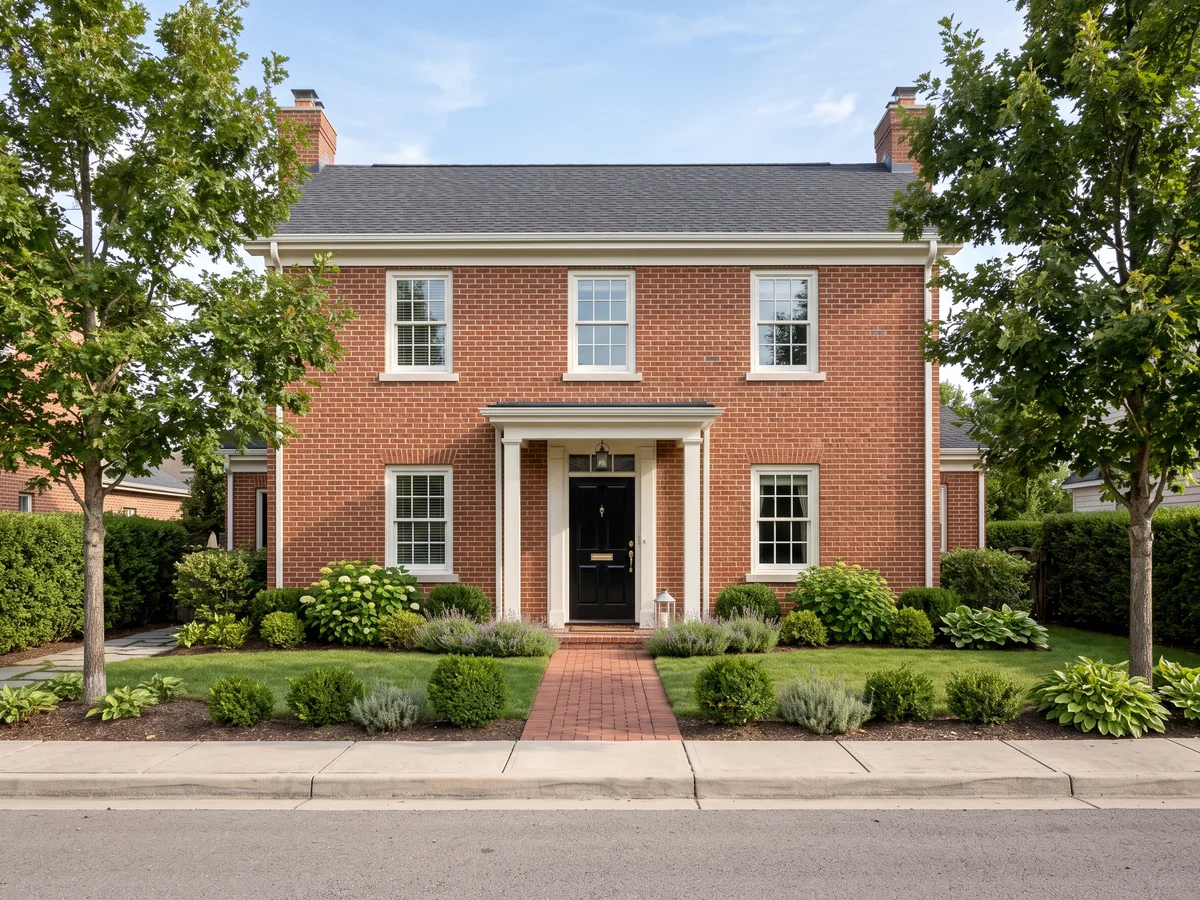
Trim, shutter and door colors that flatter brick
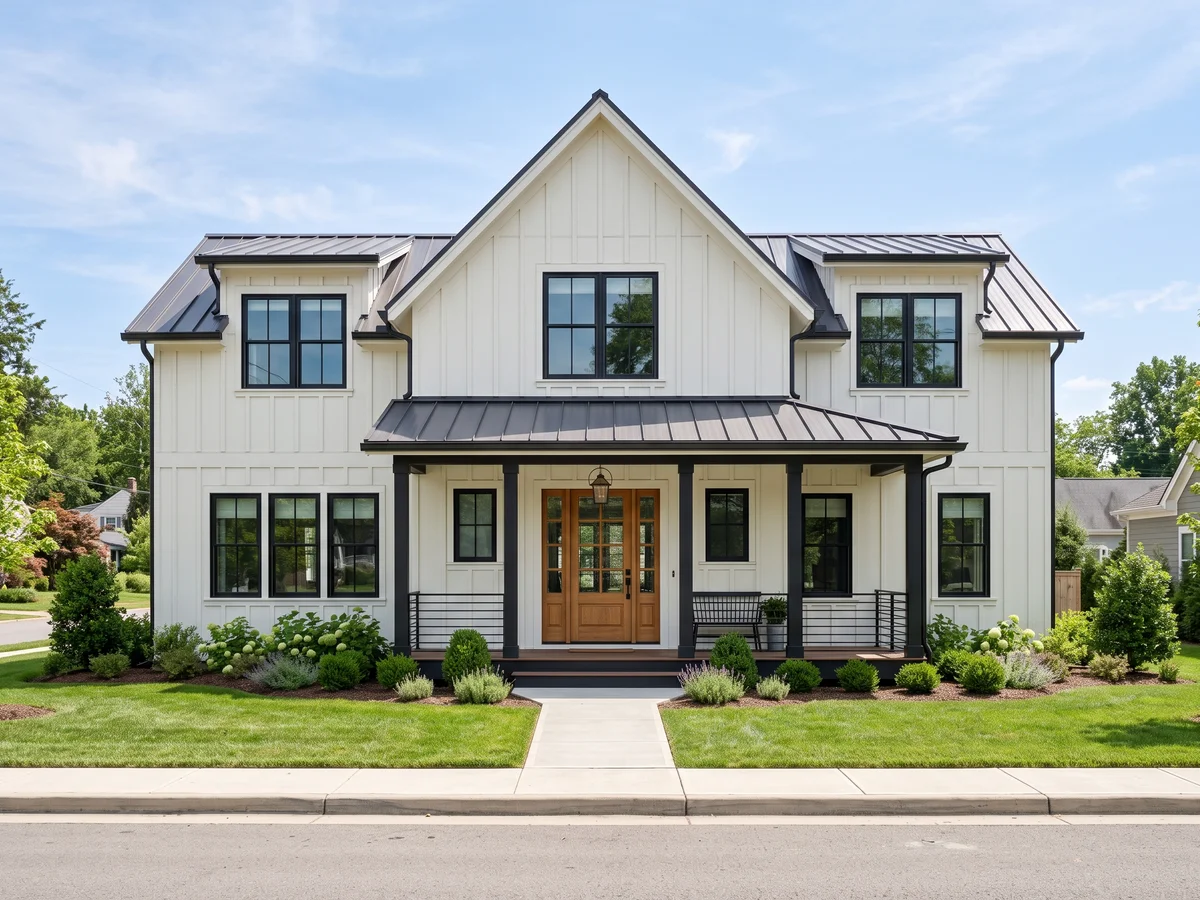
Crisp whites and black windows
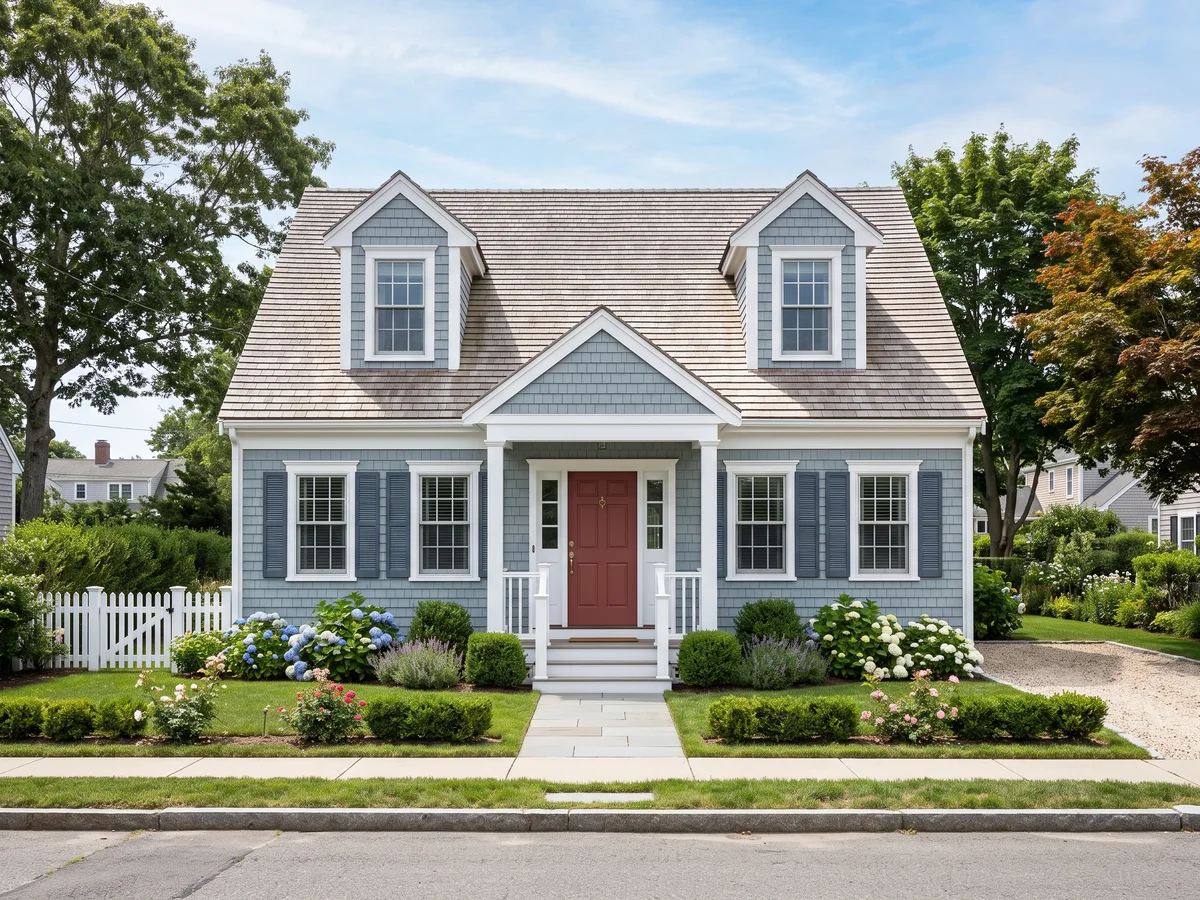
The story-and-a-half cousin: shingle grays, whites and shutters
Five colonial schemes with real paint codes, previewed on a photo of your own house. Free to start.