Farmhouse Exterior Paint Colors
A farmhouse scheme is a formula, not a color: light body, dark windows, wood at the door. Get those three right and the style follows. Five complete schemes below, in real, buyable colors with exact codes — each one a click away from a preview on a photo of your actual house.
Try "Alabaster body, black windows, wood front door" · Free previews every day · No app to download
Five Farmhouse Schemes That Work
Every color below is a real Sherwin-Williams, Benjamin Moore, or Behr color with its exact code. Take any scheme straight to the store, or preview it on a photo of your own house first — your siding and your sun shift color more than a screen ever will.
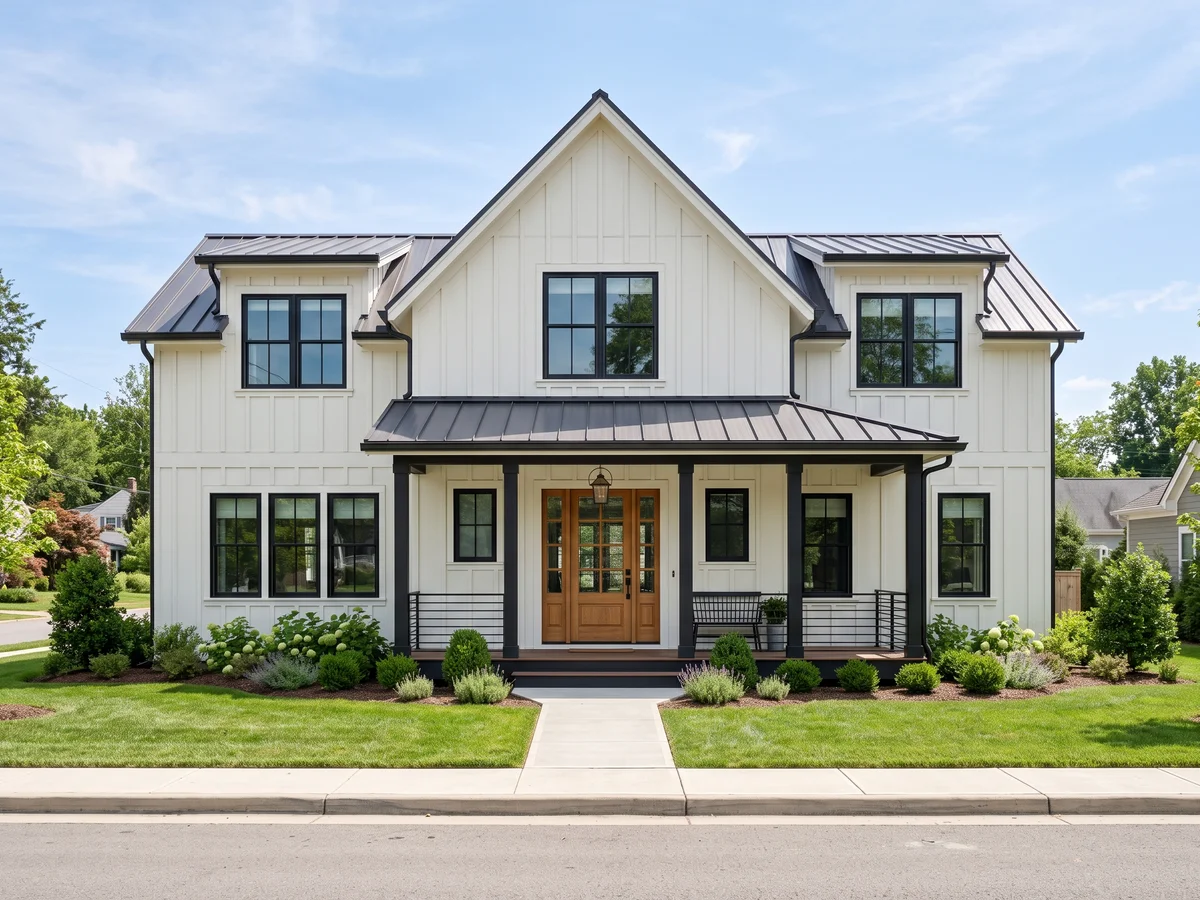
Classic White Farmhouse
The reference look: a warm white body that reads as painted wood, not plastic. White-on-white trim. Black saved for the front door and window sashes. Alabaster is the most-specified farmhouse white in America for a reason — just enough cream to stay soft at noon and glow at dusk. It works on any siding profile, and if you plan to sell, this is the safest scheme on the page.
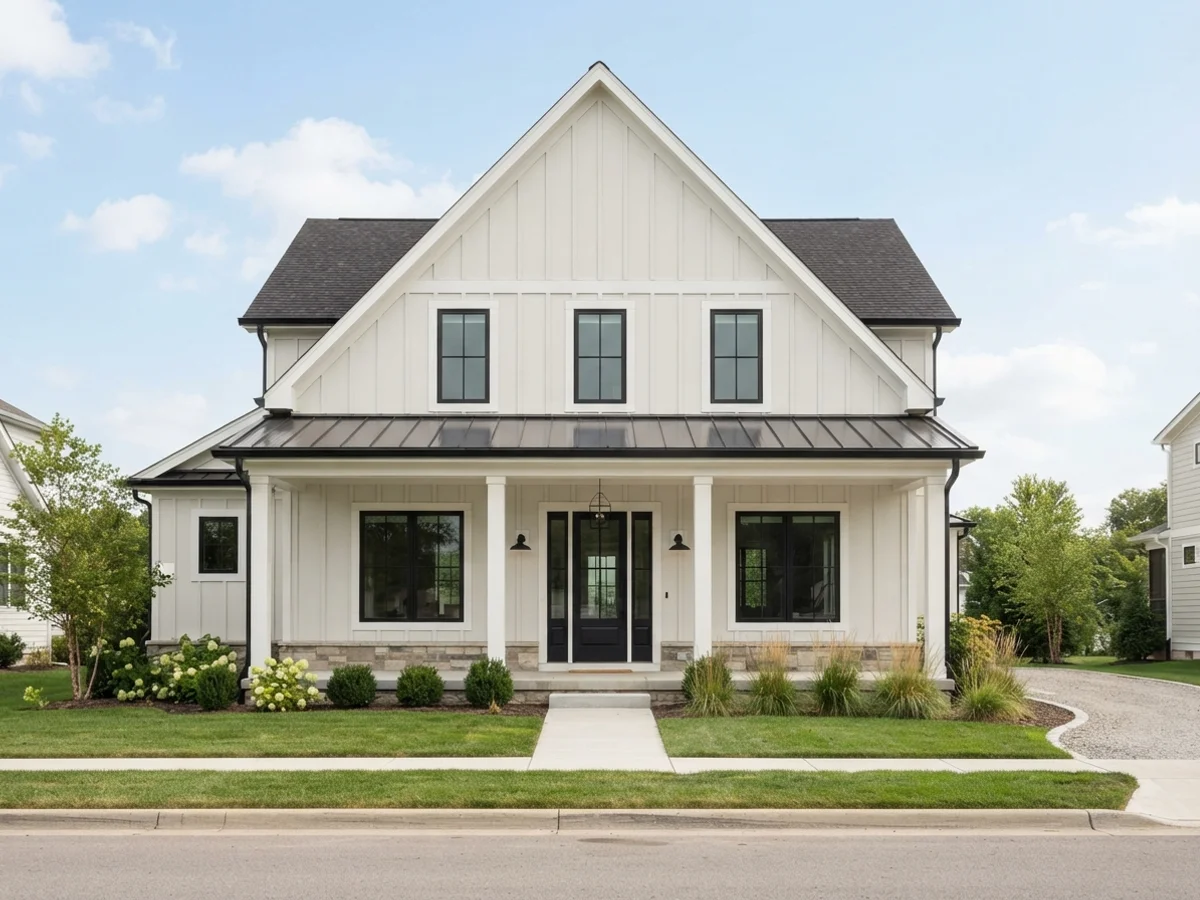
Modern Farmhouse
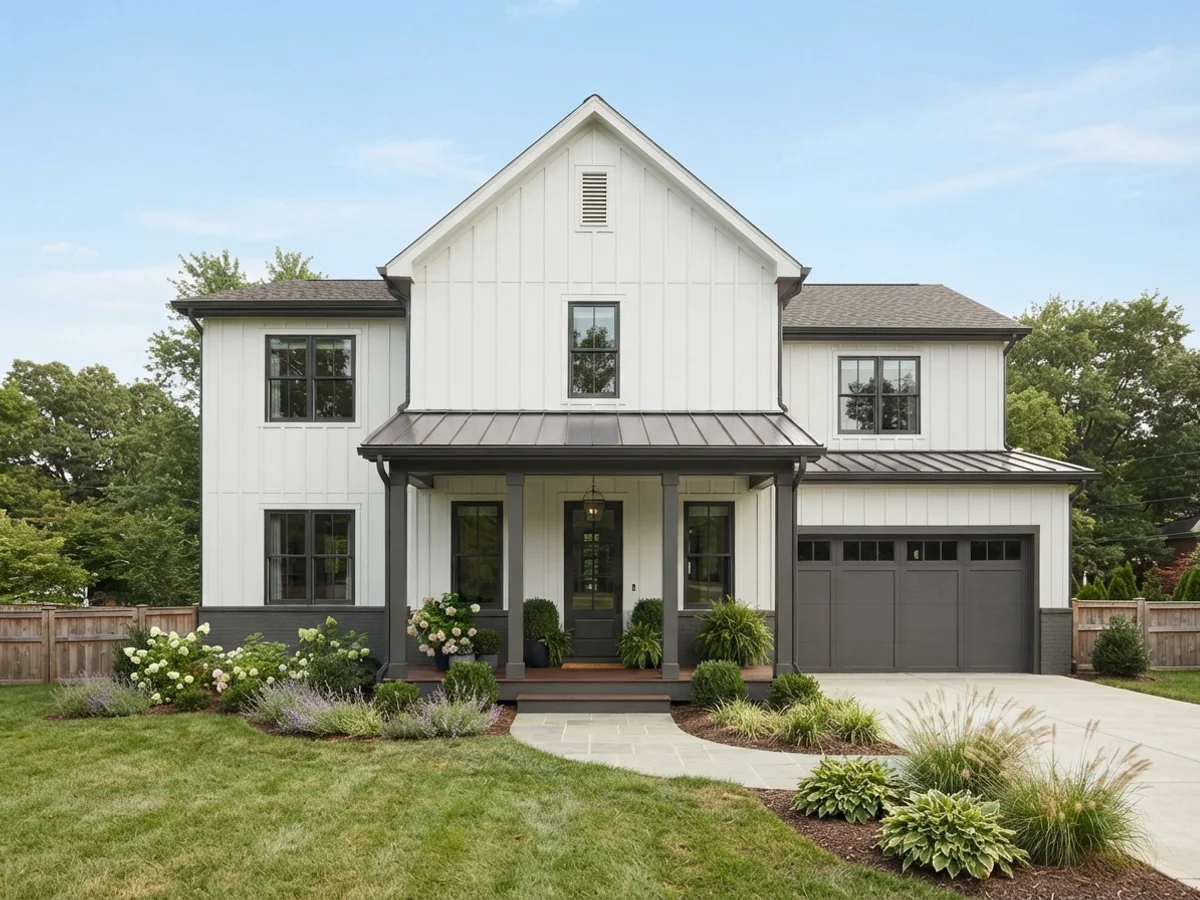
Cooler and crisper than the classic. A bright, near-neutral white over board-and-batten, black-bronze window frames, and a charcoal garage or wainscot to ground it. Chantilly Lace is one of the cleanest whites Benjamin Moore makes, so the black elements read graphic instead of cozy. This is the scheme behind most of the new-build farmhouses on your feed.
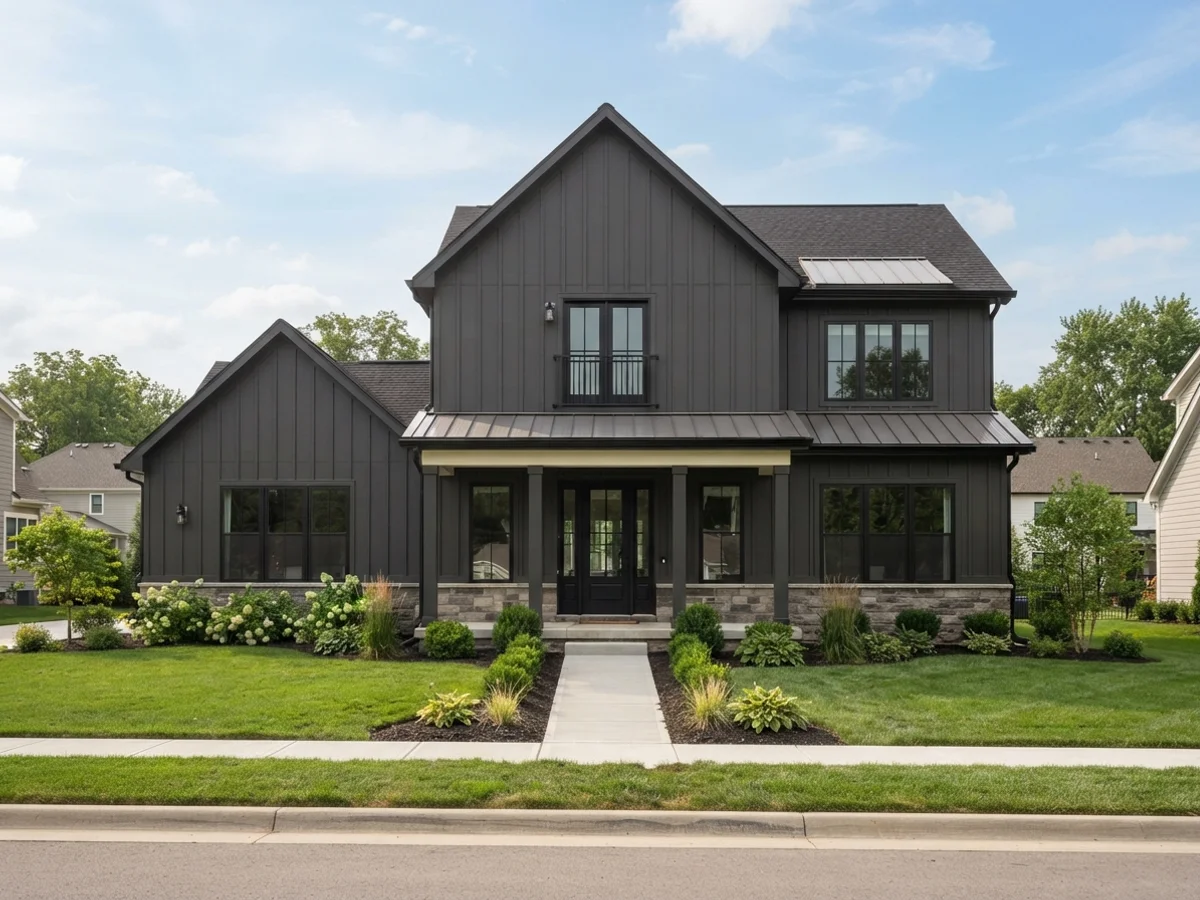
Moody Farmhouse
Flip the formula: a near-black body, true-black windows, and warm white kept only for the porch ceiling and soffits. Iron Ore is the go-to — a soft black with a little gray in it, so it shows the board-and-batten shadow lines instead of flattening them the way a pure black would. Best on houses with a metal roof or a wide porch. Pair it with a natural wood door and it stops feeling severe.
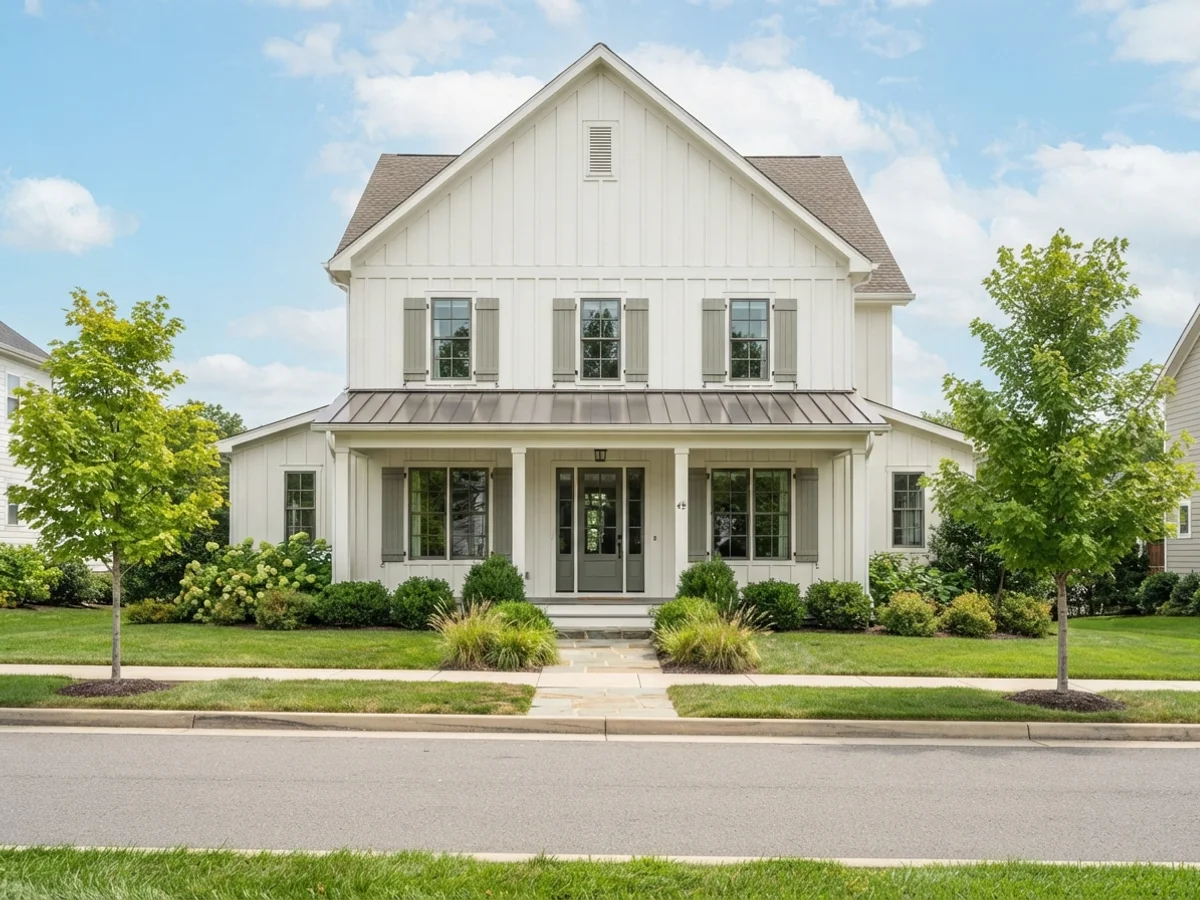
Sage-Door Farmhouse
The classic white farmhouse with the black swapped for green. White Dove runs a hair warmer than Chantilly Lace, which lets a muted sage door and gray-green shutters sit comfortably instead of clashing. Pewter Green on the door is dark enough to anchor the entry. Evergreen Fog on the shutters keeps the scheme from going two-note. This is the version that photographs best against a real yard.
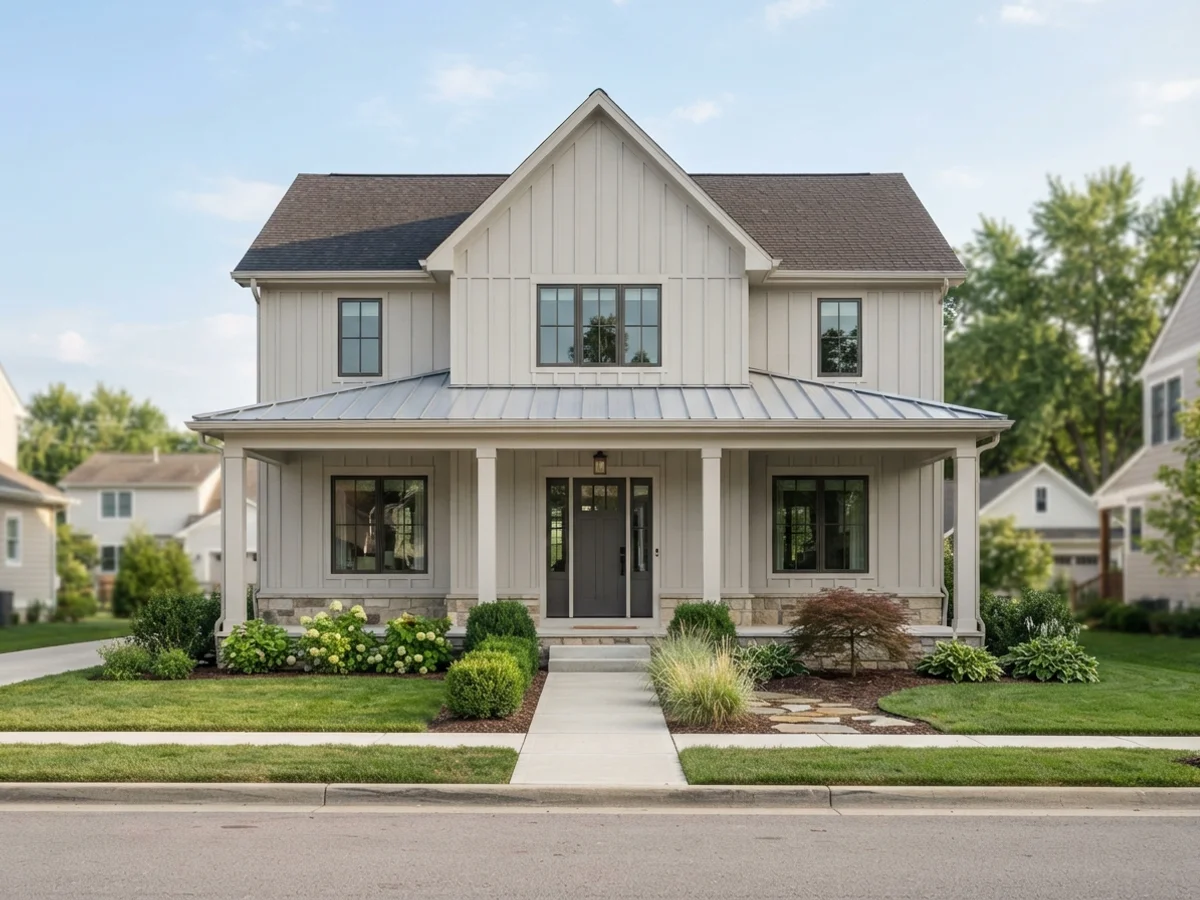
Greige Farmhouse
For anyone who finds all-white too stark — or too much work. Agreeable Gray is a soft greige that hides dust and pollen far better than white while still reading light from the street. Keep the trim a clean warm white so the corners stay crisp, then put the drama in a charcoal door and bronze accents on lighting and railings. The most forgiving scheme here for older siding.
The Details That Sell the Look
Paint gets you most of the way. Four details do the rest.
Board-and-batten — vertical siding with raised battens — is the strongest single farmhouse signal. If you have it anywhere, a gable, a garage wall, let the body color run over it uninterrupted and let the shadow lines do the decorating. Black window frames are the second: even on an otherwise classic white house, switching white sashes to Tricorn Black or Iron Ore moves the whole exterior a decade forward. The two blacks are not interchangeable, and plenty of houses run both — Iron Ore, with its touch of gray, on big surfaces like a garage door where pure black goes flat, and Tricorn Black on the fine lines of sashes and doors.
Third, metal roof accents: a standing-seam porch roof in charcoal or galvanized finish ties the dark windows to something overhead. Fourth, wood tones — a stained front door, cedar porch posts, or a wood garage door give the scheme its one warm note. Keep the wood in a single tone family across the elevation. The front door page covers door colors in depth, and shutters — if your house has them — should match the window-frame color, not fight it.
Upload the photo. The visualizer paints each surface separately, and you can swap any one slot without starting over.
Five Farmhouse Looks, Rendered
Curated looks from our exterior render set. Each one opens the visualizer with its siding, trim and door colors already loaded.
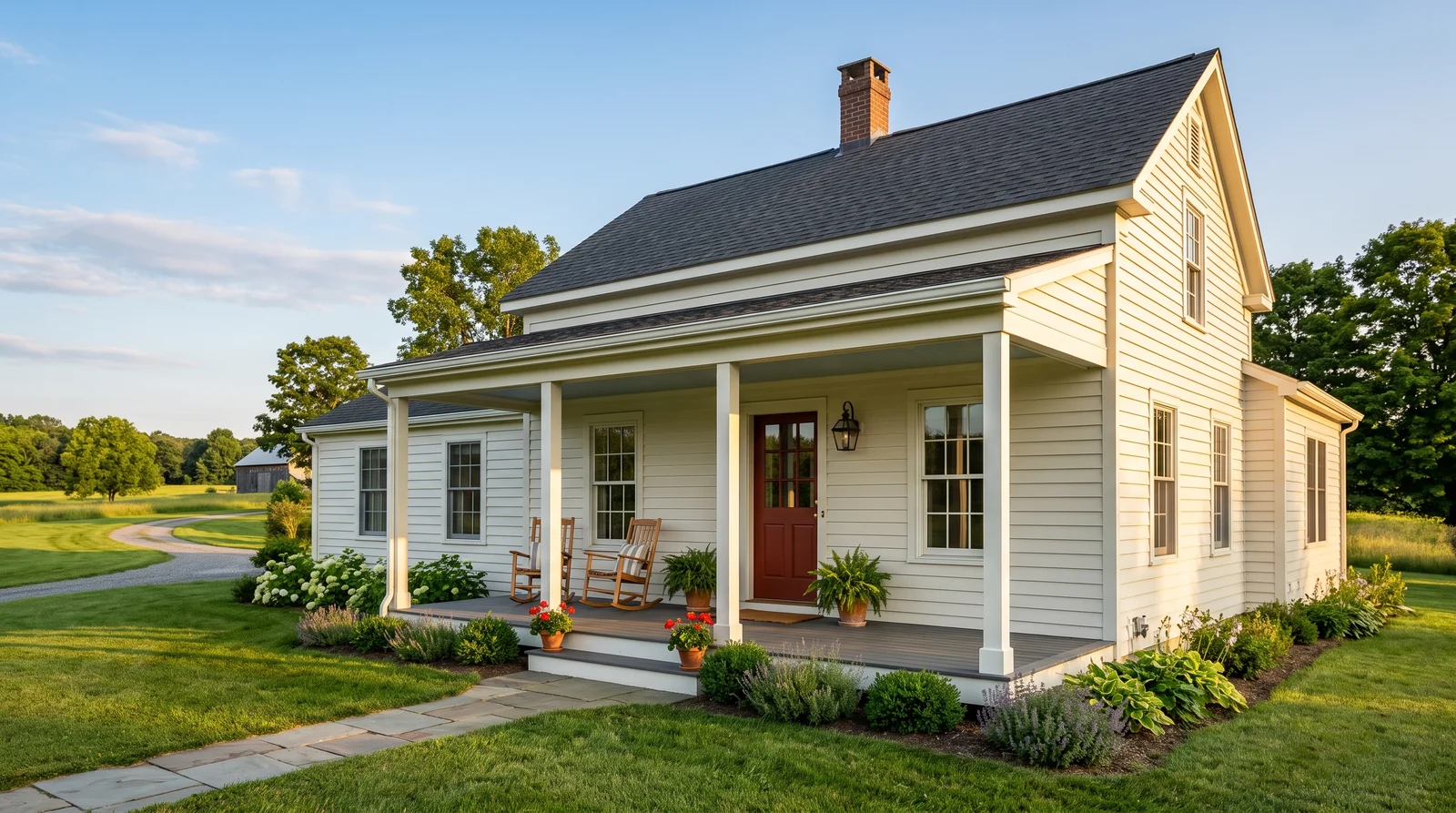
The old-fashioned version: warm white siding, white trim, a red door, and a haint-blue porch ceiling.
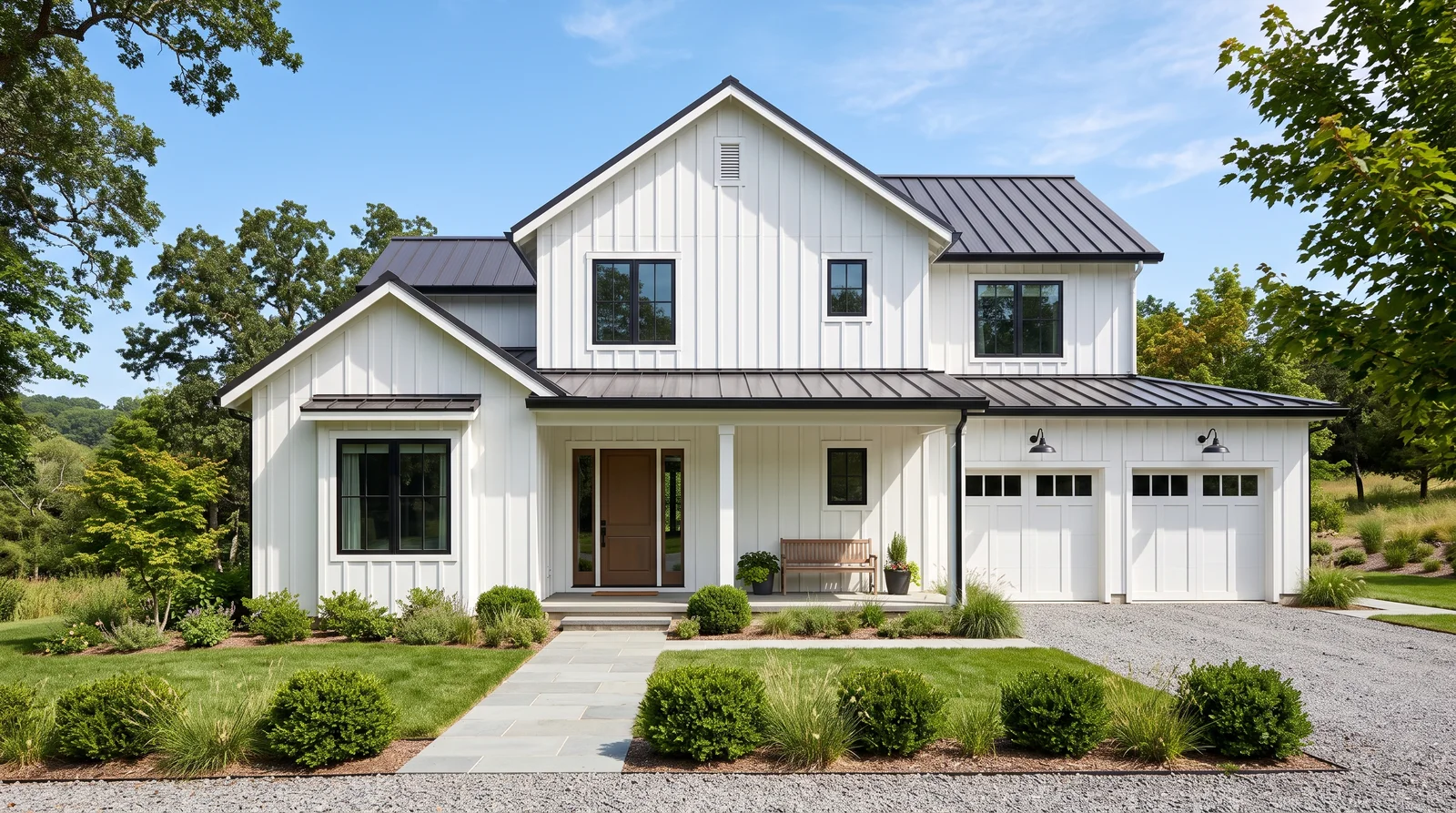
The white-and-black scheme everyone is building right now, warmed up with a bronze door so it does not read cold.
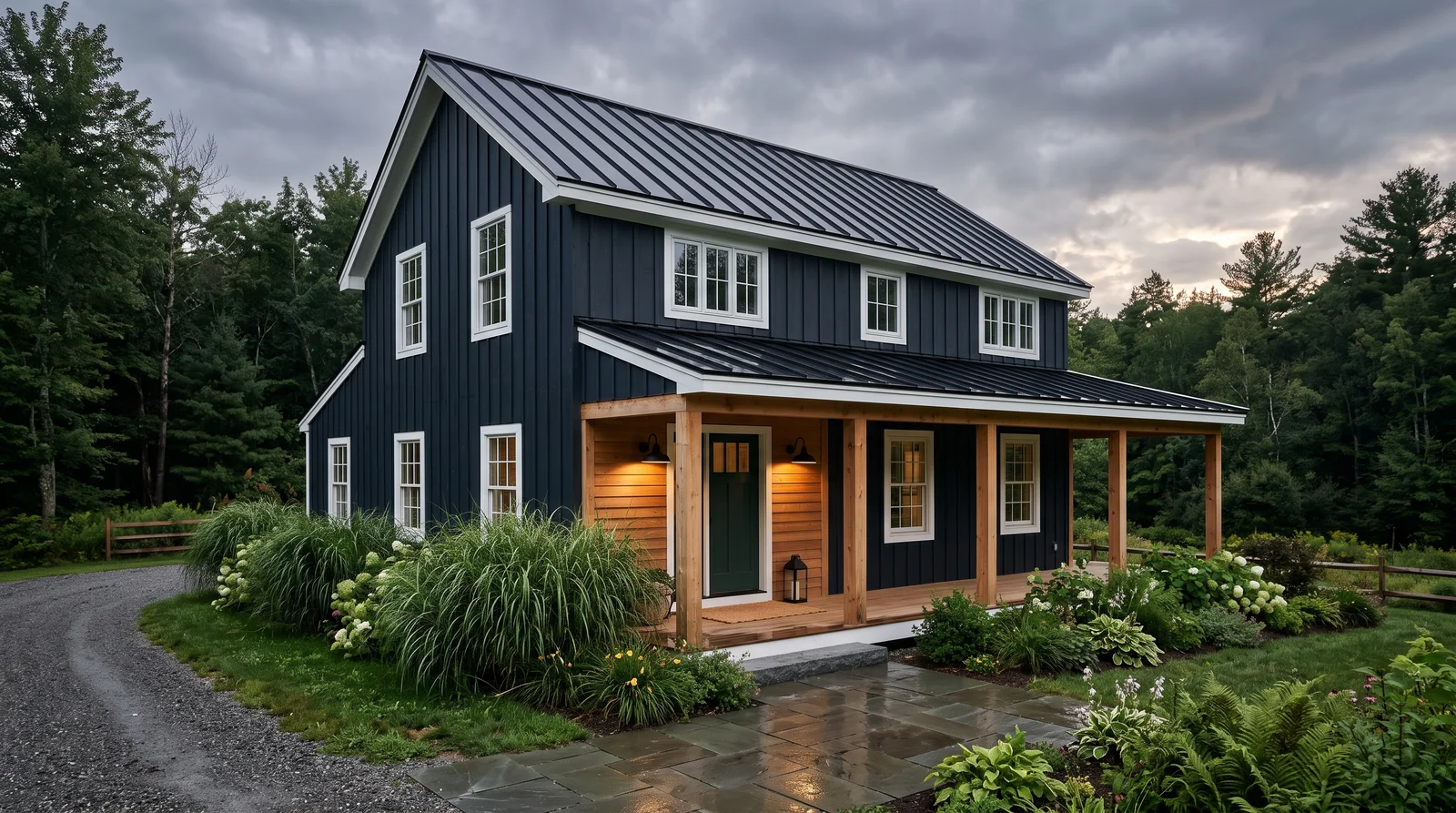
Near-black siding with white trim and a deep green door - dramatic from the road, and it hides a lot of siding sins.
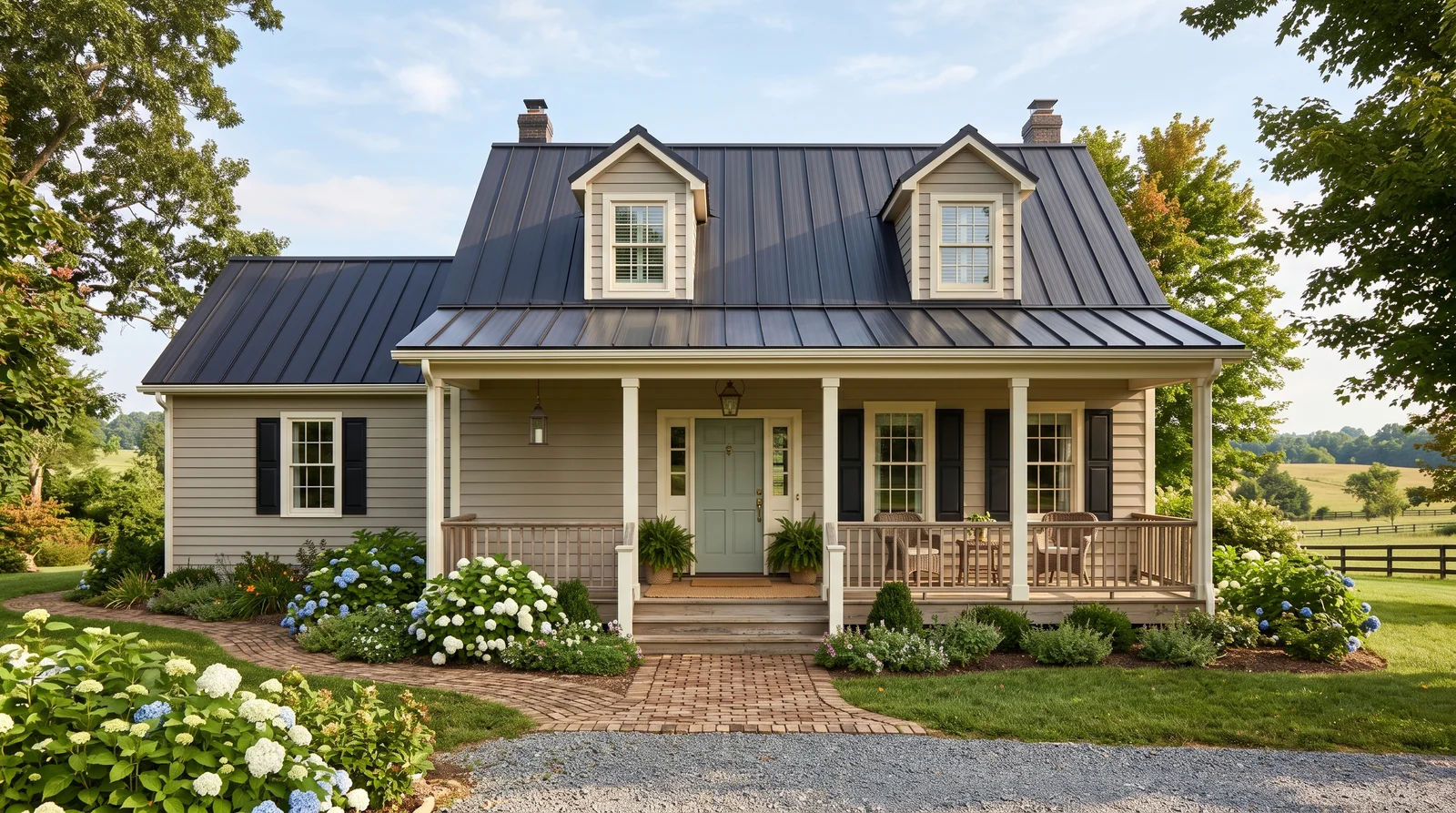
For people who want a farmhouse that is not white: a warm greige body with creamy trim and a soft green door.
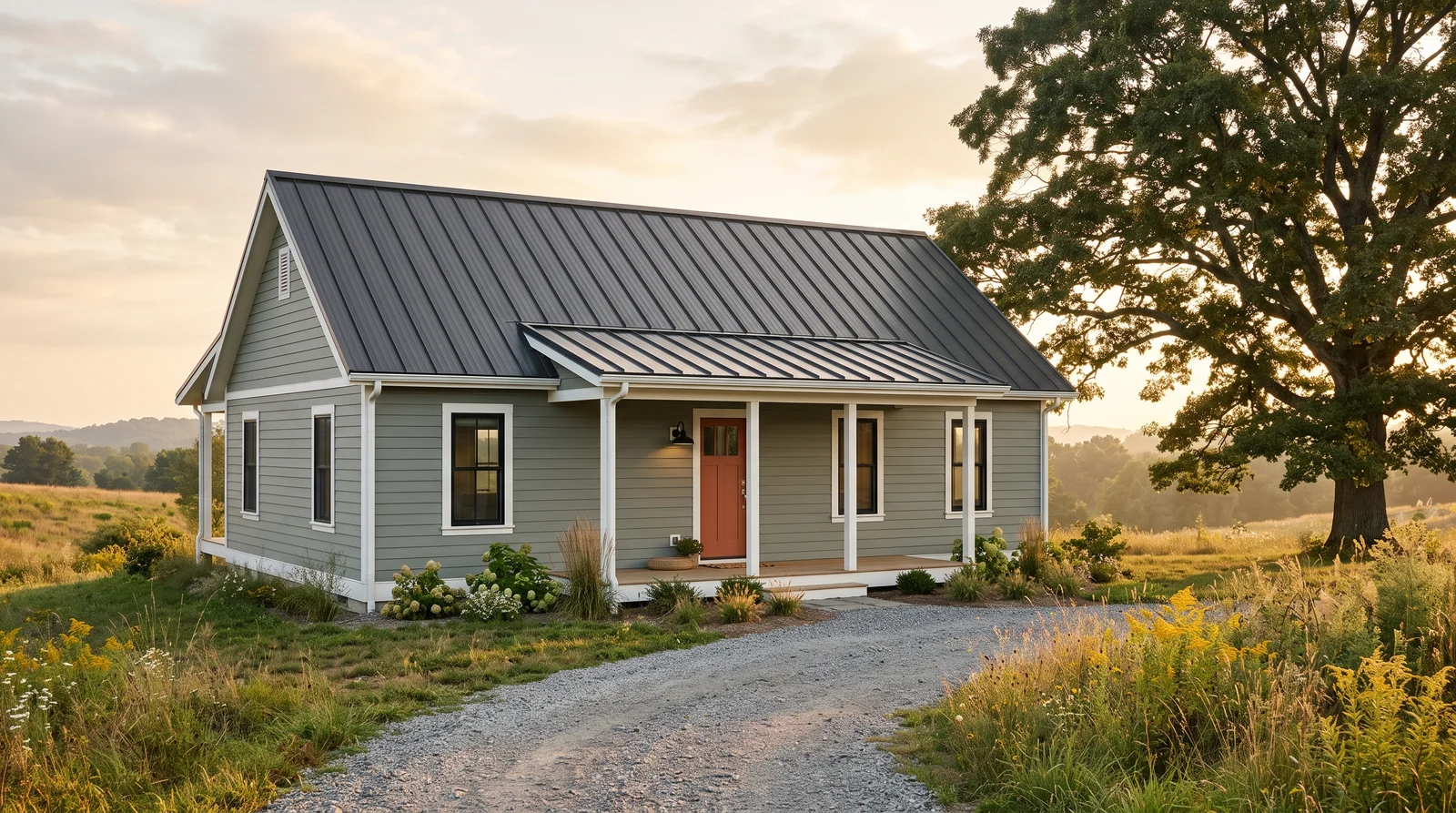
Muted green siding that looks like it grew out of the yard, with a terracotta door for one warm surprise.
From Alabaster to Iron Ore
Pick a body from the light end, trim close to it, and a window or door color from the dark end. Hover for the name, click to try it.
Modern vs Classic Farmhouse
Both share the same body-plus-contrast structure. They differ in temperature and strictness.
Cool and Graphic
- A bright white like Chantilly Lace or Pure White
- Black or near-black on every frame and fixture, matte hardware
- A three-color discipline — white, black, wood — and almost nothing in between
- Favors newer siding and simple rooflines; push it one step further and you get the moody farmhouse, the fastest-growing version of the style
Warmer and Looser
- Creamier whites like Alabaster or White Dove
- Softer contrast is fine — charcoal instead of true black
- Room for a painted porch floor, a sage door, or greige siding
- Alabaster's LRV of around 82 is why it leads the pack — bright enough to read white, low enough not to glare
If your house is older, has irregular trim, or sits among mature trees, the classic palette is usually the better fit — warmth flatters imperfection, stark white exposes it. Not sure which side yours lands on? Run one scheme from each column through the visualizer and the photo answers faster than any rule. The same light-body-dark-frame logic also translates well to a ranch, while a cottage takes the classic palette and softens it further — and if your house is masonry, the brick house page covers which of these schemes survive next to red brick.
White Farmhouses Photograph Better Than They Live
The listing photos never show year three.
A White Body Shows Everything
Green algae streaks on the north face, red dust splash-back above the grade line, a gray film under every window by the second spring.
Cheap Black Fades Unevenly
Hard southern sun fades budget black toward charcoal-purple, frame by frame, faster than premium exterior lines that hold their pigment.
Board-and-Batten Costs More
The style's favorite siding multiplies the labor: every batten is two more edges to cut in, which is why a repaint quote runs well past the same square footage in lap siding.
Buy It Right the First Time
Spec satin, not flat — it sheds dirt and takes a hose. Put a soft wash on the calendar every spring. Or take the middle path: a warm white like Alabaster hides half the dirt a bright white shows.
More Farmhouse Colors That Work
Every one of these drops into the schemes above without breaking the formula. Click one to try it on your house.
Farmhouse Color FAQ
What is the classic farmhouse color formula?
Light body, dark windows, wood at the door. Get those three right and the style follows — it works on any siding profile, and it is the formula every scheme on this page starts from.
Which black should I use on farmhouse windows?
Iron Ore and Tricorn Black are not interchangeable. Iron Ore has a touch of gray, so it stays flat-free on big surfaces like a garage door; Tricorn Black is truer and reads best on the fine lines of window sashes and the front door. Plenty of houses run both at once.
Should I pick a warm white or a true white body?
Alabaster, with an LRV around 82, is the warm-white default: bright enough to read white from the street, low enough not to glare. If your house is older, has irregular trim, or sits among mature trees, warmth flatters imperfection better than a stark white does.
Does a white farmhouse need extra upkeep?
Yes. A white body shows algae streaks, dust splash-back, and a gray film under the windows faster than almost any other color, and cheap black frames fade toward purple-brown in hard southern sun. Spec satin over flat, pay up for the black, and wash the house every spring.
Related Styles and Surfaces
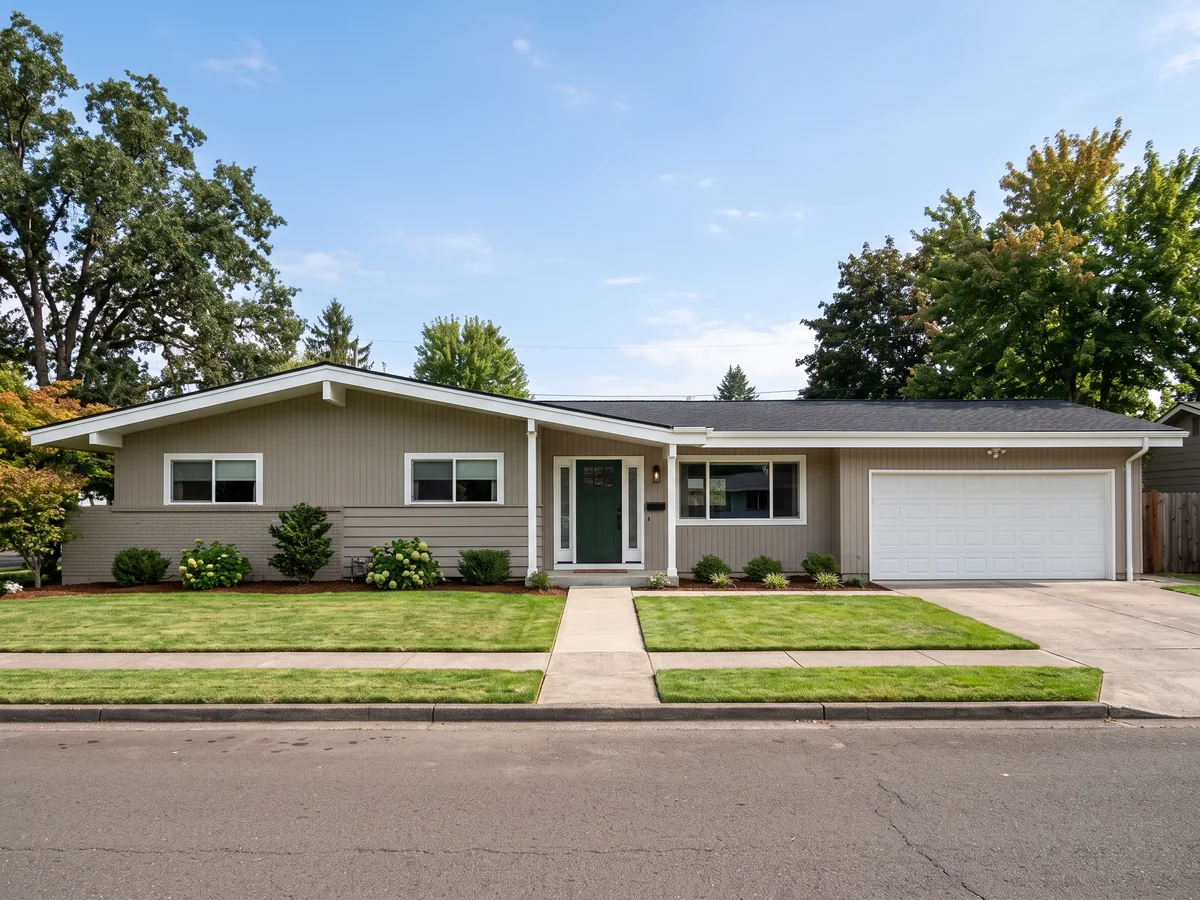
The same light-body, dark-frame logic on a low, long facade
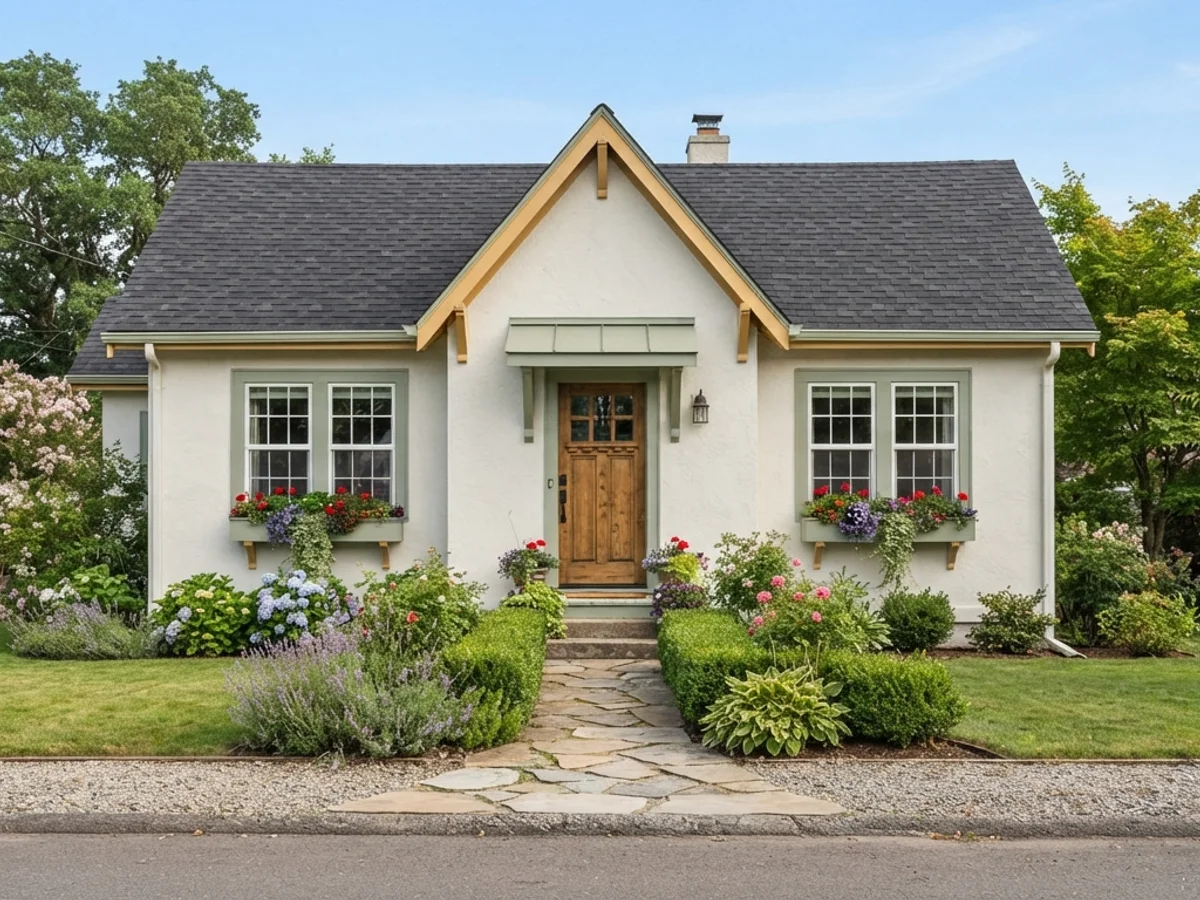
The classic palette, softened further
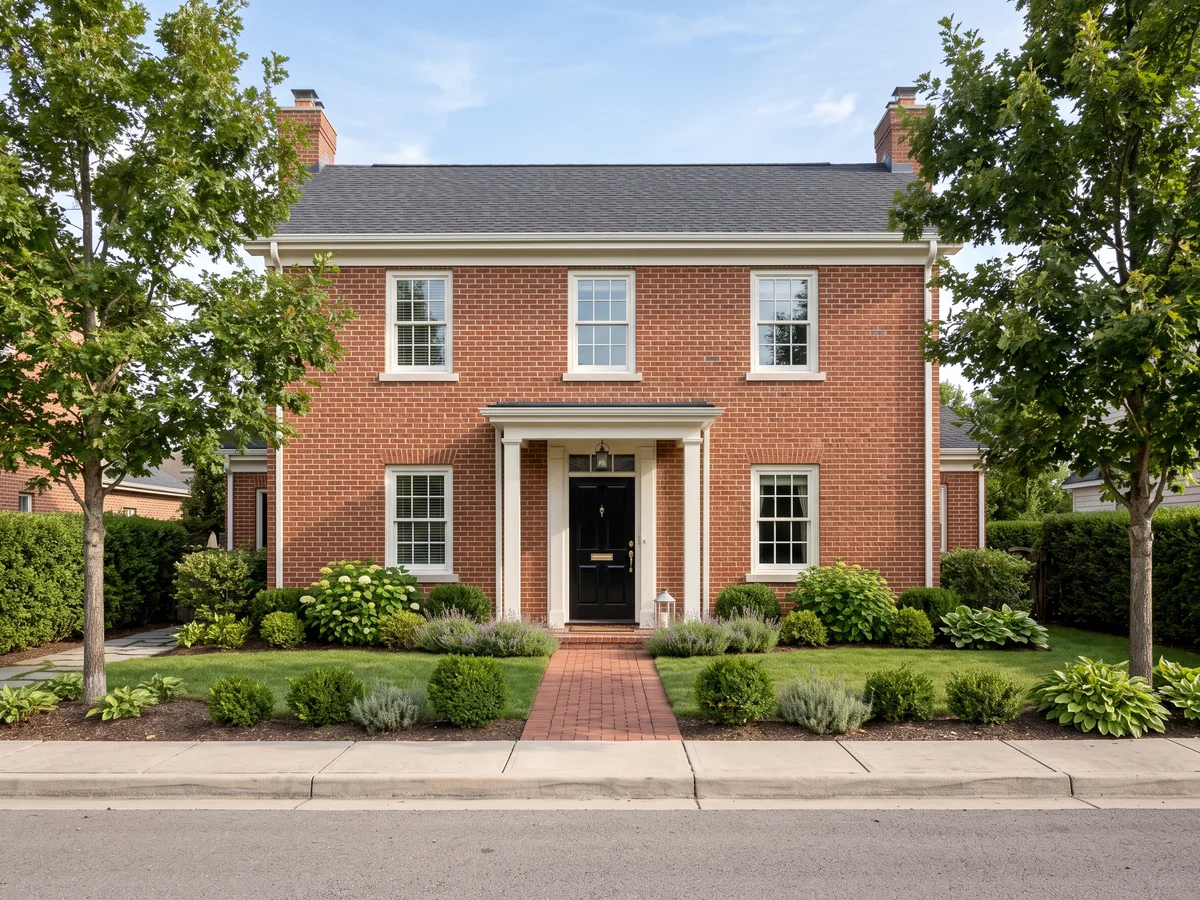
Which of these schemes survive next to red brick
One photo of your house, all five schemes on this page — free to start.