Ranch House Colors
A ranch is one long, low box — the wrong color flattens it into a beige stripe by the road, and the right scheme leans into that strong horizontal line instead. Five complete schemes below, with real paint codes and a way to see each one on your own house.
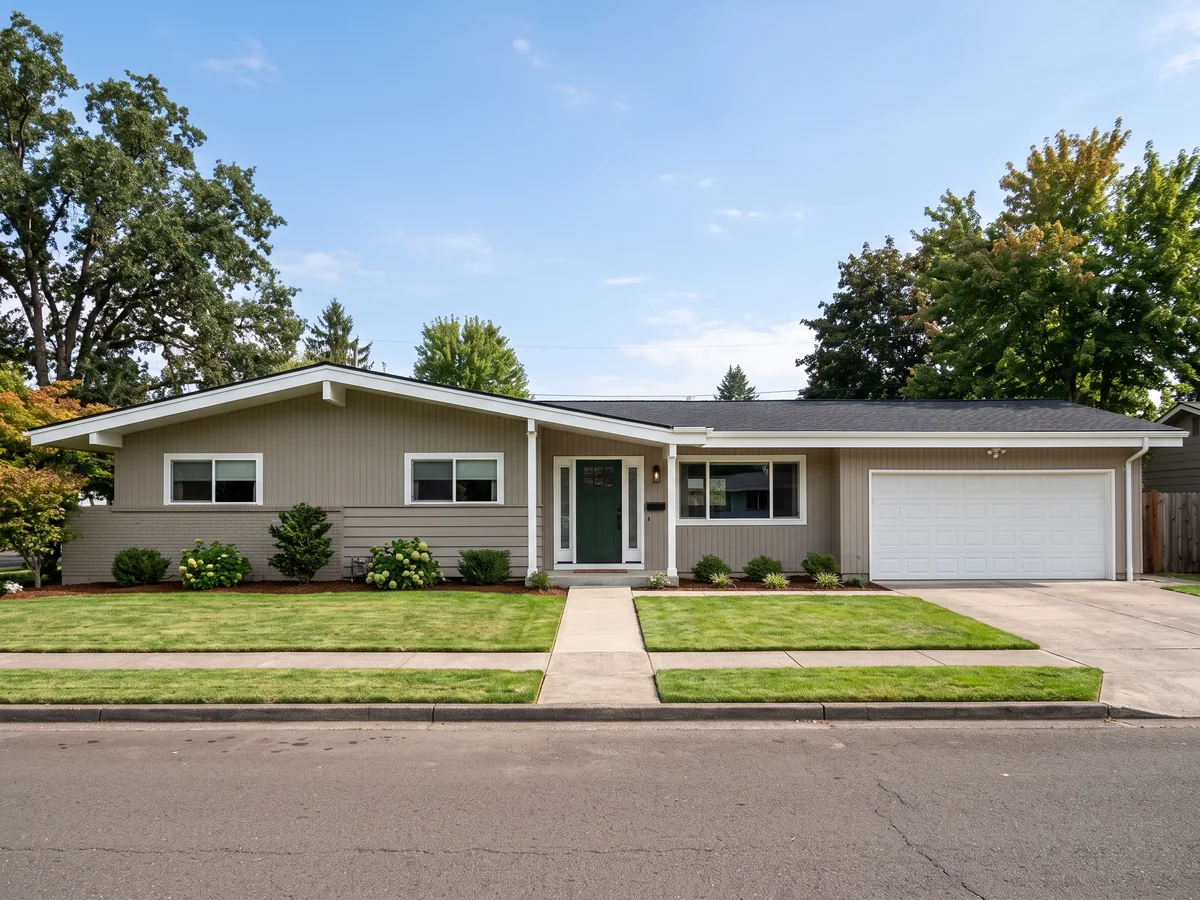
Five Ranch Color Schemes That Work
Every scheme is complete — body, trim, door — with verified Sherwin-Williams and Benjamin Moore codes. The render repaints only siding and trim; roof, brick, windows, and yard stay as they are, so you judge each scheme against everything that isn't changing.
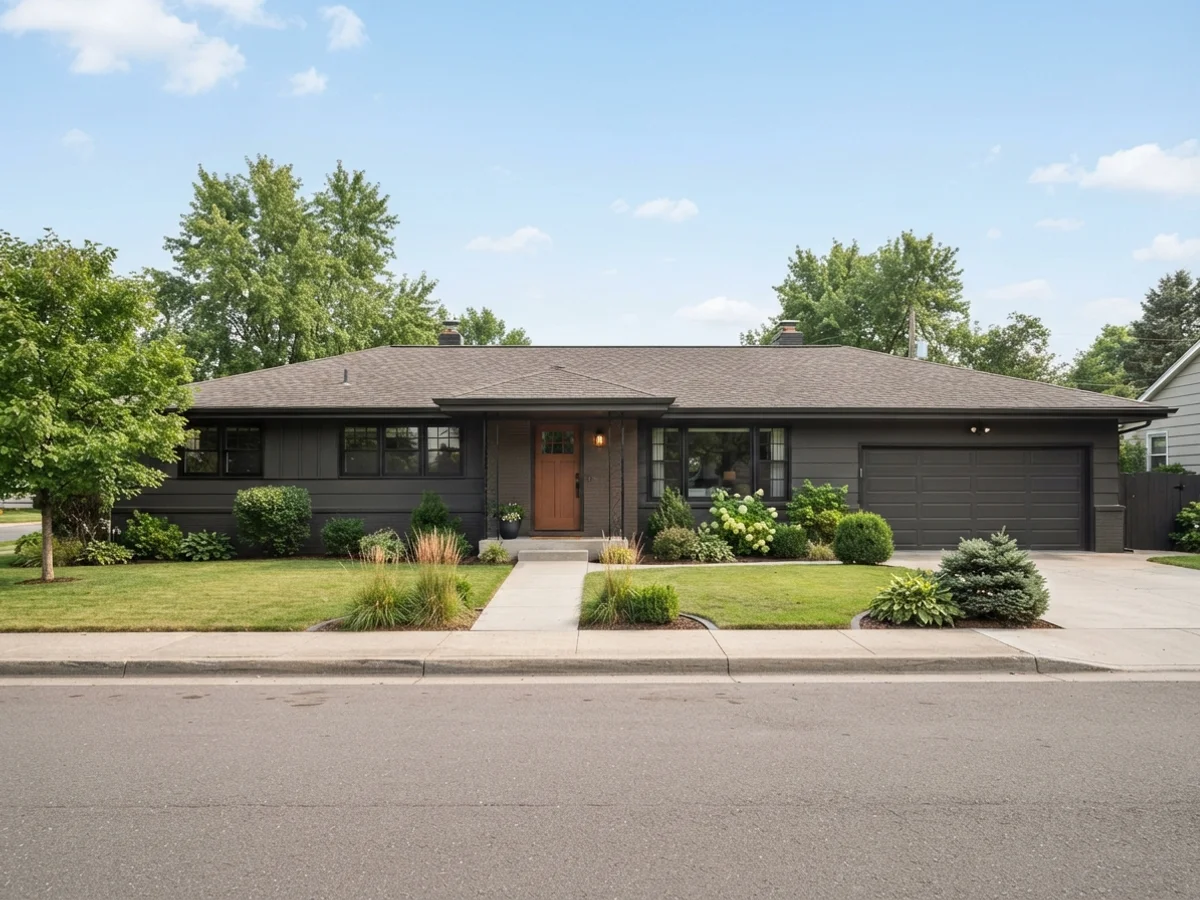
The Modern Ranch — Dark Body, Warm Wood Door
One deep charcoal over the whole body — siding, trim, fascia, even the gutters. That single move turns the ranch’s long low line from a liability into the whole point: nothing chops the facade into pieces, so the house reads as one confident horizontal band. The warmth comes from exactly one spot — a natural wood front door, or Cavern Clay if you’d rather paint than stain. This is the scheme behind most of the "modern ranch" photos being pinned right now. It wants decent eaves and some landscaping in front; on a bare lot a full-dark house can feel heavy.
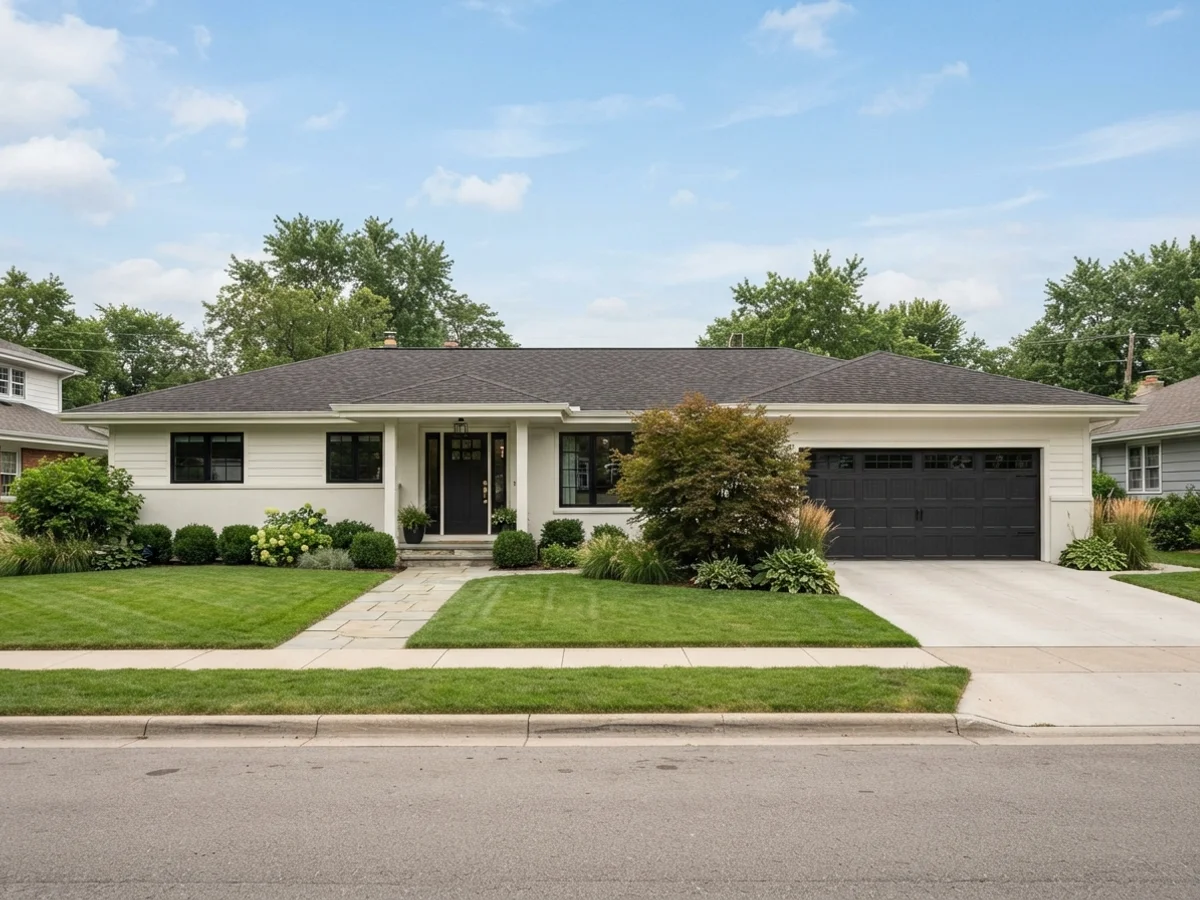
White Ranch + Black Windows
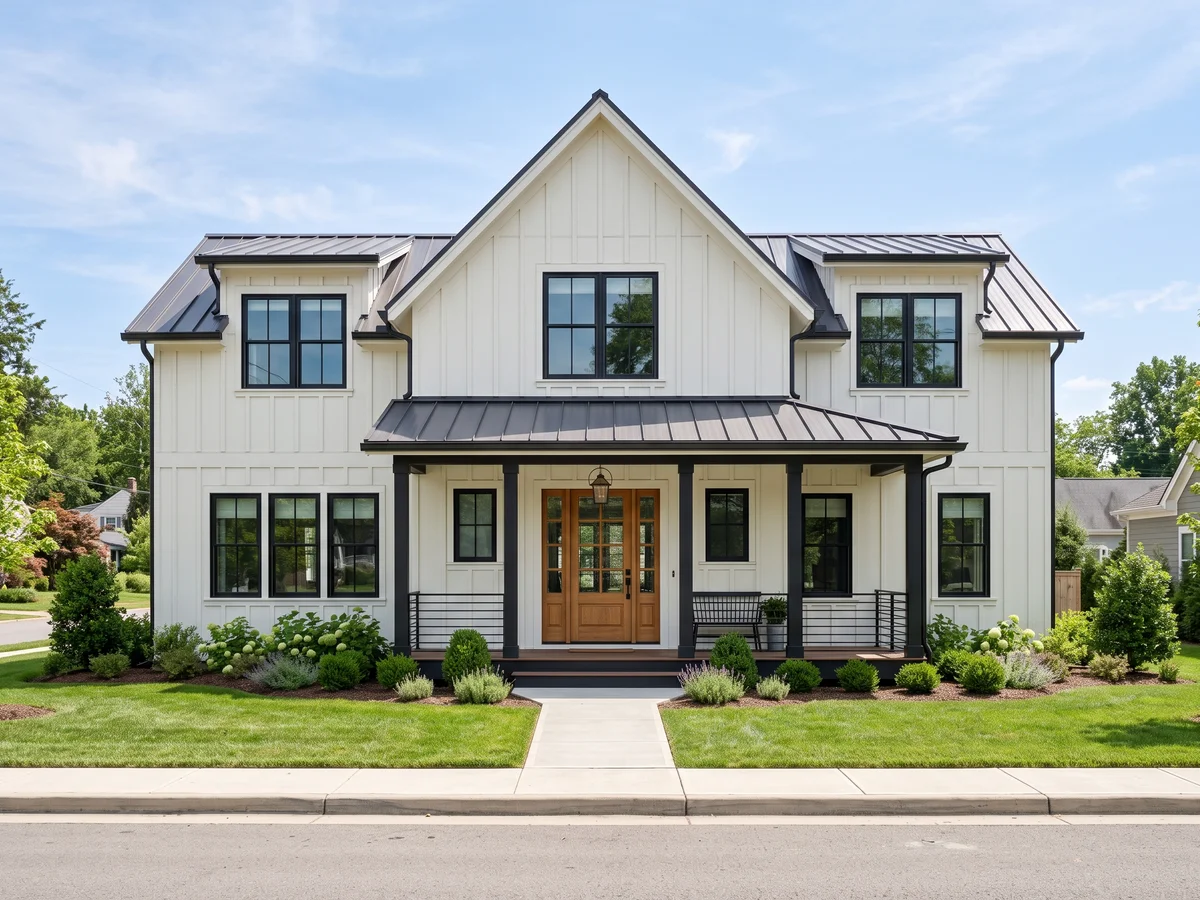
The cleanest update a ranch can get, and the one that photographs best. Alabaster dominates exteriors for a reason: it stays soft in full sun where brighter whites glare. Run it over body and trim as one color. Then let black windows, a black door, and black exterior lights do all the contrast. One honest caveat — if your windows are white vinyl and staying that way, this scheme loses its engine. Pick the greige scheme below instead, or commit to black shutters and a black door for the contrast.
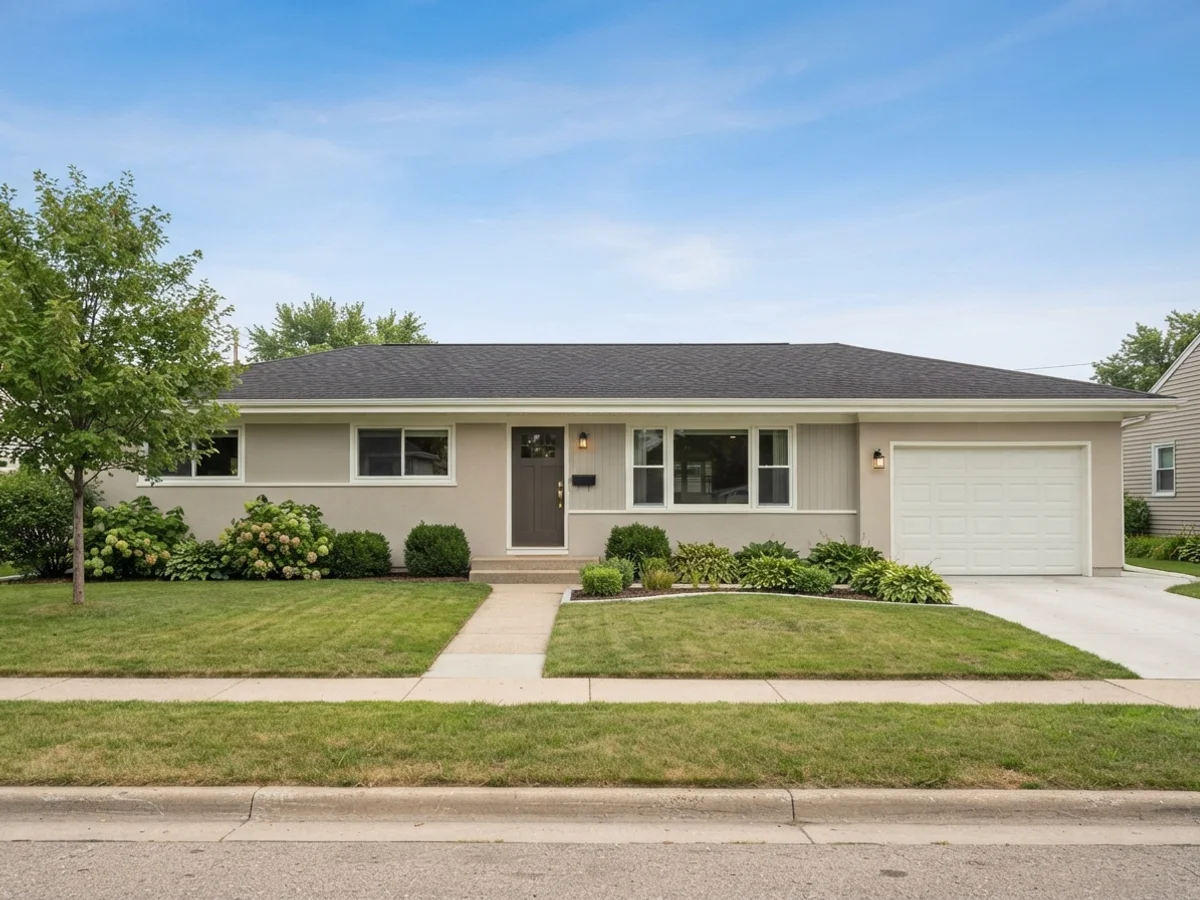
Greige + Crisp White
The safe-but-current scheme, and the best seller on small ranches. Agreeable Gray is a true greige — gray enough to look updated, warm enough not to go cold next to a brown roof. Crisp white trim around windows, fascia, and the garage frame gives the facade rhythm without high drama. A near-black bronze door anchors the entry. If your fixed elements lean warm — tan roof, cream stone, orange-brown brick — swap the body to Accessible Beige. Same idea, one step warmer.
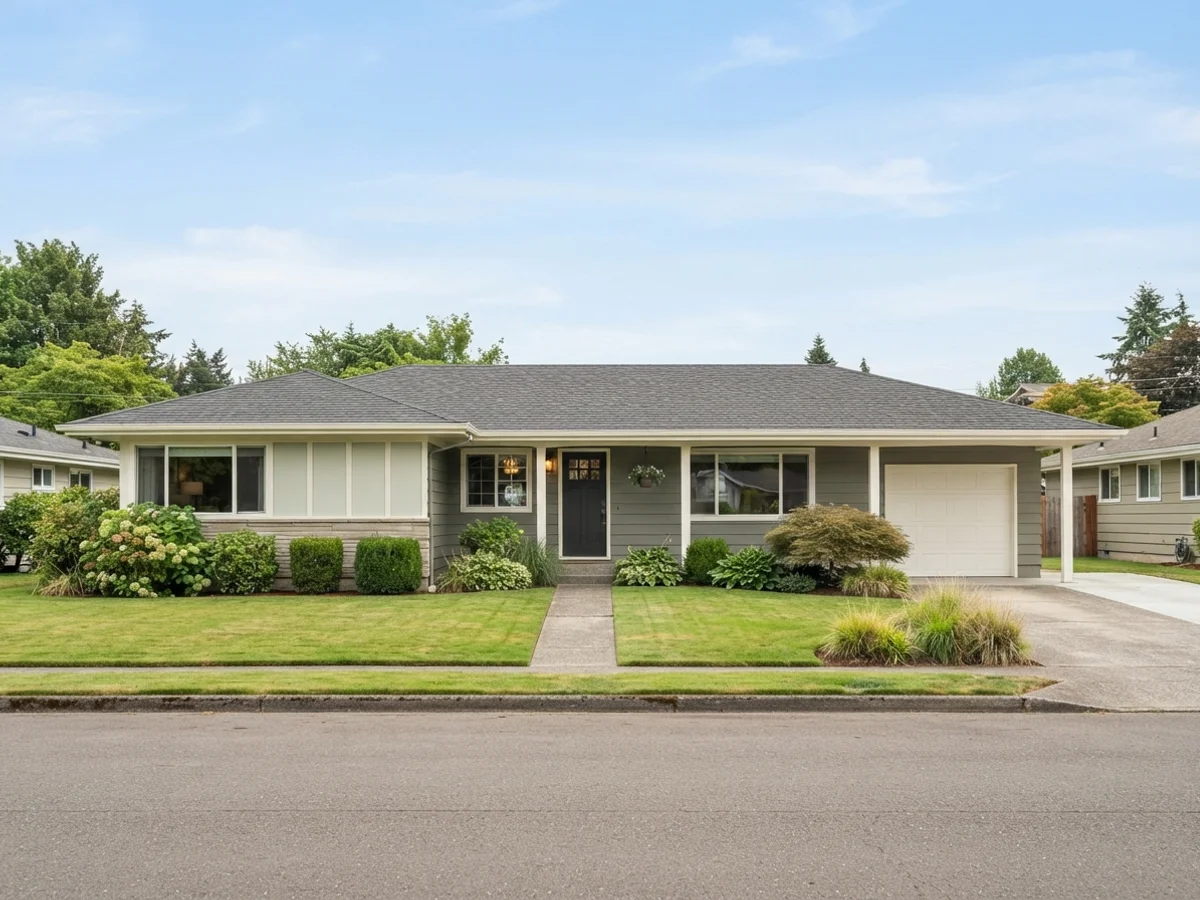
The Sage Ranch
Muted green is the ranch color of the moment, and it suits the style’s ground-hugging posture. A sage house sits into its yard instead of on it. Evergreen Fog is the moody mid-tone version; Clary Sage is the lighter, sunnier take for small ranches that can’t afford to get darker. Either way, keep the trim a soft white rather than a stark one, and give the door real weight with a near-black. This scheme is strongest on ranches with trees and shrubs around them — the green talks to the landscape.
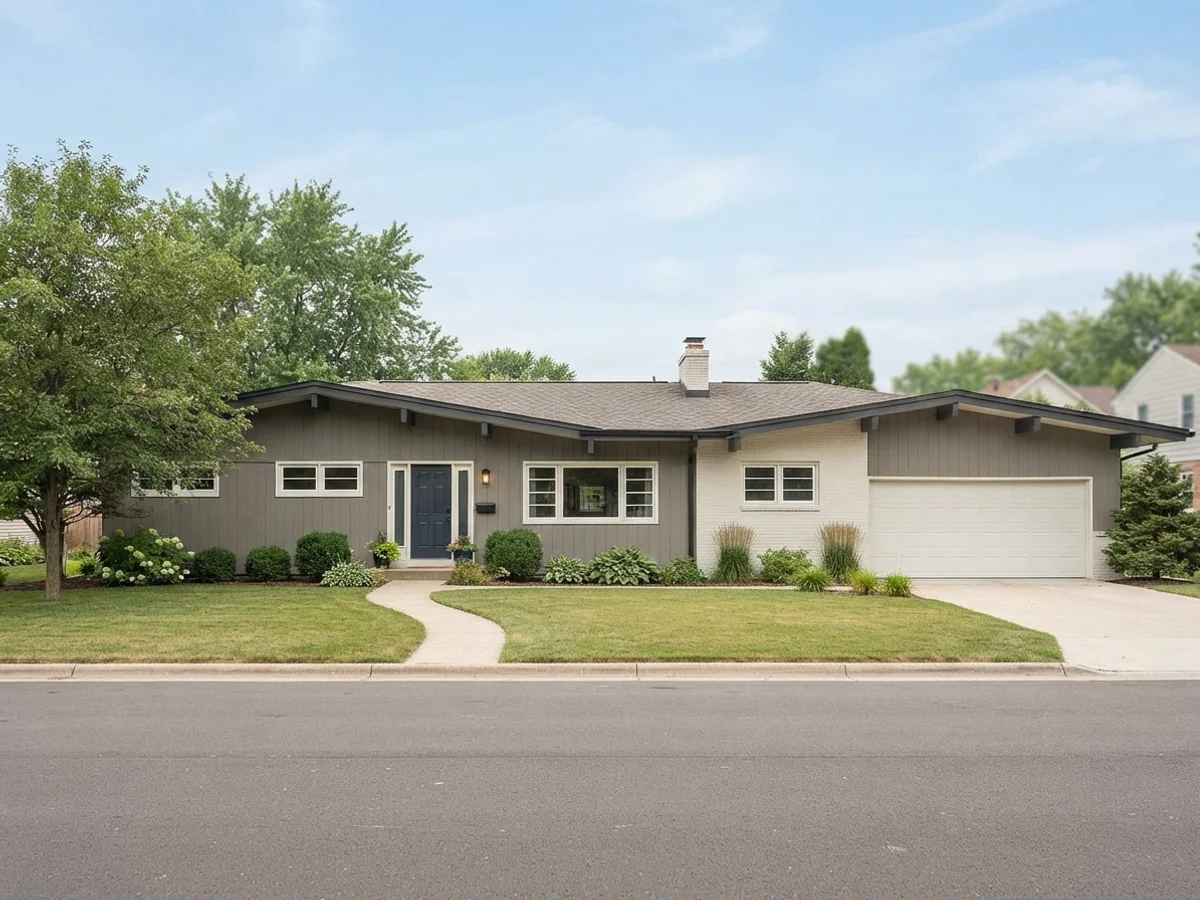
Mid-Century Two-Tone With Painted Brick
Lots of ranches are part brick, part siding. The mid-century answer: stop pretending they’re one material. Paint the brick section a clean white, run the siding in a true mid gray, and let the door go saturated navy. The rule that makes two-tone work — change color where the material changes, never in the middle of a wall. Chelsea Gray against White Dove brick gives you the layered, architectural look the original builders intended. Hale Navy at the entry is period-correct without being a costume.
The Modern Ranch, on the House
Body and trim run as one continuous color, which is the move that keeps a low facade from chopping into pieces. Sash is the darkest color and lives only on the window frames. The door is the one warm note.
On a ranch, running the body and trim in one color is what makes the long, low line read as deliberate instead of accidental — fascia, corner boards and gutters all disappear into the same band as the siding, so nothing chops the facade into pieces. The sash color covers only the window frames, almost always the darkest value on the house. The door gets the single warm spot: a natural wood door, or a color like Cavern Clay if you'd rather paint than stain.
The garage door usually takes the body color too — see below for when it should not. And the front door is the cheapest way to test how much contrast your ranch can carry before committing to a whole-house repaint.
Upload the photo. The visualizer paints siding, trim and door separately, so you can push the contrast and pull it back without starting over.
Five Ranch Looks, Rendered
Curated looks from our exterior render set. Each one opens the visualizer with its siding, trim and door colors already loaded.
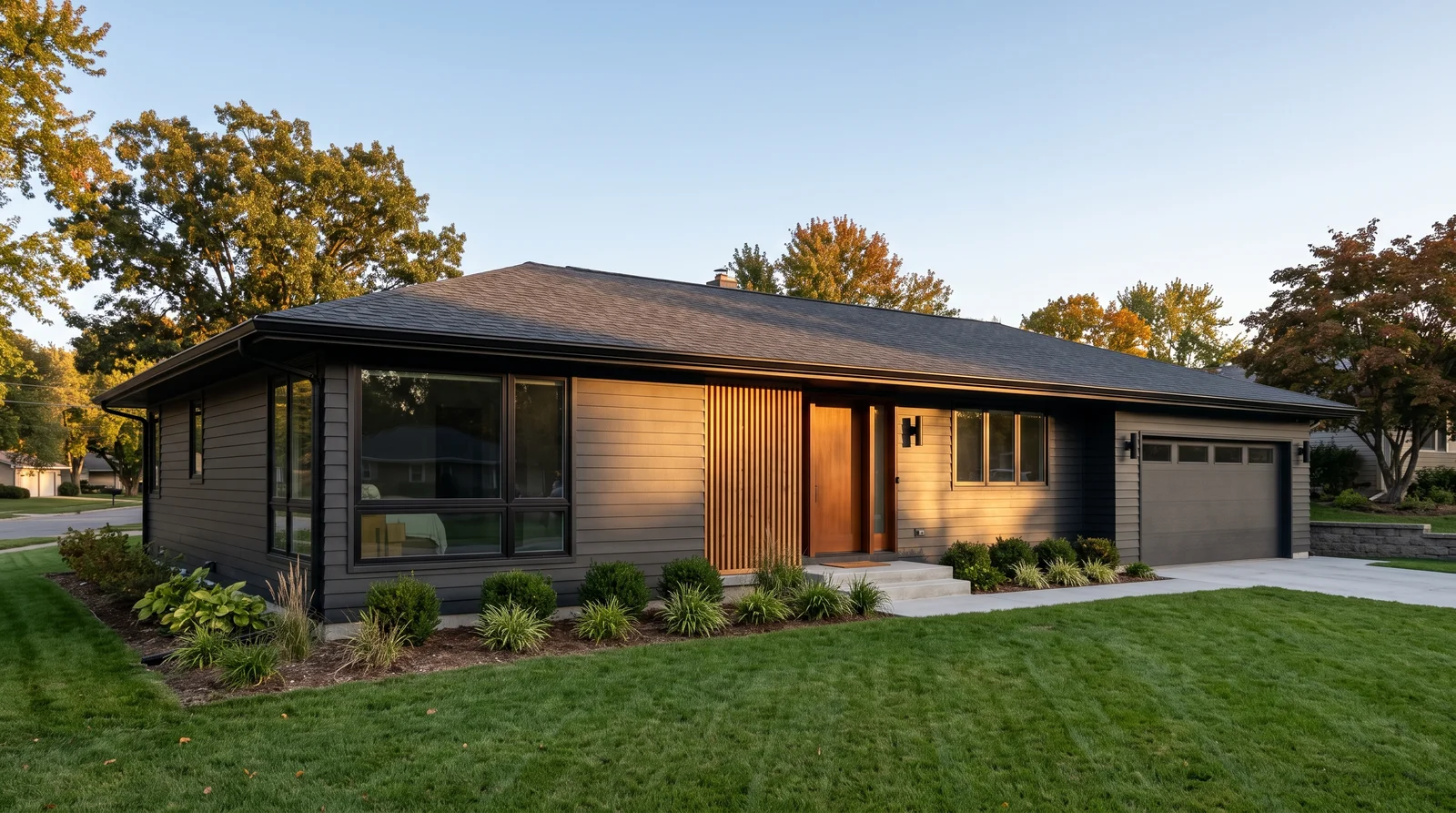
Charcoal siding with warm cedar at the entry - the update that makes a plain 1960s ranch look deliberate.
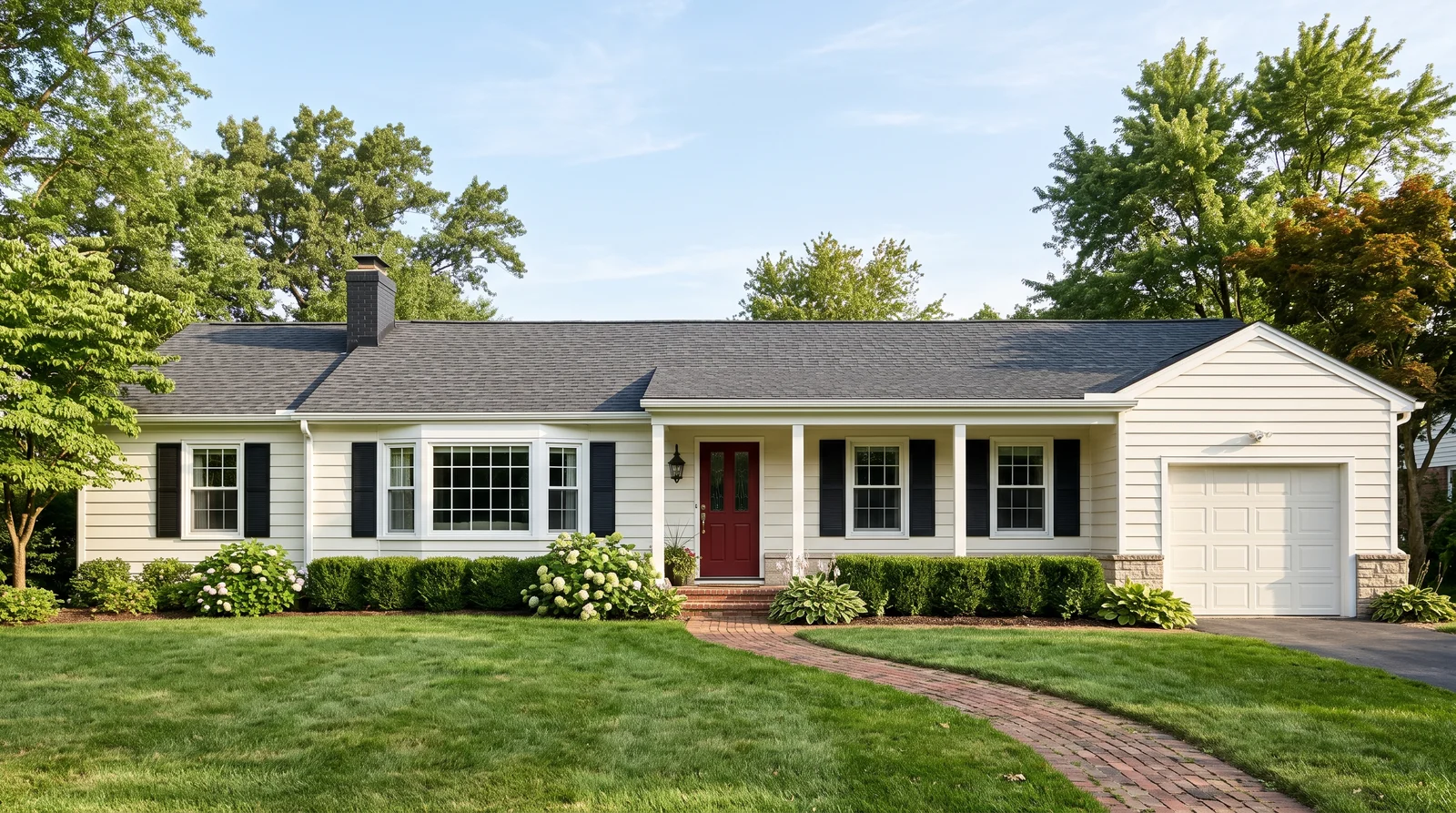
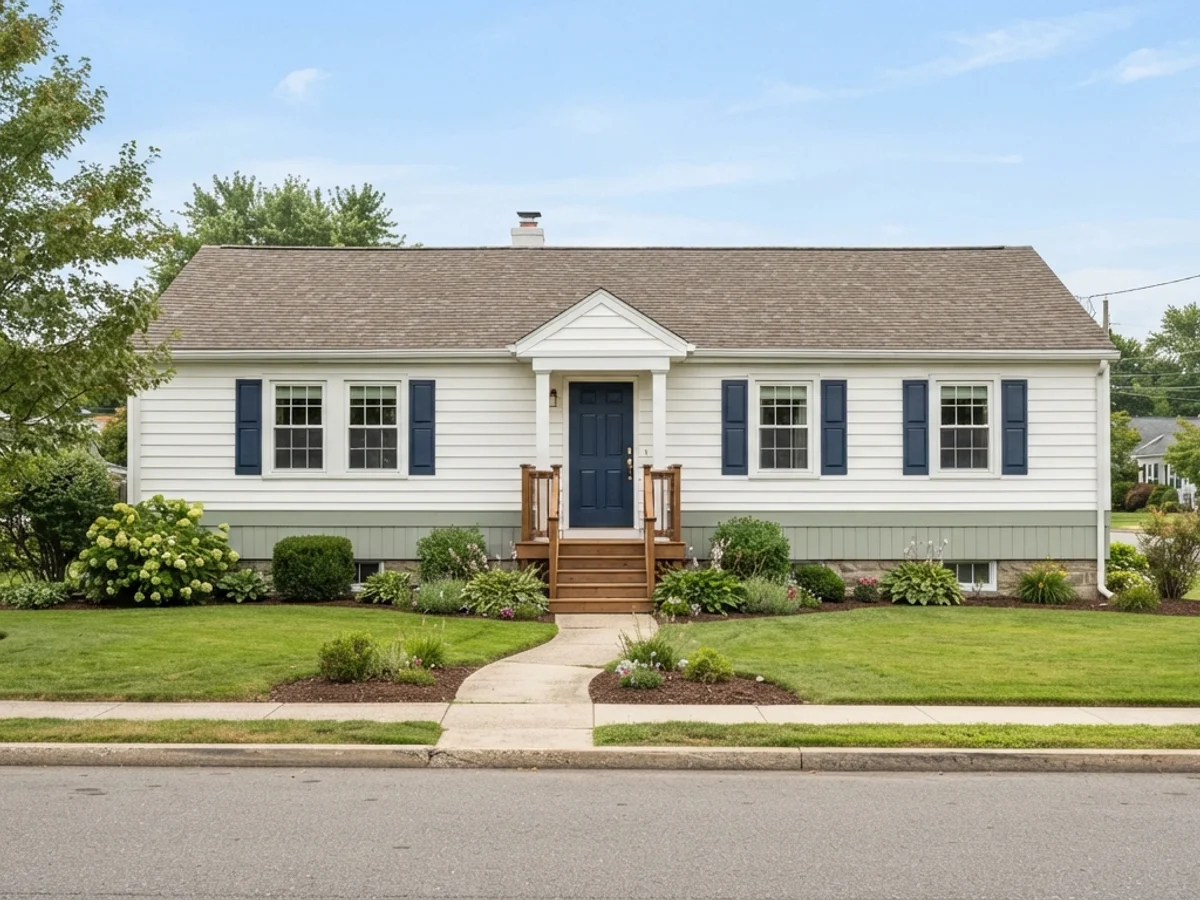
Soft white siding, black shutters and a red door - the scheme that has never once looked wrong on a ranch.
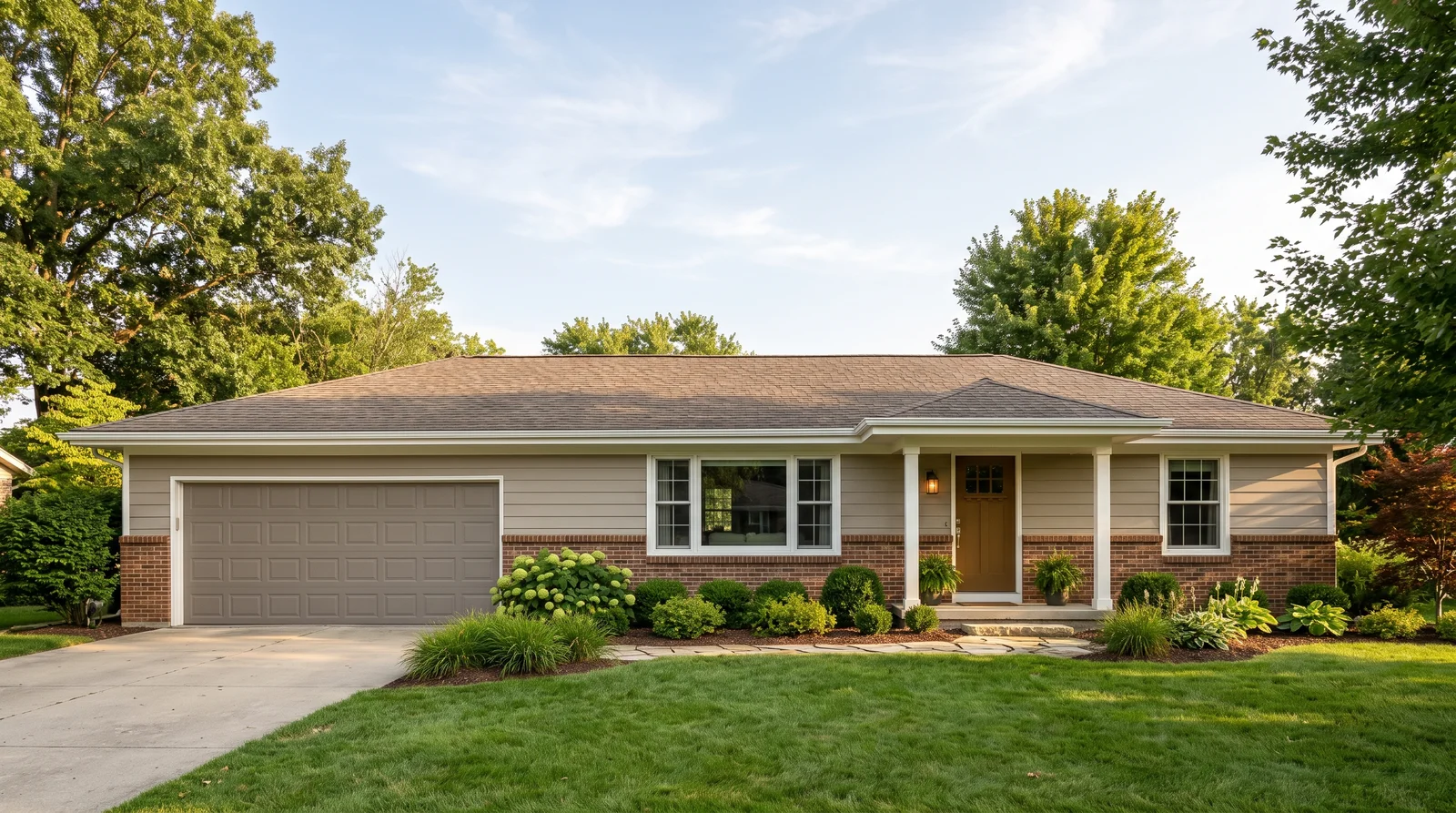
The fix for the half-brick, half-siding ranch: one warm greige that makes the brick look chosen, not inherited.
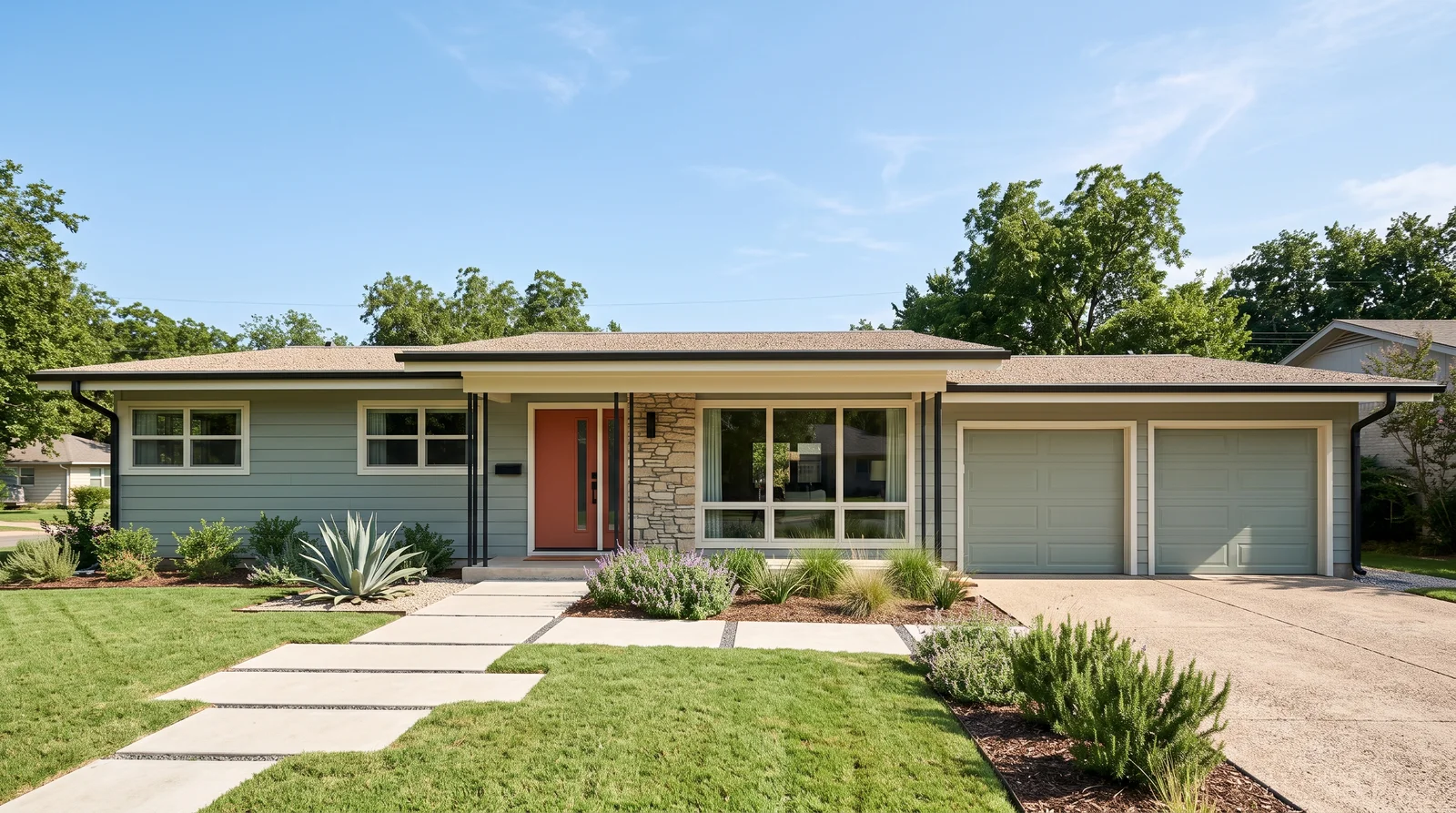
A soft green body with a clay door, the scheme that suits a 1955 ranch better than any gray ever will.
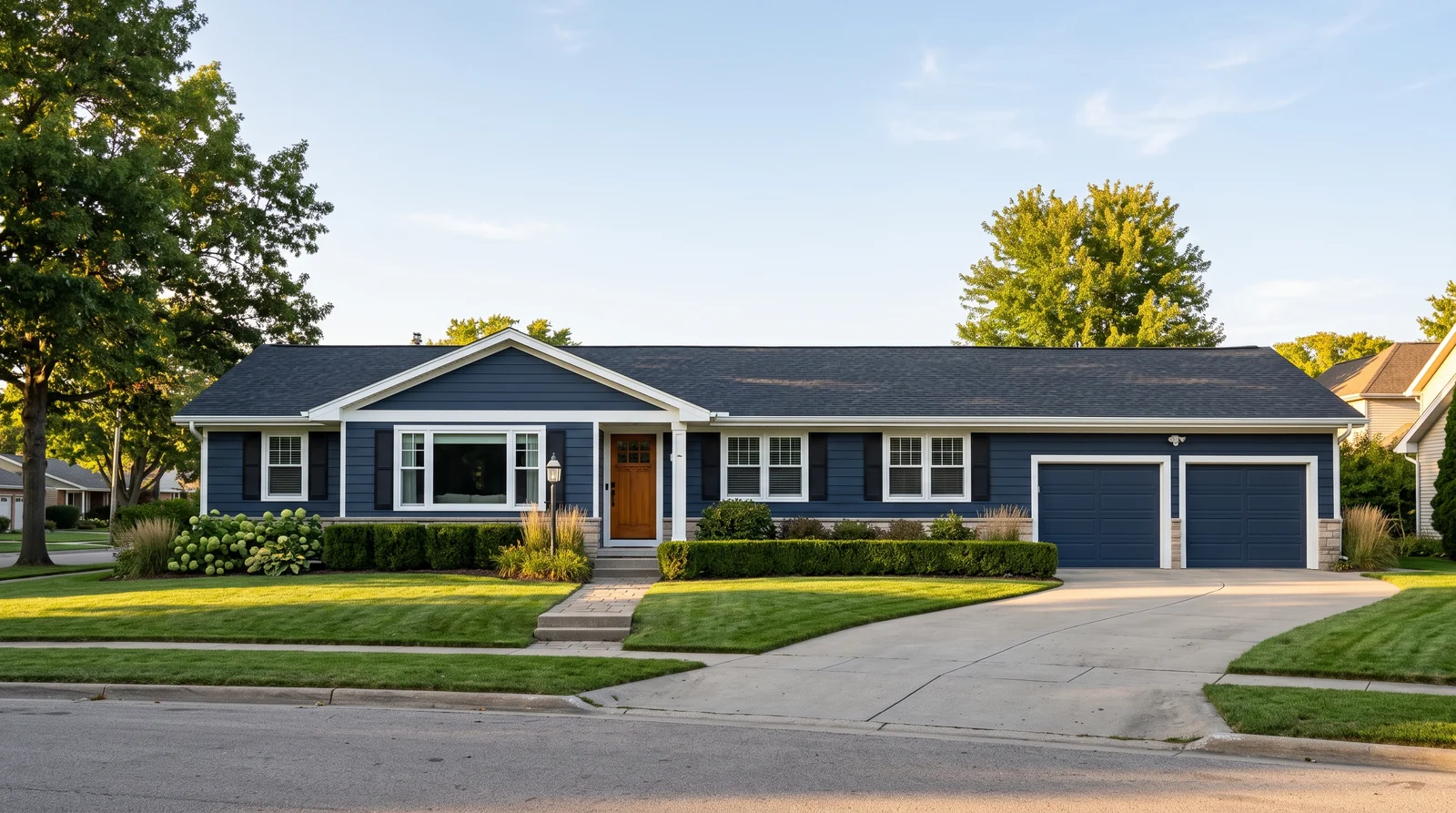
Deep navy siding with bright white trim - color with a backbone, and still safe enough for any street.
From Extra White to Tricorn Black
Ranch color runs from crisp whites through true greiges to near-black. Pick a body from the middle or the light end, trim close to it, and save black or near-black for windows and the door. Hover for the name, click to try it.
The Garage Door: Two Approaches
On most ranches the garage door is the single biggest paintable rectangle facing the street — a sixteen-foot panel on a facade maybe fifty feet wide. Whatever color it wears, it wears loudly.
Match It to the Body
- Painted the body color, that huge rectangle disappears into the band of the house instead of competing with it
- The eye slides past it to the front door — the thing you actually want people to see
- Never default to white on a colored body — a white garage door only belongs when the trim itself is white
The Accent Carriage Door
- Works only on a real wood-look door with real panels and hardware
- A flat builder-grade steel door painted to stand out is just a flat steel door, louder
- If yours is plain, spend the drama at the entry instead — try both on your photo before deciding, it only takes two renders
Three Ways to Make a Small Ranch Look Bigger
Color cannot add square footage. On a small ranch it convincingly fakes some.
Go Light on the Body
A high-LRV white or greige reflects light up the wall and visually raises the eave line. Alabaster (LRV 82) and Agreeable Gray (LRV 60) both do it; anything past roughly LRV 40 starts working against you.
Remove the Clutter
Paint gutters, downspouts and fascia the same as the body, or the trim color if fascia is part of a continuous trim line. Six colors on a small house reads busy; two reads bigger, every time.
Ground It, Don't Stripe It
Paint exposed foundation a dark neutral close to the soil color, so the house sits on a base instead of floating on a gray concrete line. Keep the door as the one dark accent up top.
Ranches With Brick or Stone Sections
Most ranches are not one material. A brick skirt, a stone chimney wall, a brick front with siding on the gable ends — the fixed material is the first fact of your color scheme, not an obstacle to it. Pull the body color from the mortar or from the quietest tone inside the brick and the pairing looks intentional. Fight the brick with a color that shares none of its undertones and no amount of trim work saves it. If the brick is the dominant surface, start with the brick house color guide instead — it covers keep-the-brick schemes and when painting it makes sense.
And the shutters question: most ranches are better without them. Original ranch windows are wide horizontal units. Skinny decorative shutters beside a wide window read as an obvious fake. If your windows are taller than they are wide, shutters in the trim or door color can work — the shutter color guide covers the pairings. If not, spend the shutter budget on a strong front door color instead; on a long facade one saturated door does more than four pairs of shutters. Modernizing a manufactured home with the same long-low proportions? The mobile home page adapts these schemes, and the white-body playbook overlaps heavily with the farmhouse guide.
More Ranch Colors That Work
Ten more ranch-proven colors — softer greiges, warm whites, quieter sages, and two deep moody bodies — to swap into any scheme above or preview straight on your own photo.
Ranch Color FAQ
Should the garage door match the house color?
Almost always, yes. Painted the body color, that big rectangle disappears into the house instead of pulling attention from the front door. White only works when the trim itself is white. Save an accent color for a real wood-look carriage door with panels and hardware — a plain steel door painted loud is still a plain steel door.
How do I make a small ranch look bigger?
Three moves: a light body color like Alabaster or Agreeable Gray to raise the visual eave line, painting gutters and fascia the same as the body to cut clutter, and a dark foundation so the house sits on a base instead of floating on gray concrete.
What do I do with a brick or stone section?
Pull the body color from the mortar or the quietest tone in the brick rather than fighting it. If brick or stone dominates the facade, start from the brick house color guide instead — it covers keep-the-brick schemes and when painting makes sense.
Does a ranch need shutters?
Usually not. Original ranch windows are wide, and skinny decorative shutters beside a wide window read as an obvious add-on. If your windows are taller than wide, shutters in the trim or door color can work; otherwise put that budget into a stronger front door color instead.
Related Styles and Surfaces
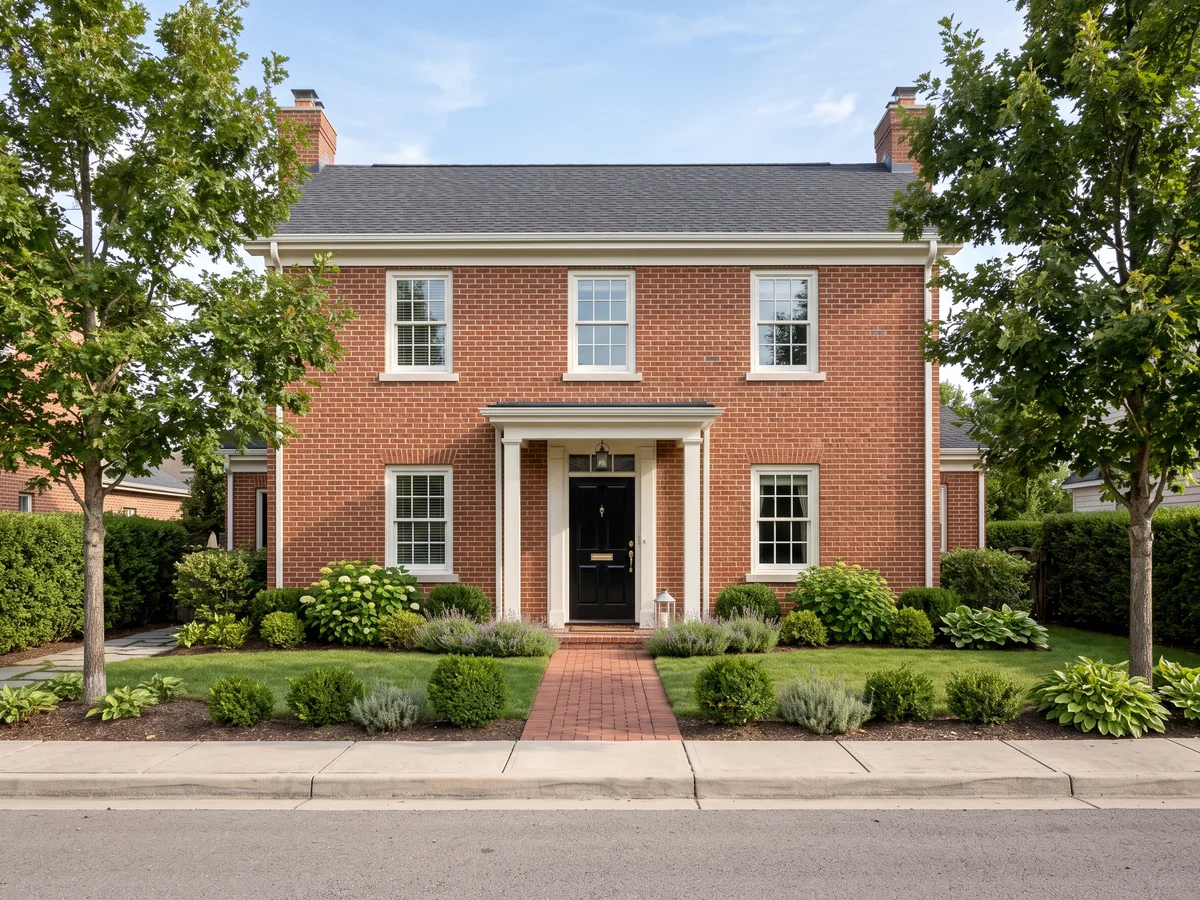
Trim and door colors that flatter brick
Crisp white bodies and black windows
The same long-low logic on a budget
One photo of your ranch, every scheme on this page — free to start.