See Your Front Door in Any Color
One quart of paint, one afternoon — no other change this cheap does this much for a house. Upload a photo and try ten door colors before lunch. The visualizer repaints just the door; your siding, trim, and hardware stay exactly as they are.
See Them on a Real Front Door
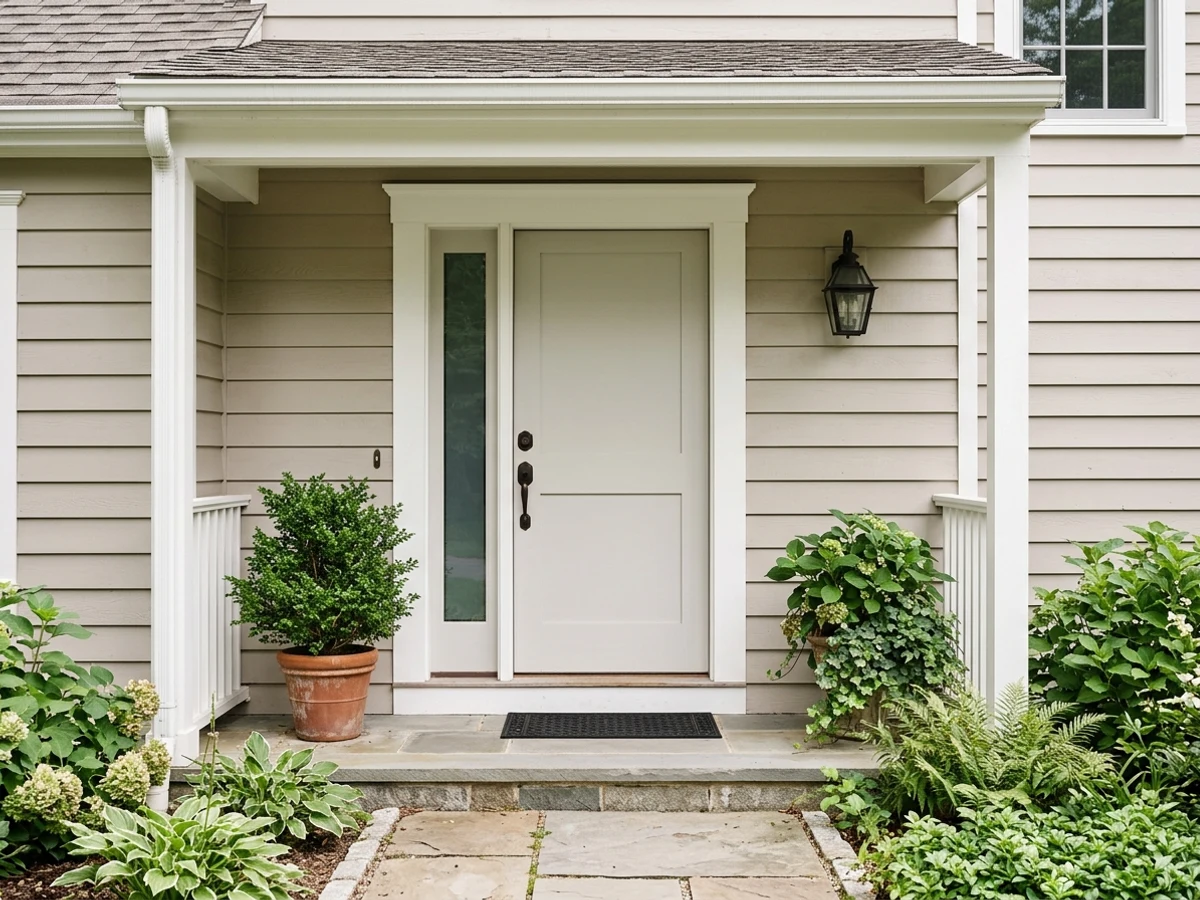
Every photo is a real render from this tool — the same entry, repainted. Tap a color, then try it on your own door.
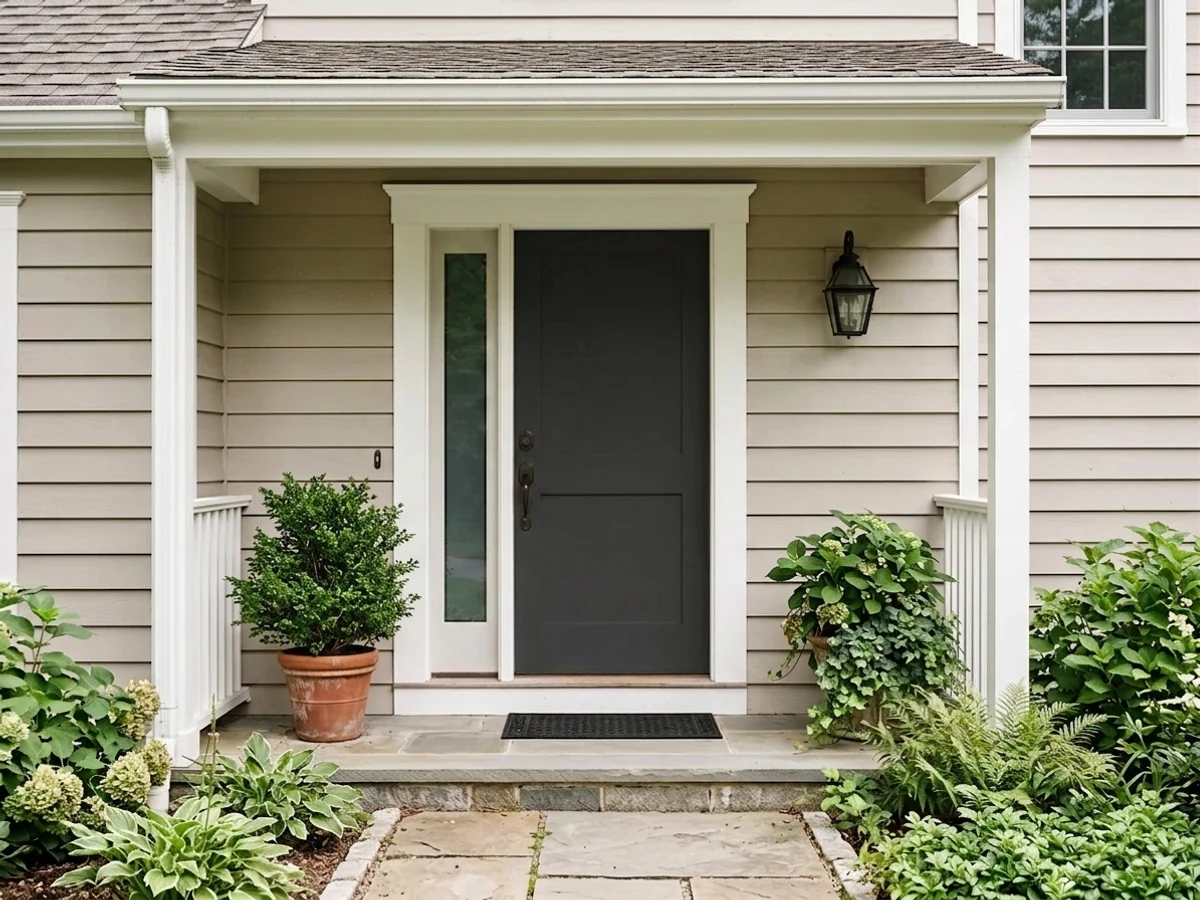
The no-regret black — works on nearly every house and every style.
Paint my door in Tricorn Black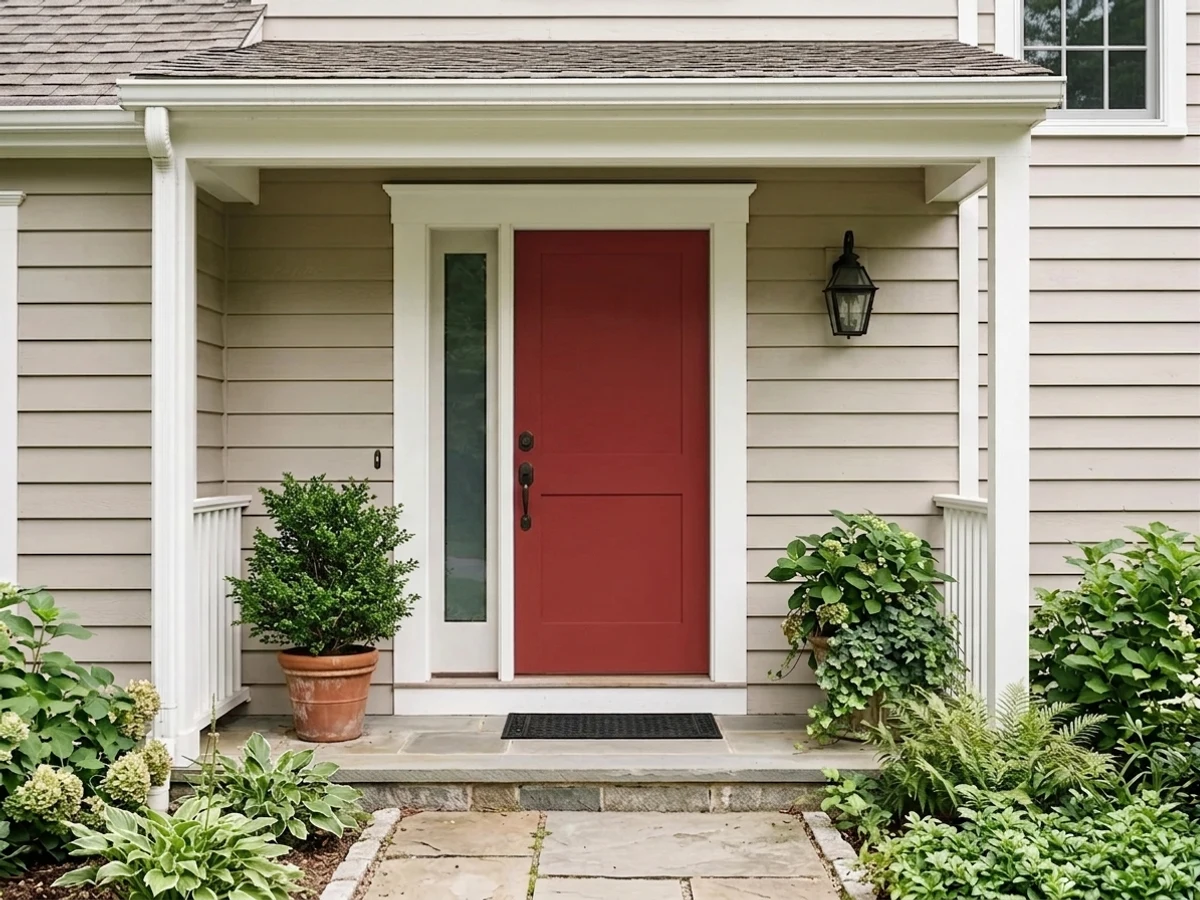
Benjamin Moore's signature red — deep enough to sit next to brick.
Paint my door in Caliente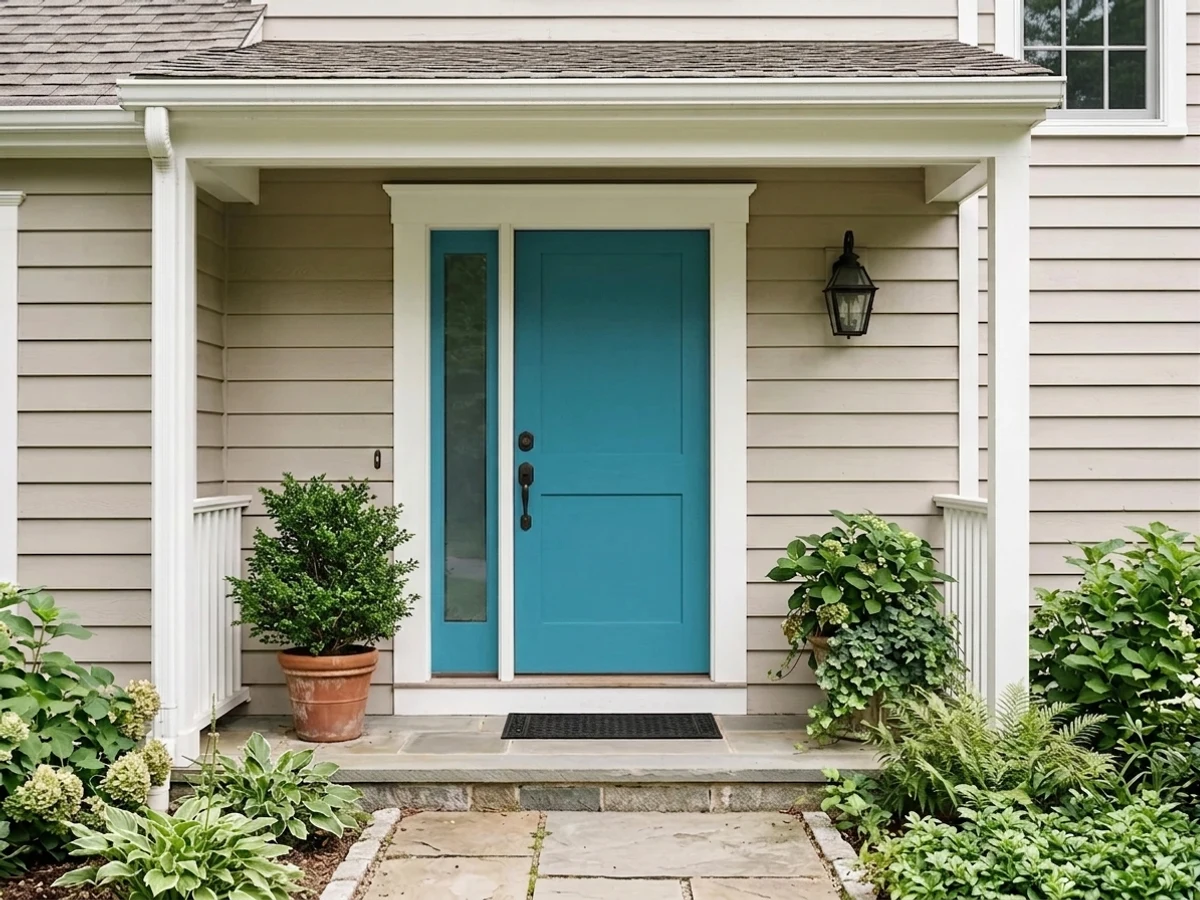
A clear turquoise — the classic cure for a gray-on-gray exterior.
Paint my door in Dream I Can FlyBlacks & Navys
The no-regret black — works on nearly every house and every style.
Paint my door in Tricorn Black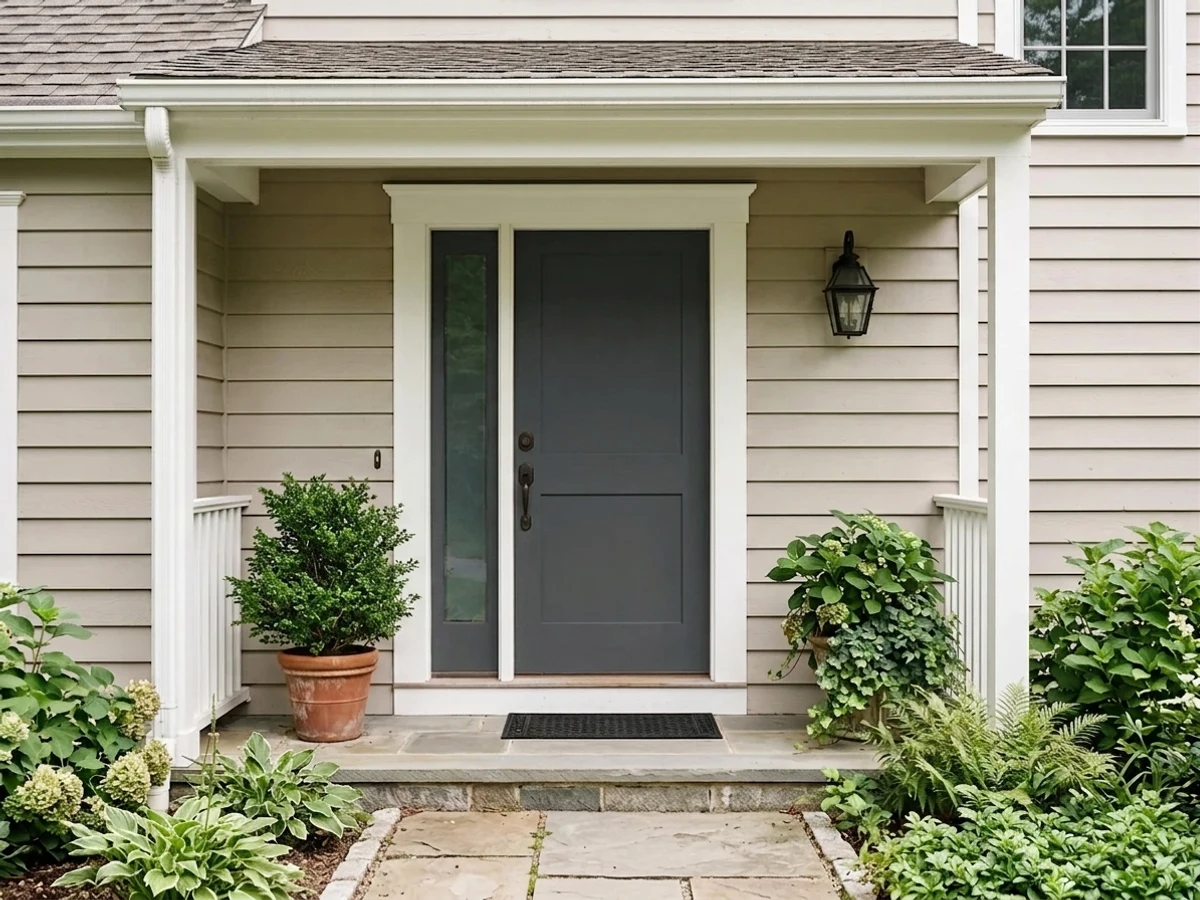
A soft black that reads less severe than true black up close.
Paint my door in Iron Ore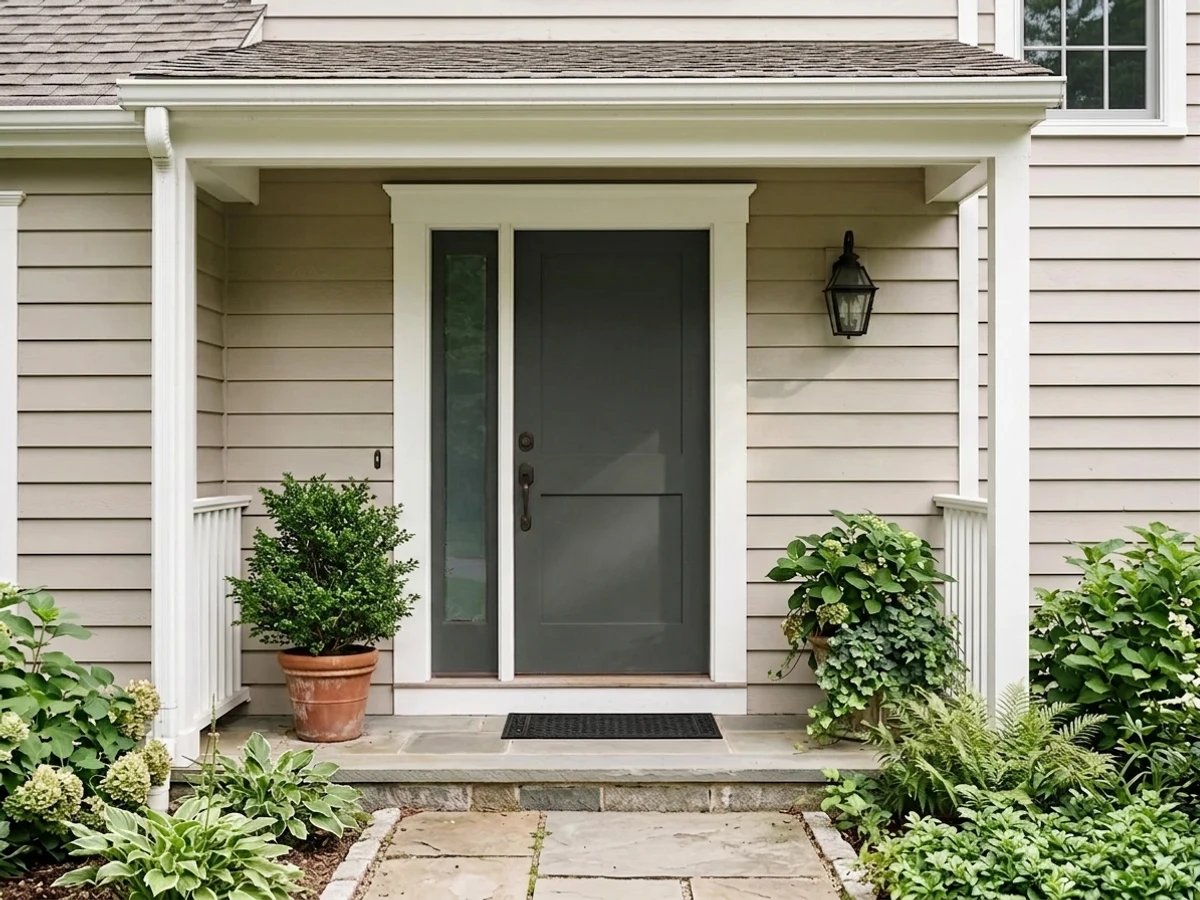
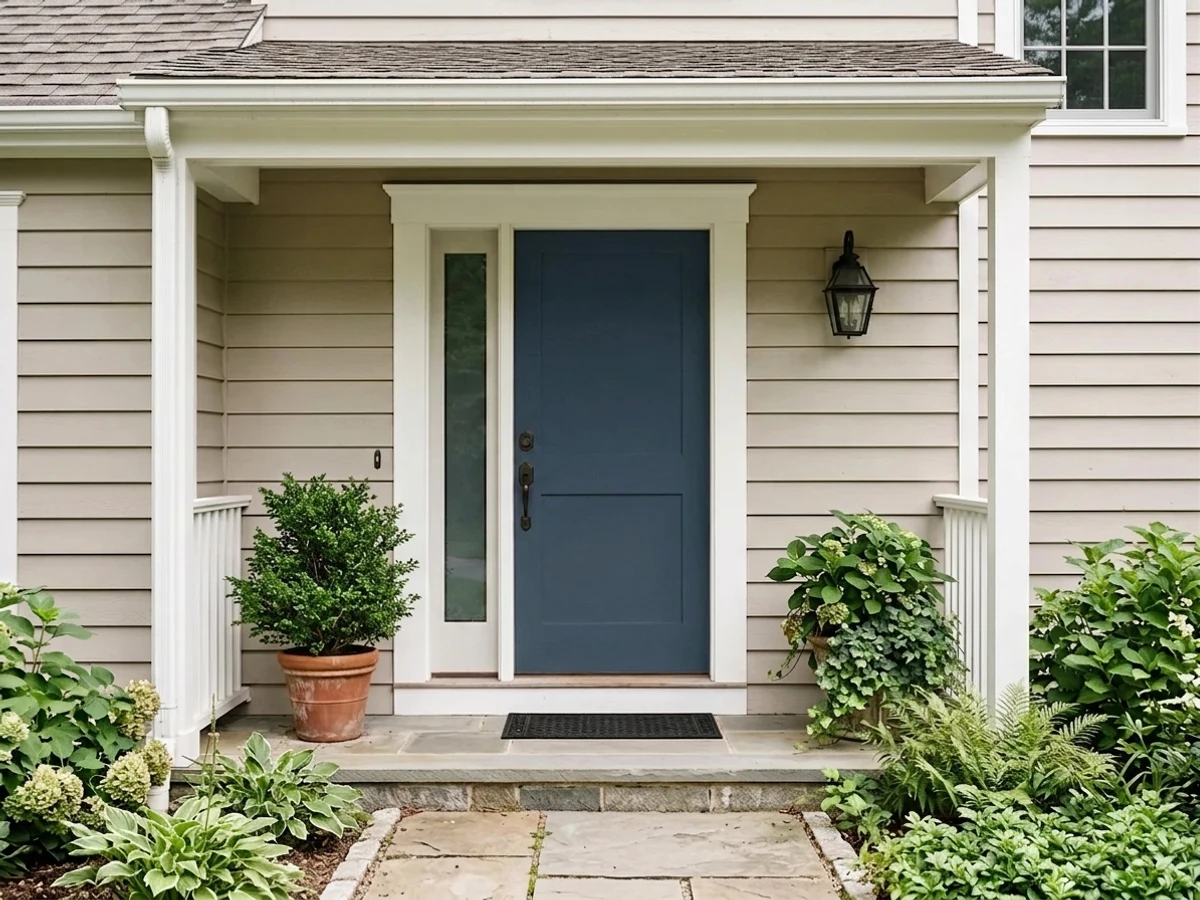
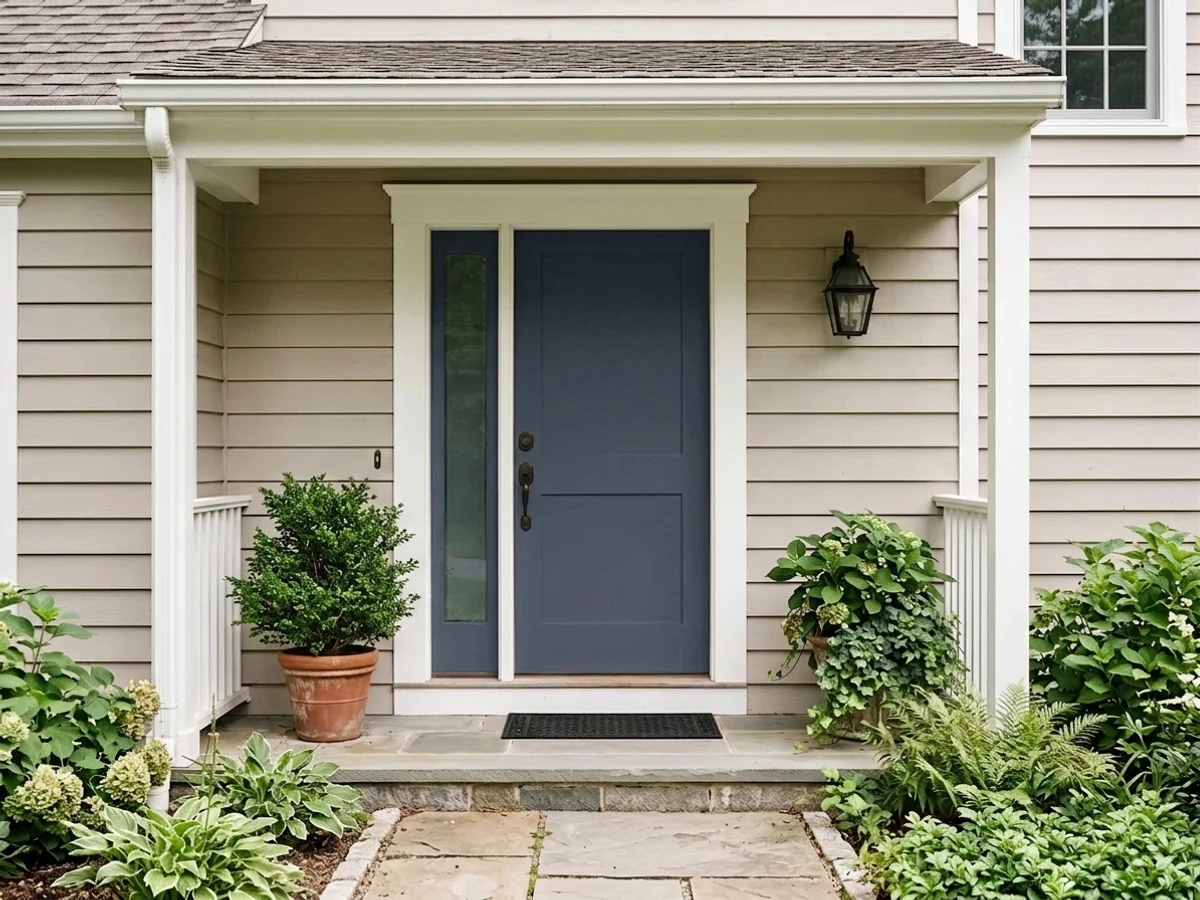
The most-searched door navy in America — formal, but with personality.
Paint my door in NavalReds
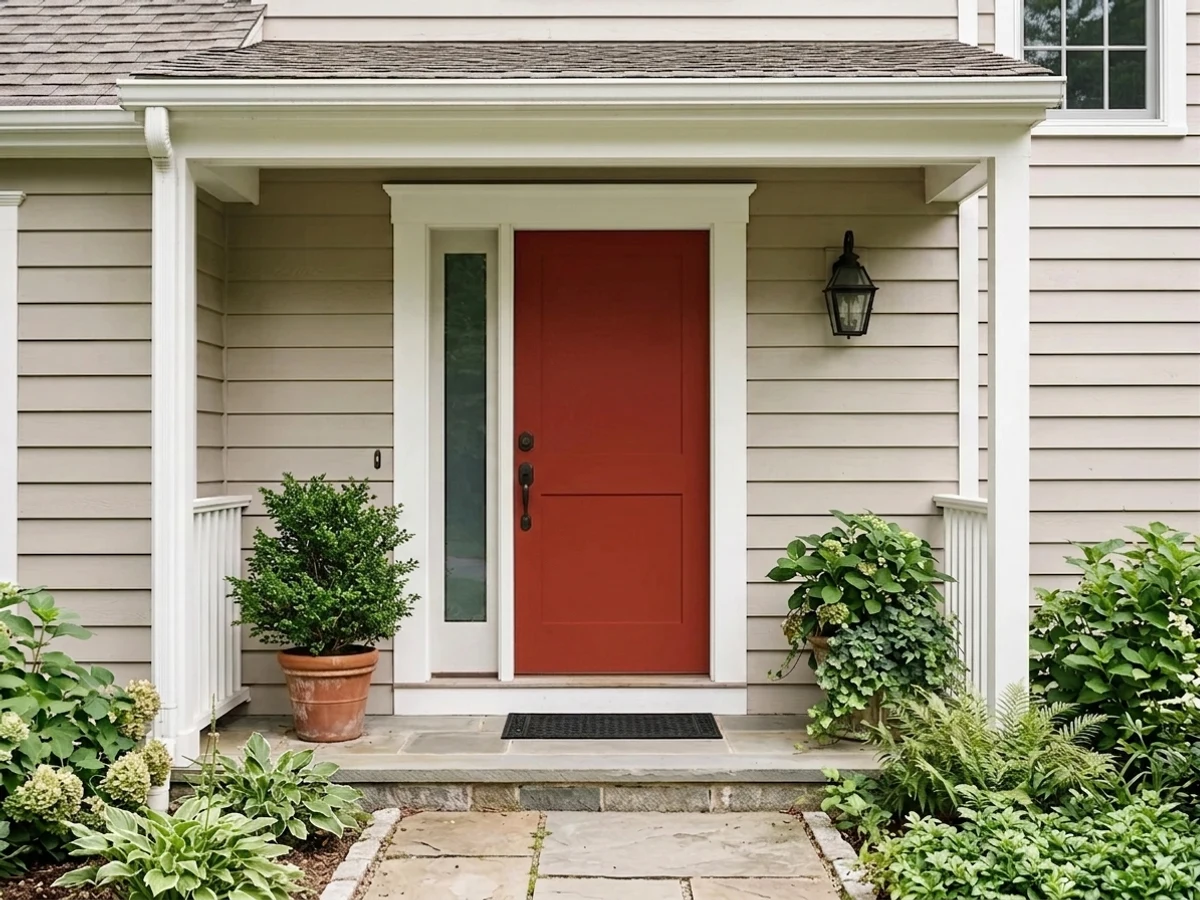
Benjamin Moore's signature red — deep enough to sit next to brick.
Paint my door in Caliente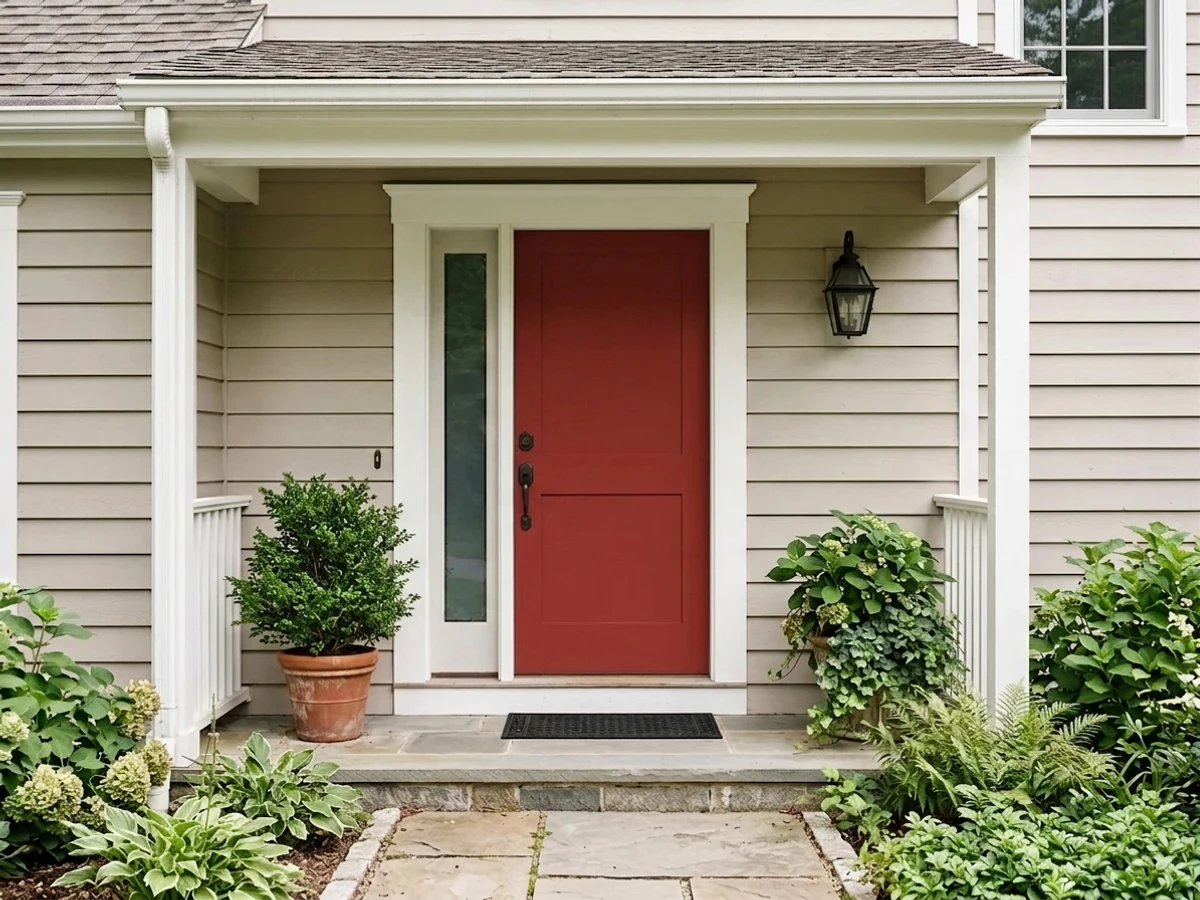
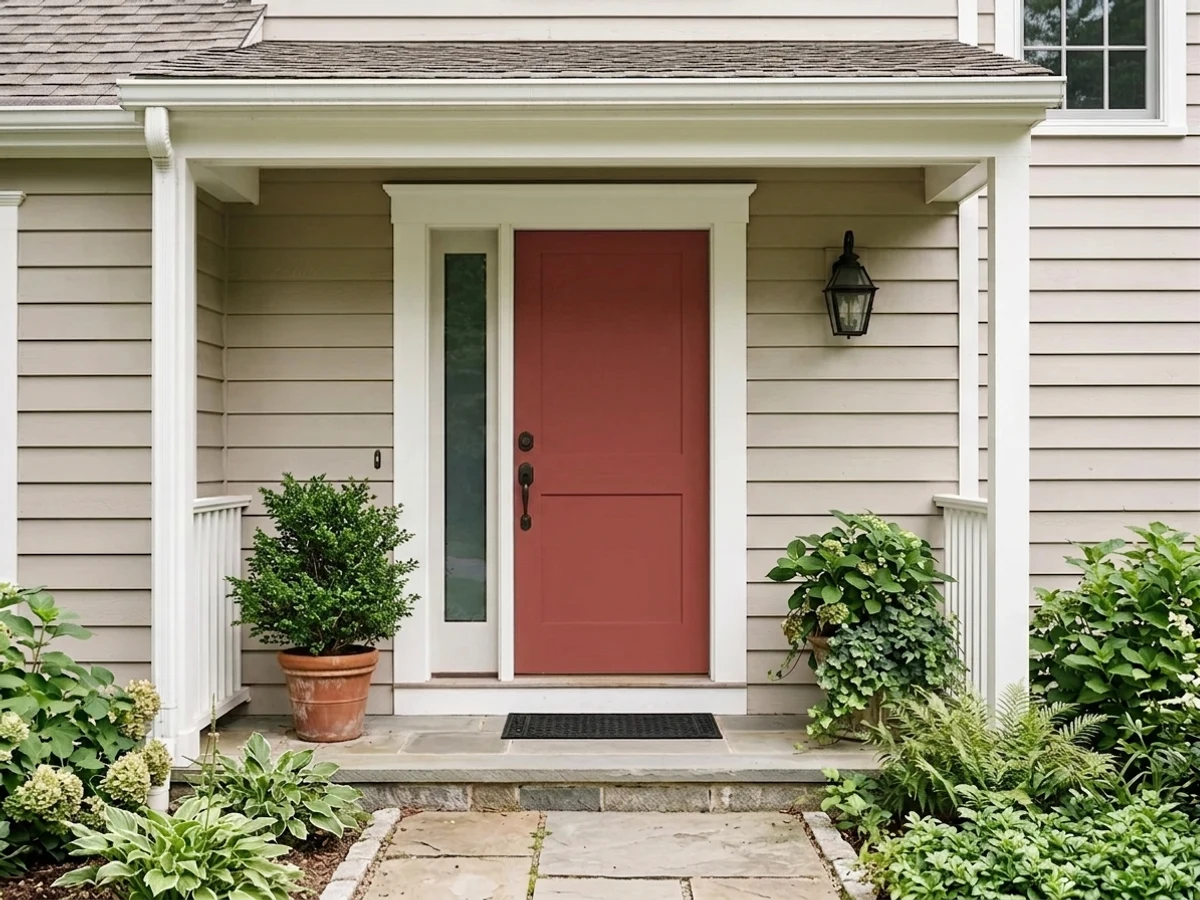
The muted, historic red — the safe pick against actual red brick.
Paint my door in Cottage Red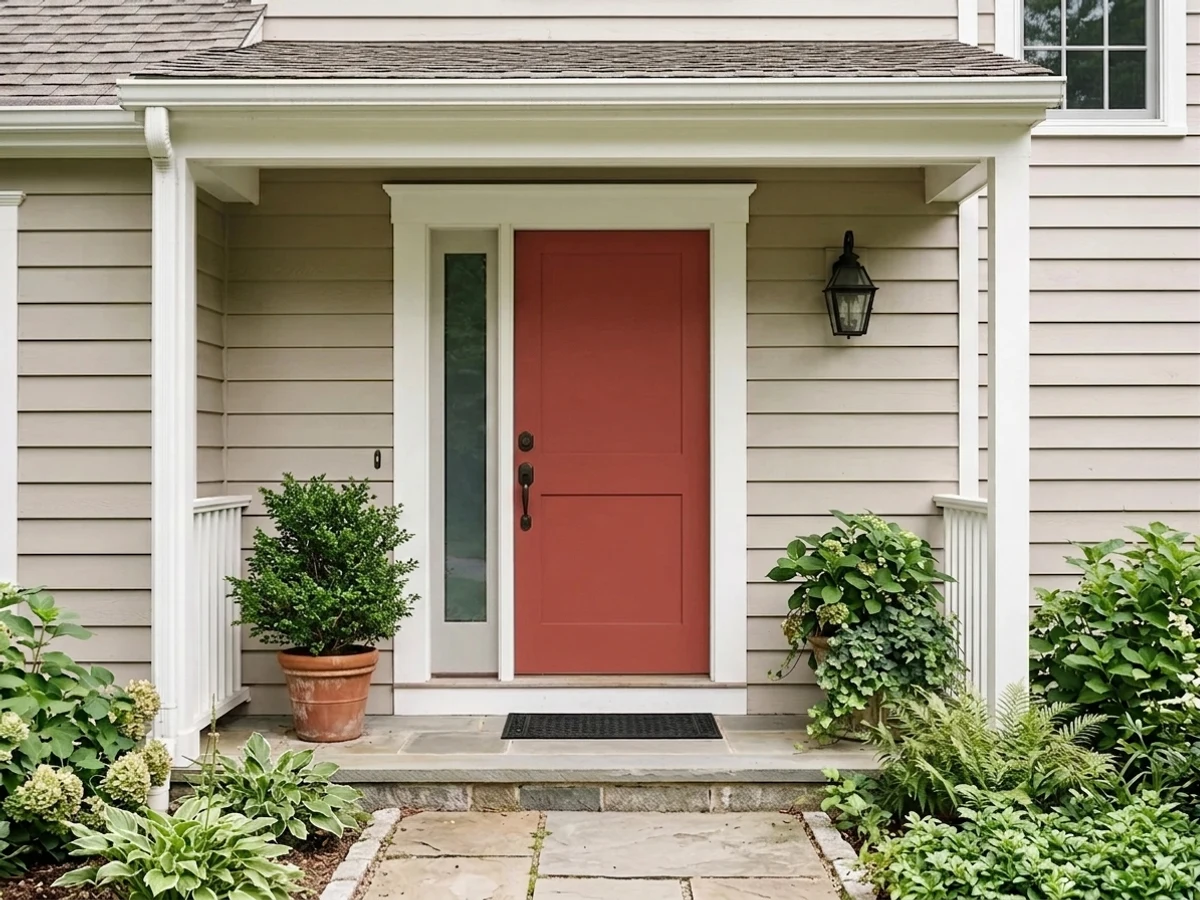
Bold & Fun
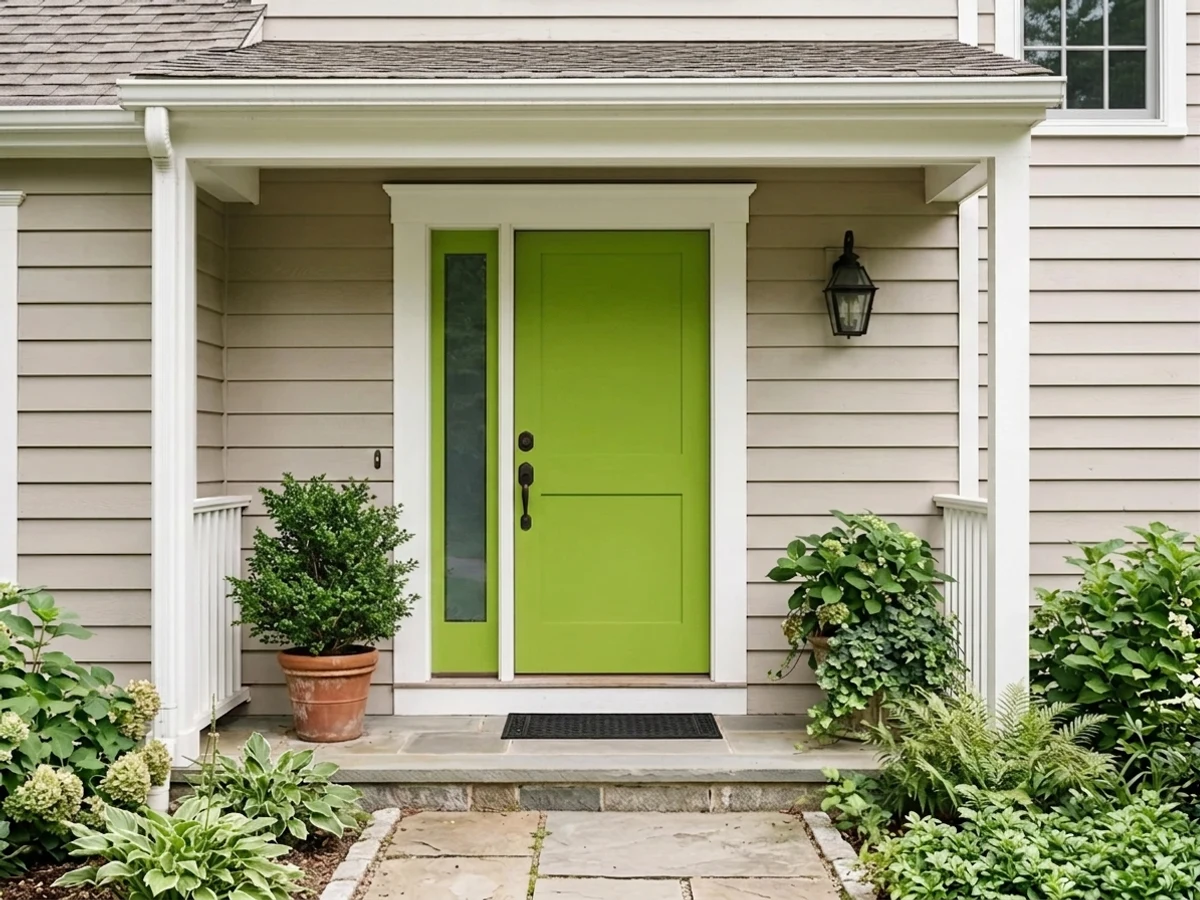
A clear turquoise — the classic cure for a gray-on-gray exterior.
Paint my door in Dream I Can Fly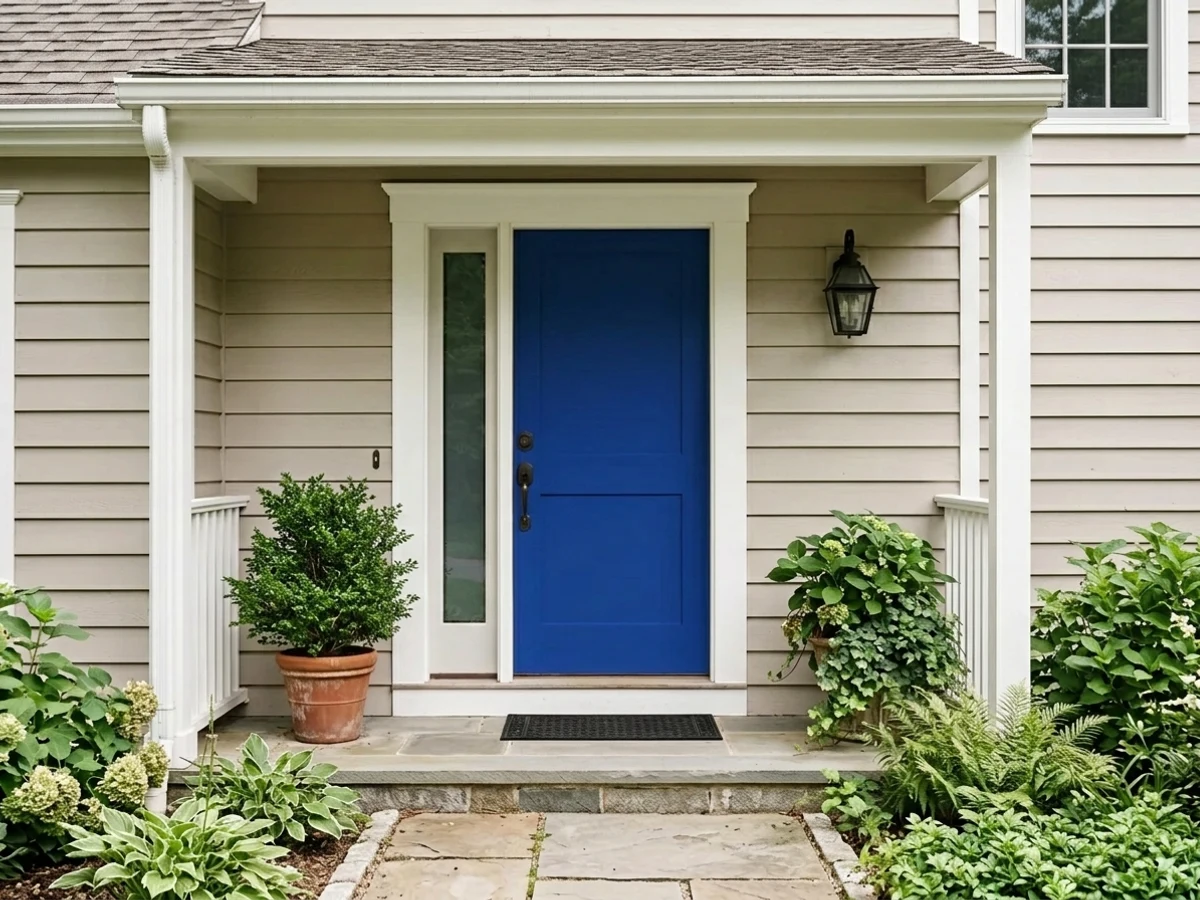
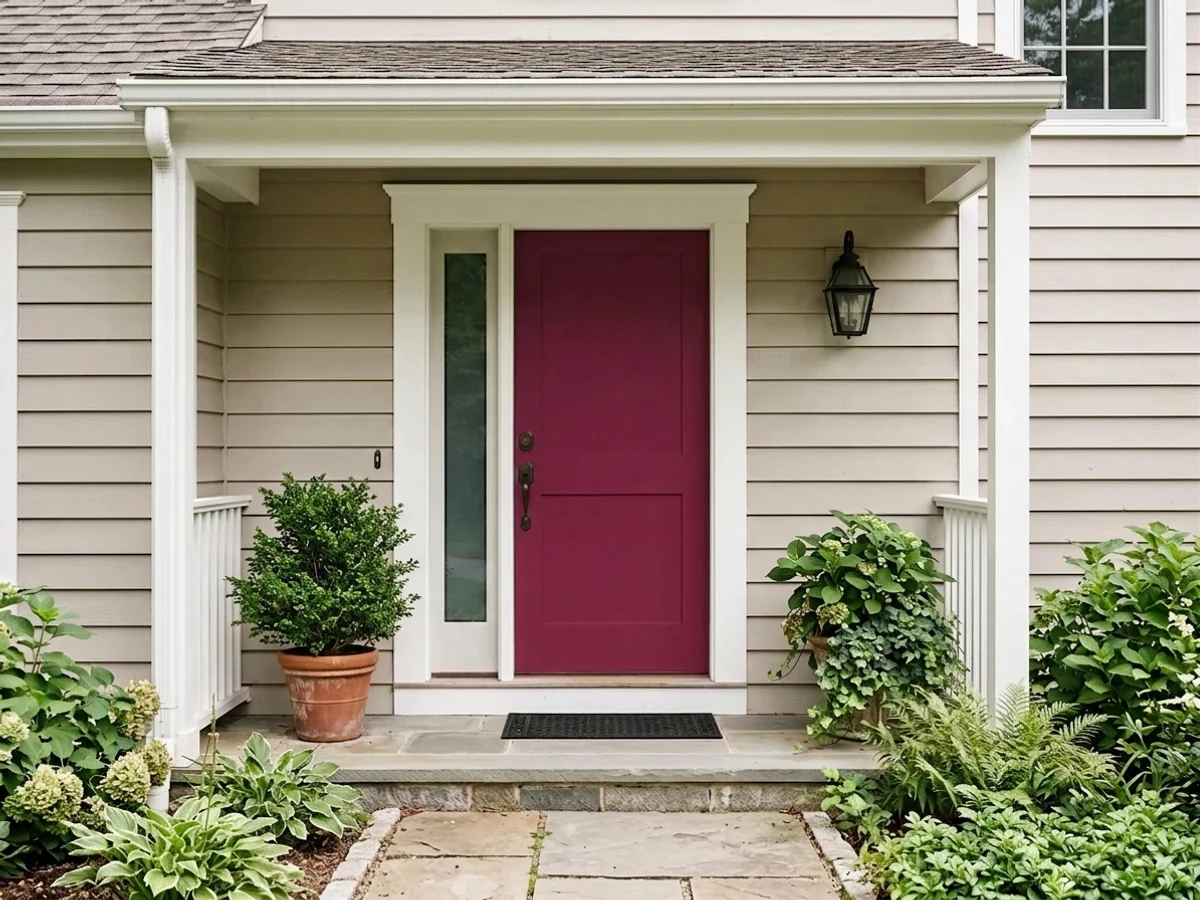
A berry-wine magenta — one quart of courage, easy to repaint.
Paint my door in Luscious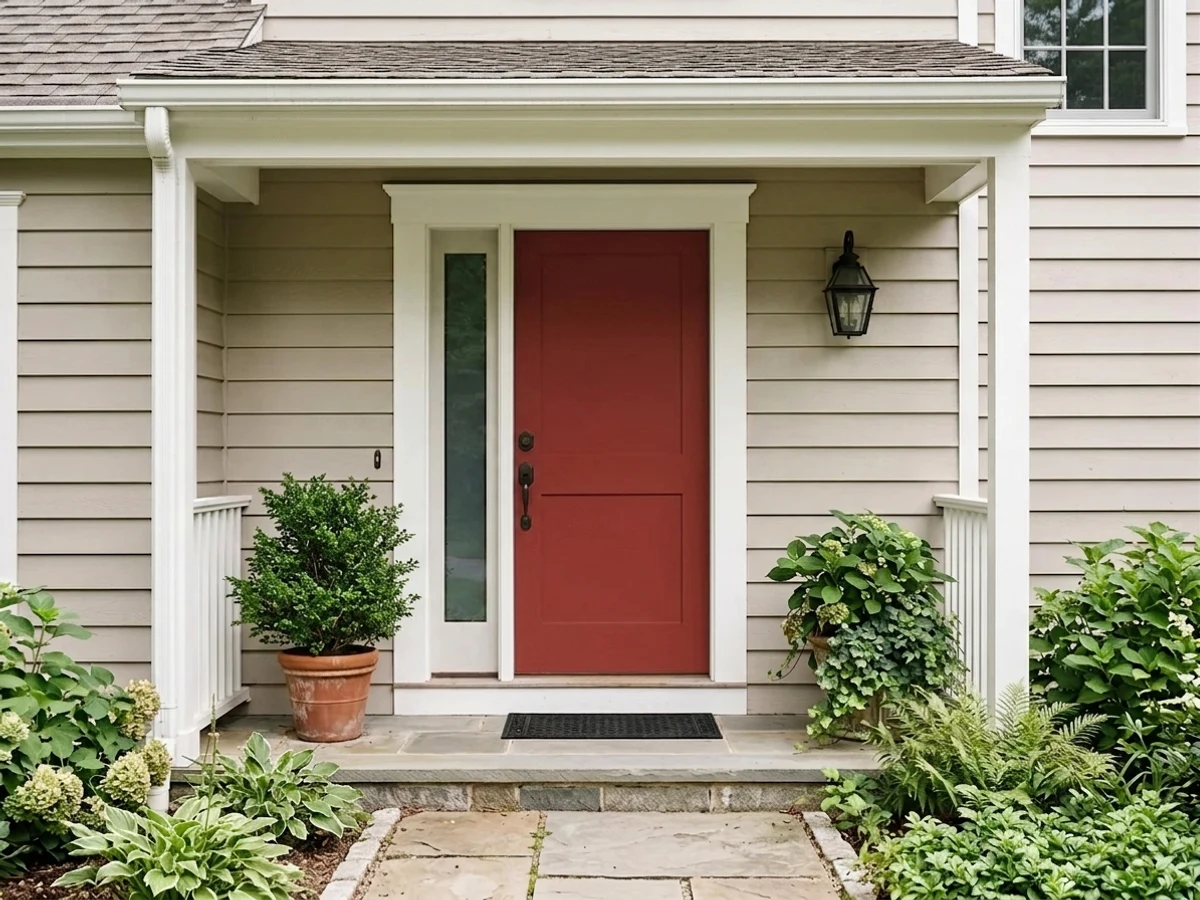
Popular Front Door Colors That Actually Work
Real, buyable colors with exact brand codes — not generic swatches. Five families cover most of the front doors in America; black and navy trade the top spot year after year, with deep green the fastest riser. We are not affiliated with any paint brand — the codes are here so the store can mix it.
Blacks & Near-Blacks
The no-regret pick — black doors work on nearly every house and every style, and realtors keep reporting they help homes sell. Soft blacks like Iron Ore read less severe than true black up close.
Navys & Deep Blues
The most-searched door color in America for a reason: navy gives you the formality of black with more personality. Beautiful against white, gray, and greige siding — and one of the safest choices on red brick.
Deep Greens
The current designer favorite. Blackened greens like Essex Green read almost neutral from the street; muted sage-leaning greens like Pewter Green are the friendlier version. All of them love brick and warm wood tones.
Classic Reds
The traditional welcome color — colonial, farmhouse, and craftsman houses all wear it well. Go brighter on white houses, deeper and more brick-toned (Stolen Kiss, Red Pepper) next to actual red brick so the two reds don’t argue.
Bright & Fun
One quart of courage. Yellow, orange, and turquoise doors are the classic cure for a gray-on-gray exterior — and because a door is small and cheap to repaint, this is the one place on the house where a bold swing is low-risk.
One option that is not paint at all: a warm wood door — stained fir, mahogany, or a convincing fiberglass wood-look. Against white farmhouse siding or gray board-and-batten, wood does what a bright color does, quieter. If your door is already wood in decent shape, preview a clear or lightly tinted finish before you paint over the grain. Paint is easy to put on and miserable to strip.
Pick the Door From the House, Not the Pinterest Board
Most front-door regret starts the same way: a color chosen from a photo of someone else's house.
A black door looks incredible on a white farmhouse with black windows. The same door looks heavy on a small brown ranch. What actually constrains the choice is everything you are not repainting — the siding, the brick, the roof, and the shutters. On a brick house, the brick's orange-red undertone quietly vetoes half the color wheel. Bright reds fight it. Most navys and blackened greens flatter it.
The recipe that works: keep the door in the house's temperature family — warm with warm, cool with cool. Make it clearly darker or clearly brighter than the siding; near-misses read as a mistake. And let it repeat one thing already on the house — the roof color, the window frames. The door can match the shutters, but it is not a rule: a navy door with black shutters often looks more considered than a matched set. On a white farmhouse, almost anything works, which is its own trap — that is exactly where testing on your real photo saves you from settling for the third-best option.
Match the Door to the House
Four starting pairings, pulled from the same logic above.
One photo of your house, and the visualizer repaints just the door.
Test It in Your Real Light
Door color is unusually sensitive to light, because most doors sit inside a covered, shaded entry.
North-Facing Doors
Cool, flat light all day — navys go gray, greens go dusty, and a color that looked cheerful on the chip reads somber.
South- & West-Facing Doors
Hours of direct sun wash colors lighter and warmer, and heat dark paint enough that some fiberglass manufacturers warn against very dark colors.
Glass Storm Doors
Add glare and reflection over the color, plus heat trapped against dark paint — another reason to judge the color in context, not in the store.
This is why a preview on your own entry beats any color card. The shadow of your porch roof, the bounce off your concrete steps, your storm door — all in the picture.
The One-Afternoon Door, Honestly
Choose Your Method
Take the door off its hinges and lay it flat on sawhorses for the best finish — no drips, no sags, but the doorway stands open all day. Or tape the hinges and paint it in place: faster, and the house stays lockable.
Sand, Prime, Two Thin Coats
Scuff-sand, prime anything bare or glossy, then two thin coats — never one heavy one, which sags at the panel corners and stays soft for days. Semi-gloss is the default sheen for a reason.
Let It Cure Before You Shut It
Dry in an hour is not cured. Leave the door cracked until bedtime, or tape the latch — shutting it tight welds fresh paint to the weatherstripping. Check your door's heat rating before a near-black on a west-facing elevation.
Front Door Color FAQ
Can I see a door color on my own house before I buy?
Yes. Upload a photo of your entry, name a color or pick one above, and just the door gets repainted — siding, trim, and hardware stay exactly as they are.
What is the most popular front door color?
Black and navy trade the top spot year after year, with deep green the fastest riser. All three work in nearly every house's temperature family, which is why they keep winning.
Should the door match the shutters?
Not necessarily. It can, for a calm traditional look, but a navy door with black shutters often reads more considered than a matched set. Try both in the same photo and see which pairing settles down.
What sheen should I use on a front door?
Semi-gloss is the traditional default — it shrugs off handprints and scrubbing and reads crisp from the street. Satin works if you want a softer, more modern look.