Cape Cod House Colors
A light body, generous white trim, shutters dark enough to frame every window, and one color on the centered door. Here are five complete schemes with real paint codes, and a way to see each one on your own house.
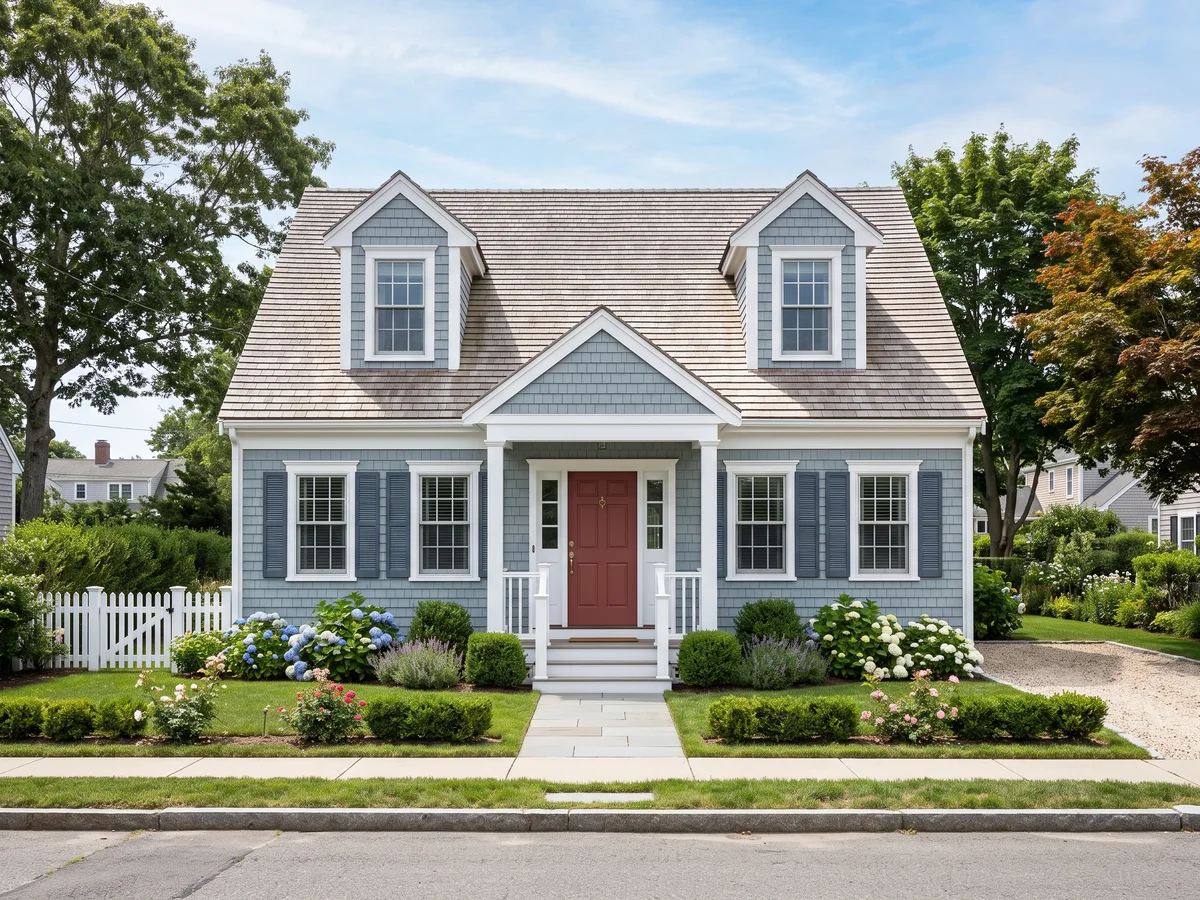
Five Complete Cape Cod Schemes
Every one is a full body, trim, shutter and door set. Codes are exact. Screen swatches are approximations, so judge the scheme on a photo of your house, not on this page.
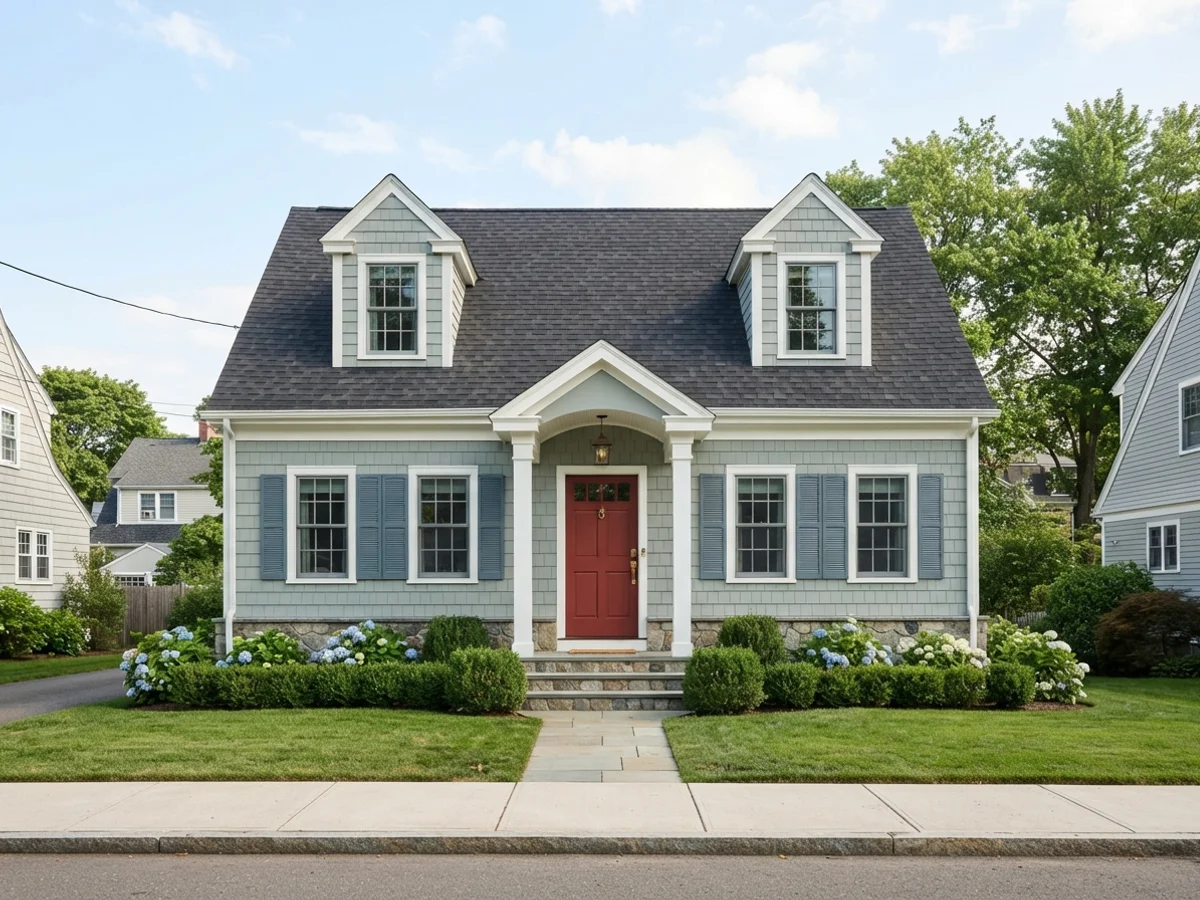
Shingle Blue & White
The scheme most people are picturing when they search this: a soft blue-gray shingle body, wide white trim, shutters two or three steps darker than the body, and a dusty red door. Wedgewood Gray sits at LRV 50, light enough to keep a one-and-a-half-story house from shrinking, gray enough that it never reads as a baby-blue beach rental.
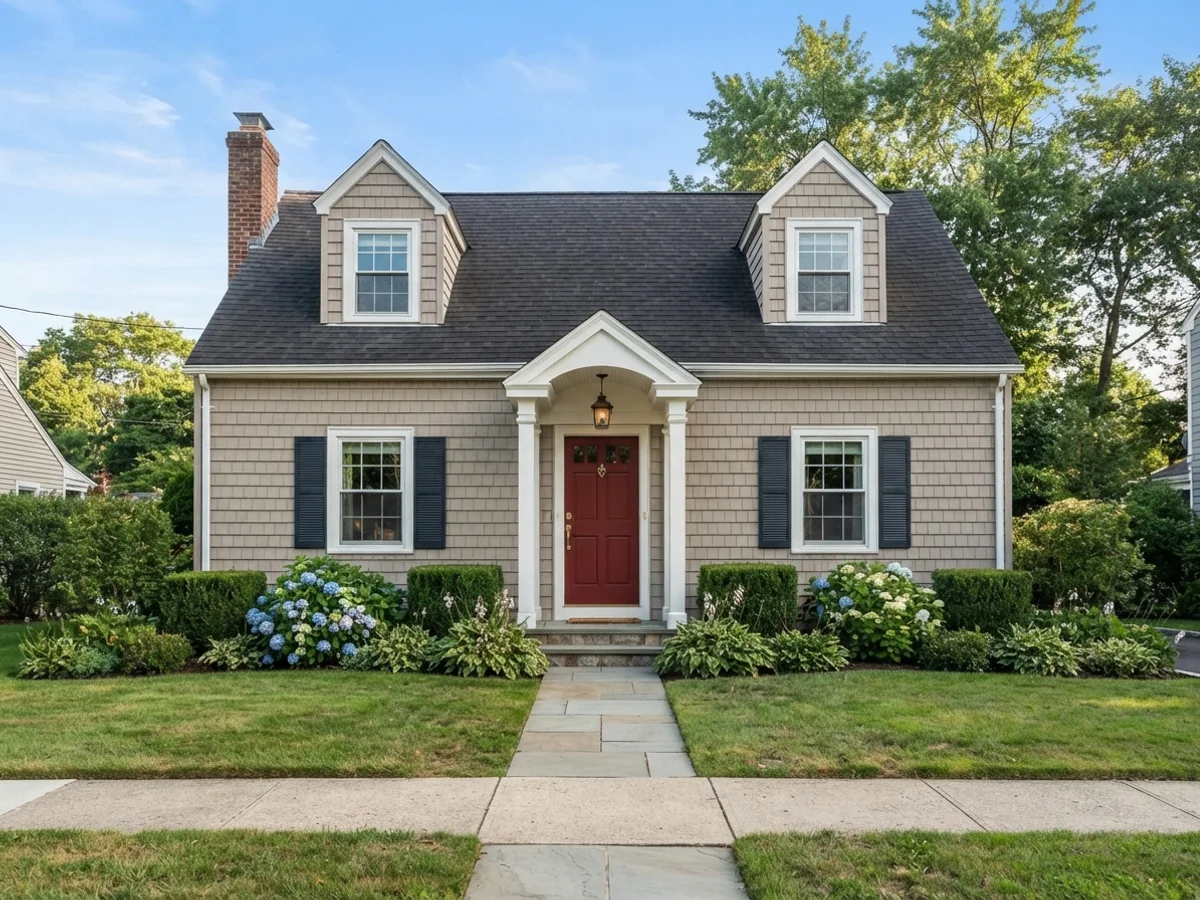
Weathered Gray & Hale Navy
The Nantucket default, translated into paint. Cedar shingles silver to a soft driftwood gray within a few salt seasons, and Cape May Cobblestone is that color without the wait. White trim, navy shutters, and a true New England red door. If your shingles are already weathering and you like it, this is the scheme to copy in stain rather than paint.
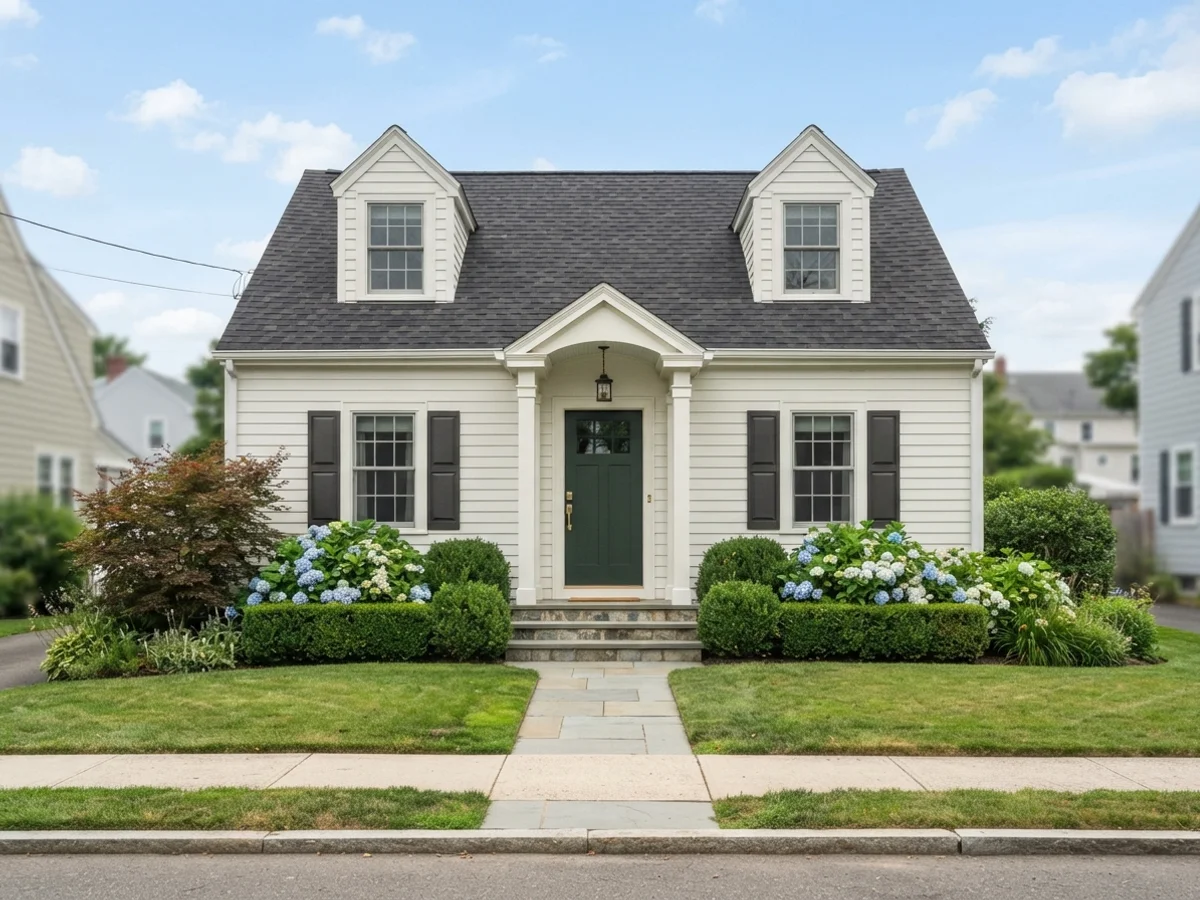
White Clapboard, Black Shutters
The suburban Cape in its most reliable form, and the one that sells. A warm white body with a cleaner white on the trim gives the corner boards and casings just enough separation to read from the street, black shutters do all the framing, and a deep green door keeps it from going stark. Two whites one step apart is the trick here, not an accident.
Nantucket Gray & Deep Green
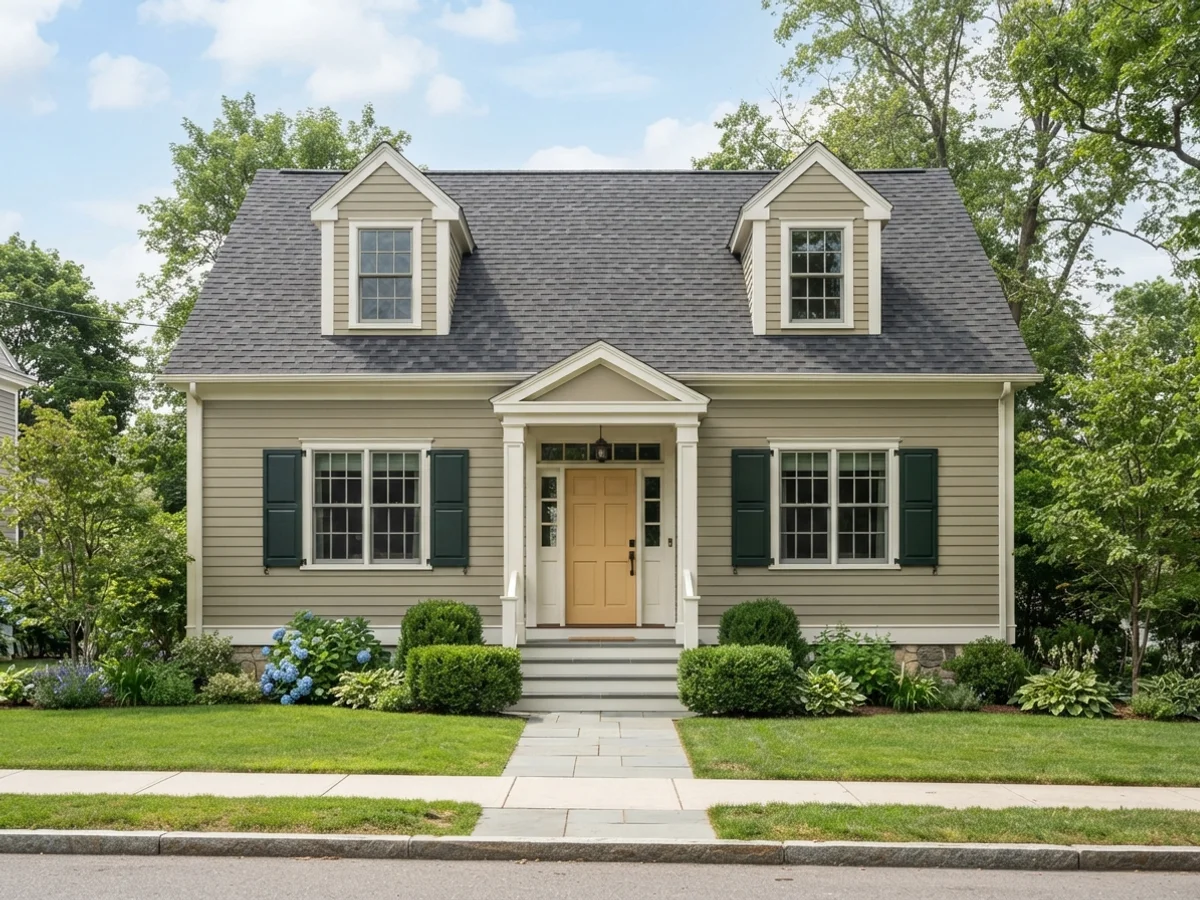
The most historically grounded scheme on the page. Nantucket Gray is a warm gray with a green cast, which is what old shingle looks like on a gray day. Deep green shutters and a yellow door come straight off the short list of colors the island has approved for generations. The door is the risk and the point: on a symmetrical facade it is the only thing your eye has to land on.
Warm Greige & Charcoal
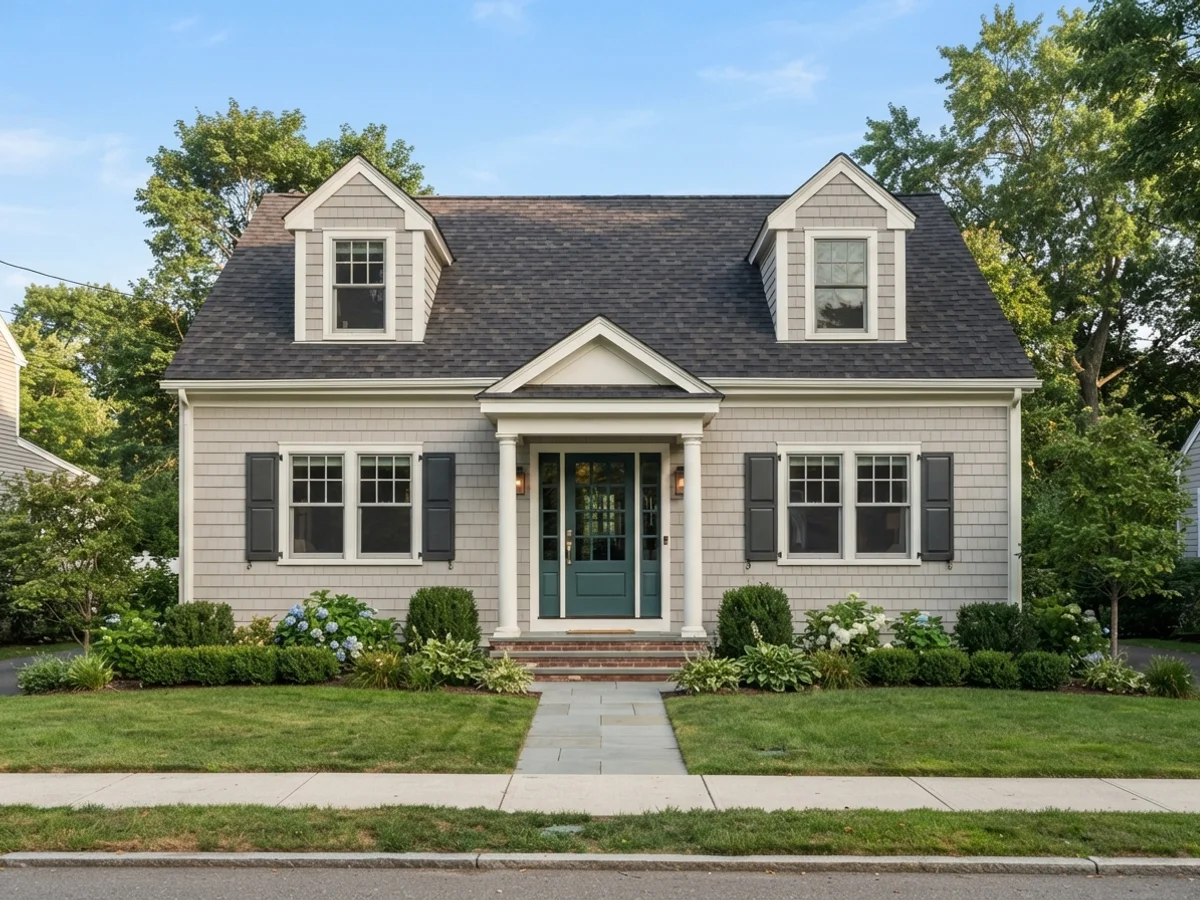
The modern update for a 1950s Cape with vinyl or fiber cement siding and an attached garage. Repose Gray is warm enough to live under a brown or weathered roof, which most of these houses have; charcoal shutters read as black without going flat, and a deep teal door is the one contemporary note. Nothing here dates the house to a decade.
Four Colors, and the Roof That Rules Them
Body on the siding and the dormer walls. Trim on everything that sticks out. Shutters dark enough to frame the windows. One color on the door. And the roof, which you are not painting but have to plan around.
The body color covers the siding and it covers the dormer walls too. A Cape is a simple box with a big roof, so the body has less surface to work with than you expect and the trim has more. The trim color goes on the corner boards, the window and door casings, the fascia and rake boards, the dormer trim, and the porch or entry columns if there are any. On this style the trim is not a detail. Wide, bright casings are what draw the shape of the house and make a small facade look deliberate instead of plain.
The shutters are the only pattern on the front of the house. Their job is to frame each window, which means they have to be clearly darker than the body — several steps, not one. Shutters the same value as the siding disappear from thirty feet away and you have paid for nothing. The shutter color page goes deeper, including what to do when the shutters are vinyl.
The front door is centered, and on a symmetrical facade that makes it the single focal point of the whole house. It is also about twenty square feet of surface. That combination — maximum attention, minimum paint — is why a Cape is the cheapest house in America to fix with one gallon.
Upload the photo. The visualizer paints each surface separately, so you can push the shutters two steps and see it, instead of guessing off a chip.
From Chantilly Lace to Hale Navy
Cape Cod body colors sit high, around LRV 40 to 65, where a Craftsman body might be 20. Pick a body from the middle, trim from the left, shutters from the right. Hover for the name, click to try it.
The Original Cape vs. the Postwar Cape
Search results mix them together and the color advice does not transfer. Find yours first, then pick from the schemes above.
Shingle, stain, and one colored door
- Cedar shingle walls left to silver, or held there with a semi-transparent stain
- Historically the painted clapboard went on the front only; the other three sides were shingle and bare
- White trim and a single strong door color do all the work
- Shutters are optional — plenty of early Capes never had any
- Schemes 2 and 4 above are built for this house
Painted body, shutters on every window
- Clapboard, fiber cement, or vinyl, built by the million from the 1930s to the 1950s
- Two dormers, a centered door, and often an attached garage or breezeway
- Shutters carry most of the color, so their contrast is the whole scheme
- Nothing to preserve — a modern greige or a white body is fair game
- Schemes 1, 3 and 5 above are built for this house
The historic record is shorter than the Pinterest boards suggest. On Nantucket, a visitor in 1801 wrote that most island houses carried no paint at all, and where there was paint, red was the common color. White lead paint only became widely available in the 1840s, and the bright modern whites we take for granted are a twentieth-century product. So a weathered shingle body with white trim is not the oldest Cape Cod look. It is the look that settled in once white paint got cheap, and it has held for a century and a half because it works.
If your house sits in a historic district, check before you buy anything. Nantucket's commission reviews exterior paint color along with everything else, and while the island's famous short list of approved colors is more folklore than rule, colors outside the quiet range genuinely get pushed back. Subdued hue, light to medium value, contrast saved for the trim and the door: that is the standard, and it happens to be good advice anywhere.
Dormers, Roof, Garage, Shutters
A Cape has almost no ornament, so a color mistake has nowhere to hide. These are the four places it usually happens.
Dormers
Body color on the dormer walls, trim color on the dormer trim. Give the dormers a color of their own and the roof breaks into pieces.
Roof
Steep and side-gabled, so it can be a third of the facade. Pick the body to sit with the roof you have: warm grays and greens under cedar or brown, cooler grays and whites under charcoal.
Garage door
On an attached garage, paint the door the body color so it recedes. A white garage door on a small Cape reads as a second front door and pulls the eye off the real one.
Shutters
Several steps darker than the body, one color, repeated exactly. If they are too close in value they vanish from the street, and the windows lose their frame.
A Small House Wants a High LRV
The single most useful number on a Cape Cod is the light reflectance value of the body color.
A Cape is one and a half stories with a roof that eats the top half of the front elevation. It already reads compact from the curb, and dark body colors push it further that way. That is why almost every Cape that photographs well sits in the LRV 40 to 65 band: Wedgewood Gray at 50, Nantucket Gray at 40, Repose Gray at 58, Sea Salt at 63. Light bodies also let the white trim stay quiet, which keeps the facade from turning into stripes.
The exception is real, though. A dark Cape can look excellent when the trim is wide and bright and the shutters are dropped entirely, so the house reads as one clean shape outlined in white. What fails is the halfway version: a mid-dark body with thin trim and black shutters, where every element is fighting for the same amount of attention. Whichever direction you go, put it on a photo of your own house before you commit. Deep colors behave very differently on a real wall than on a paint chip, and on a Cape the roof is in every one of those photos.
More Cape Cod Colors That Work
Six more body candidates and two shutter darks. Any of them can replace a slot above without breaking the style. Click one to try it.
Cape Cod Color FAQ
What color should I paint the dormers?
The dormer walls take the body color and the dormer trim takes the trim color, exactly like the rest of the house. Dormers are not a place to add a third color. Give them their own shade and the roof stops reading as one plane, which is the whole reason a Cape looks calm from the curb. The only judgment call is the dormer cheeks, the little side walls: if they are shingled they follow the roof, and if they are siding they follow the body.
Black shutters or navy shutters?
Match the shutters to the roof, not to a trend. Black shutters belong with a charcoal or black asphalt roof and a white or greige body. Navy belongs with weathered cedar, brown, or gray-brown roofs, where flat black looks like a hole punched in the wall. Either way the shutters need to be several steps darker than the body or they stop framing the windows from the street, which is the only job they have.
Can a Cape Cod house be a dark color?
It can, but understand the trade. A Cape is one and a half stories and already reads small, and a dark body makes it read smaller. If you want a dark body, keep the trim wide and bright so the corner boards, casings, and dormer edges draw the shape of the house, and skip the shutters or paint them the body color. Dark bodies also show every wave in old clapboard. Judge it on a photo of your own house before you buy the paint.
Should I paint cedar shingles or stain them?
Stain if you like the weathered look, paint if you want color. A semi-transparent or solid stain soaks in, keeps the grain, and fades rather than peels, which is why almost every Cape on the actual Cape is stained. Paint gives you the full color range and a crisper look, but it is a one-way door: once shingles are painted they cannot go back to weathering naturally, and the next recoat is a scrape job instead of a wash and reapply.
Related Styles and Surfaces
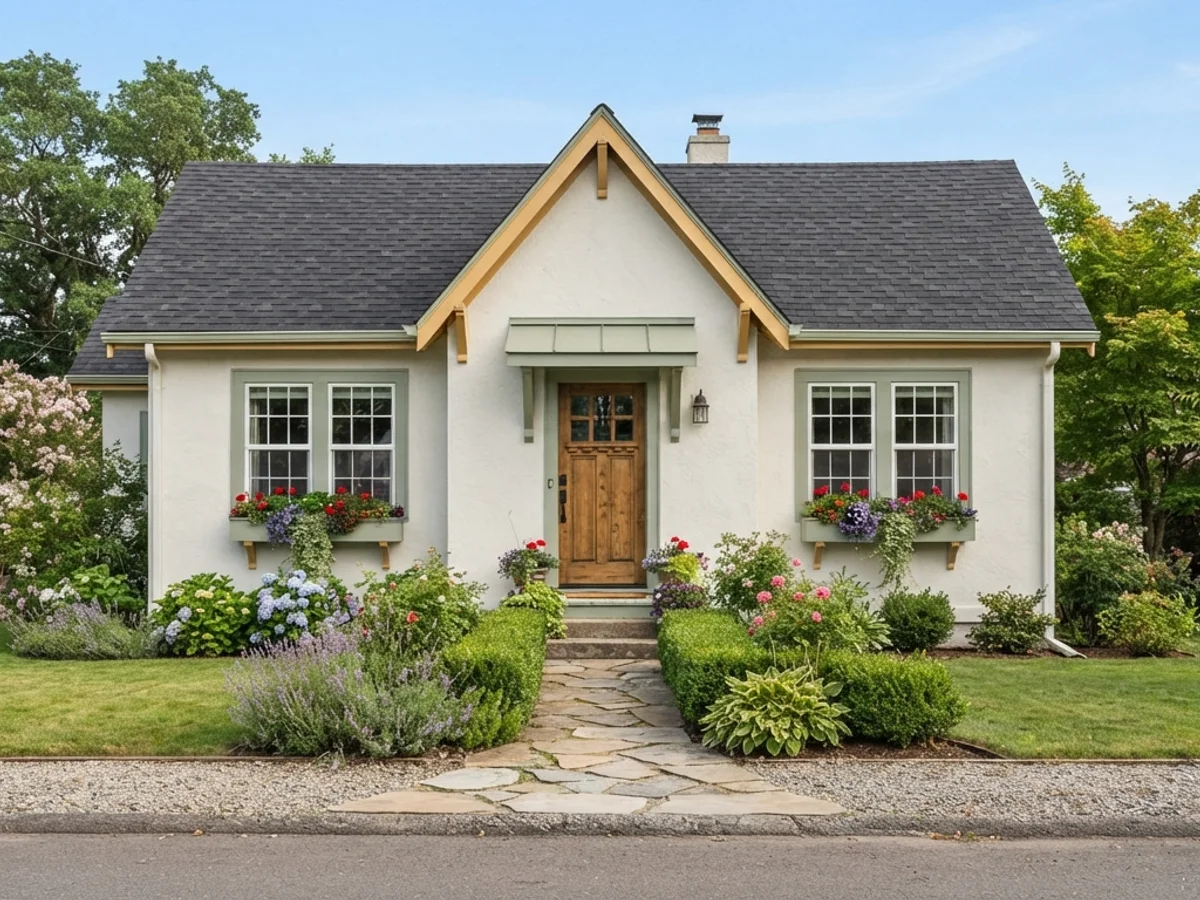
Soft, storybook palettes for a small house
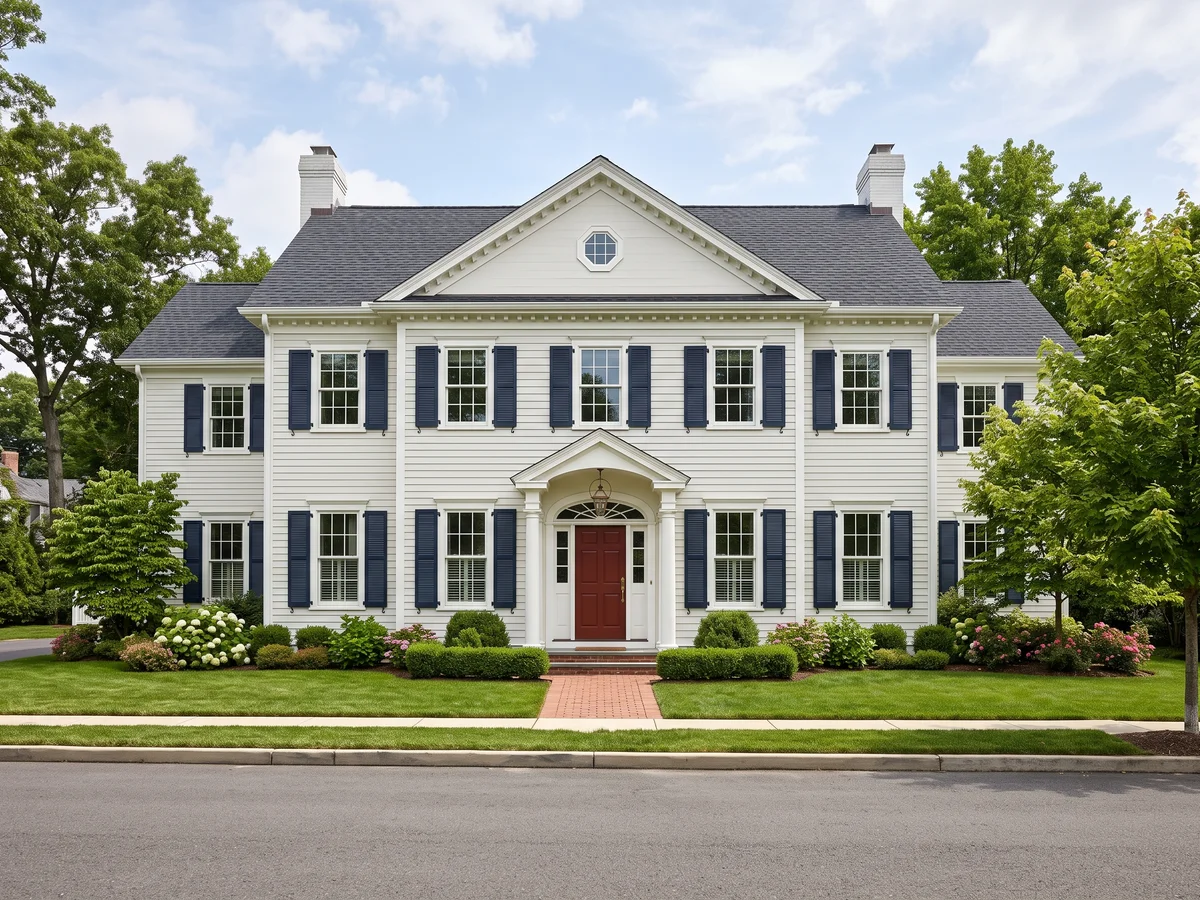
The two-story cousin: formal body, trim and shutter schemes
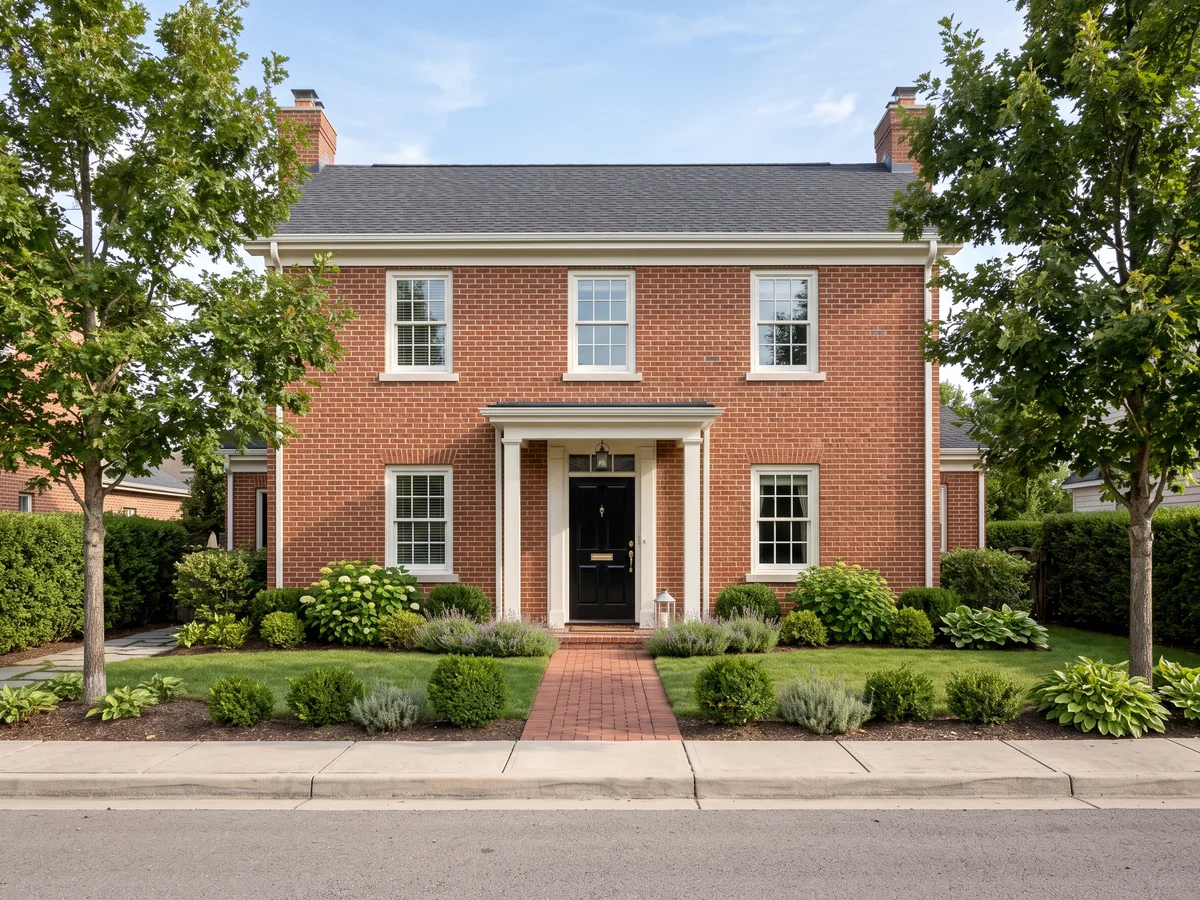
For the half-brick Cape: trim and door colors that flatter brick
Five Cape Cod schemes with real paint codes, previewed on a photo of your own house. Free to start.