See Stain Colors on Your Own Deck
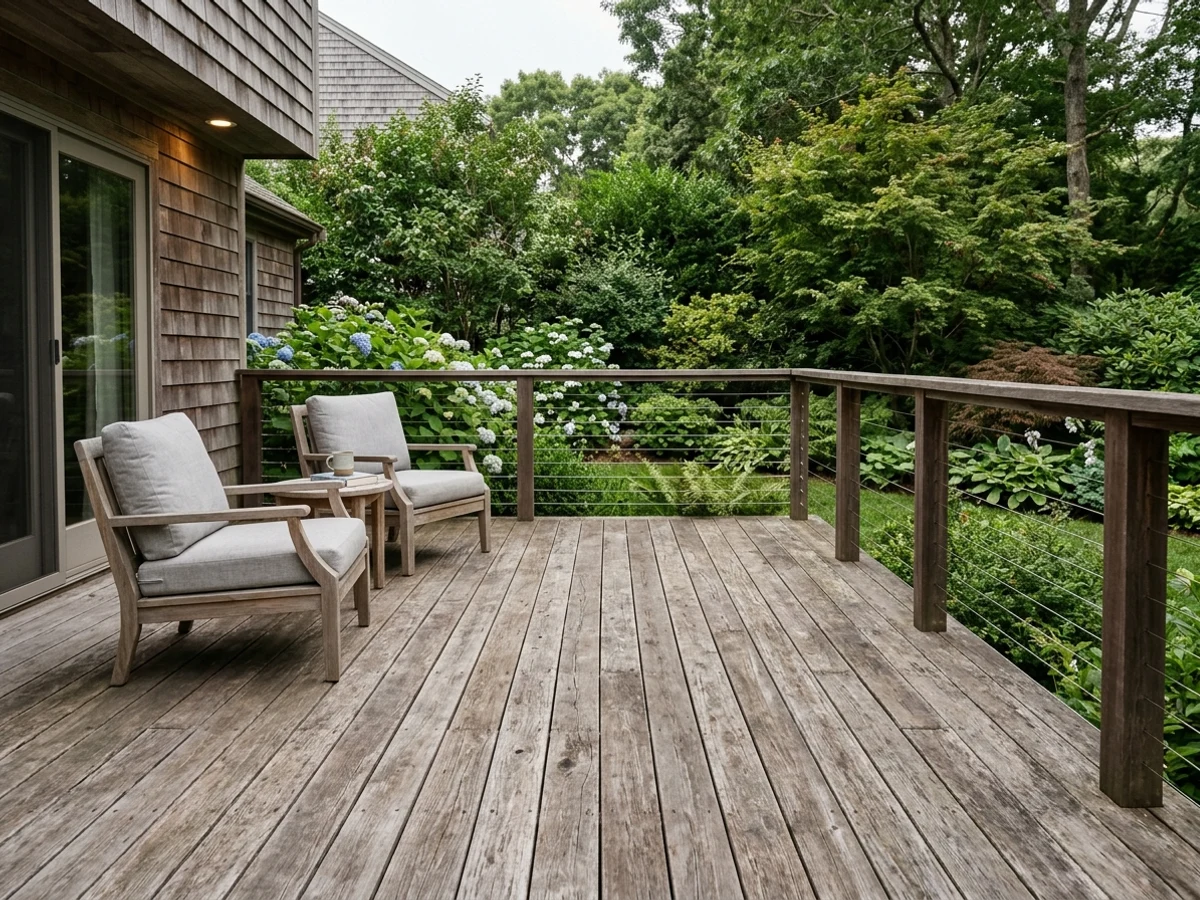
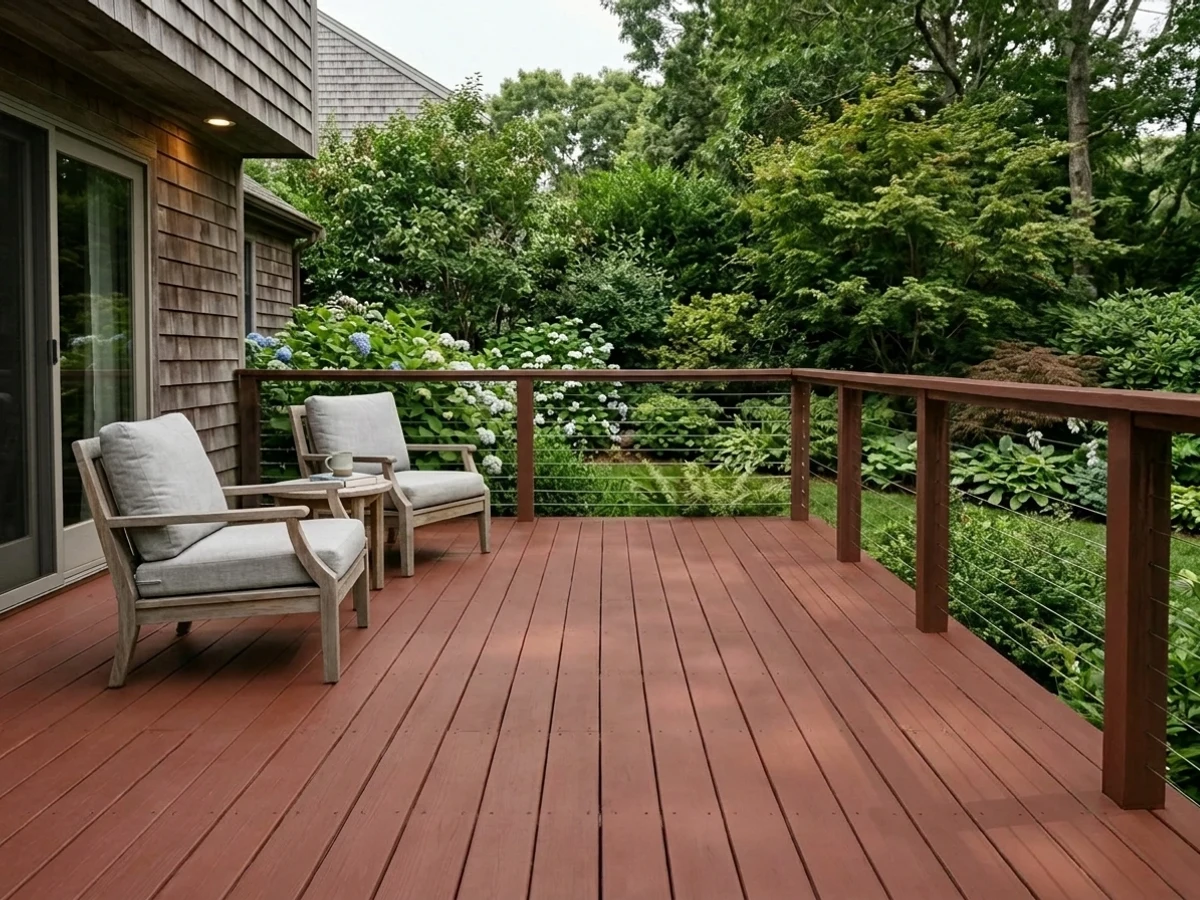
Upload one photo. The boards get re-stained in any color, weathered gray to espresso, while the house, railing and yard stay exactly as they are.
Stains That Keep Getting Picked
Every one is a real, buyable stain rendered on the same deck so you can compare like for like. Click one to load it onto your own photo.
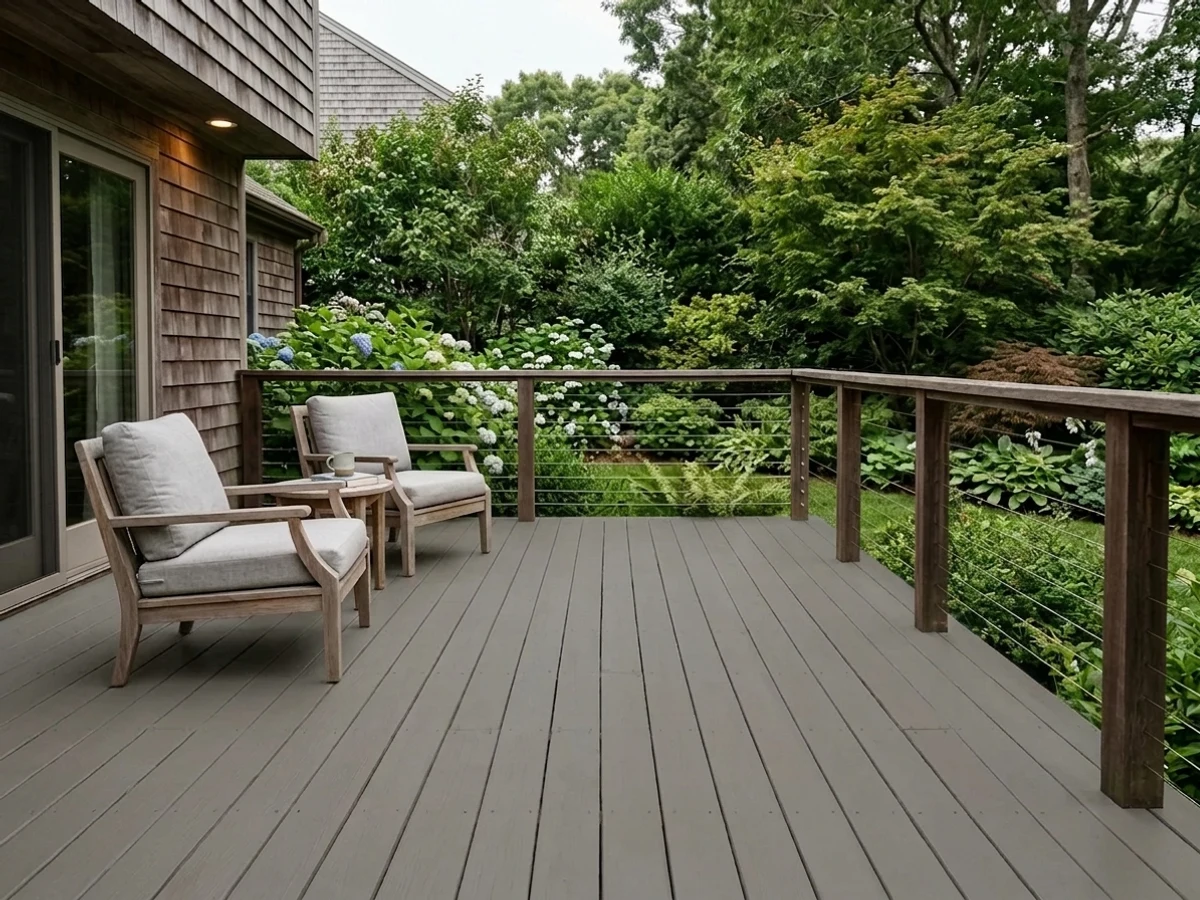
The deck-floor standard — a deep, warm gray that hides wear and dust.
Stain my deck in Gauntlet Gray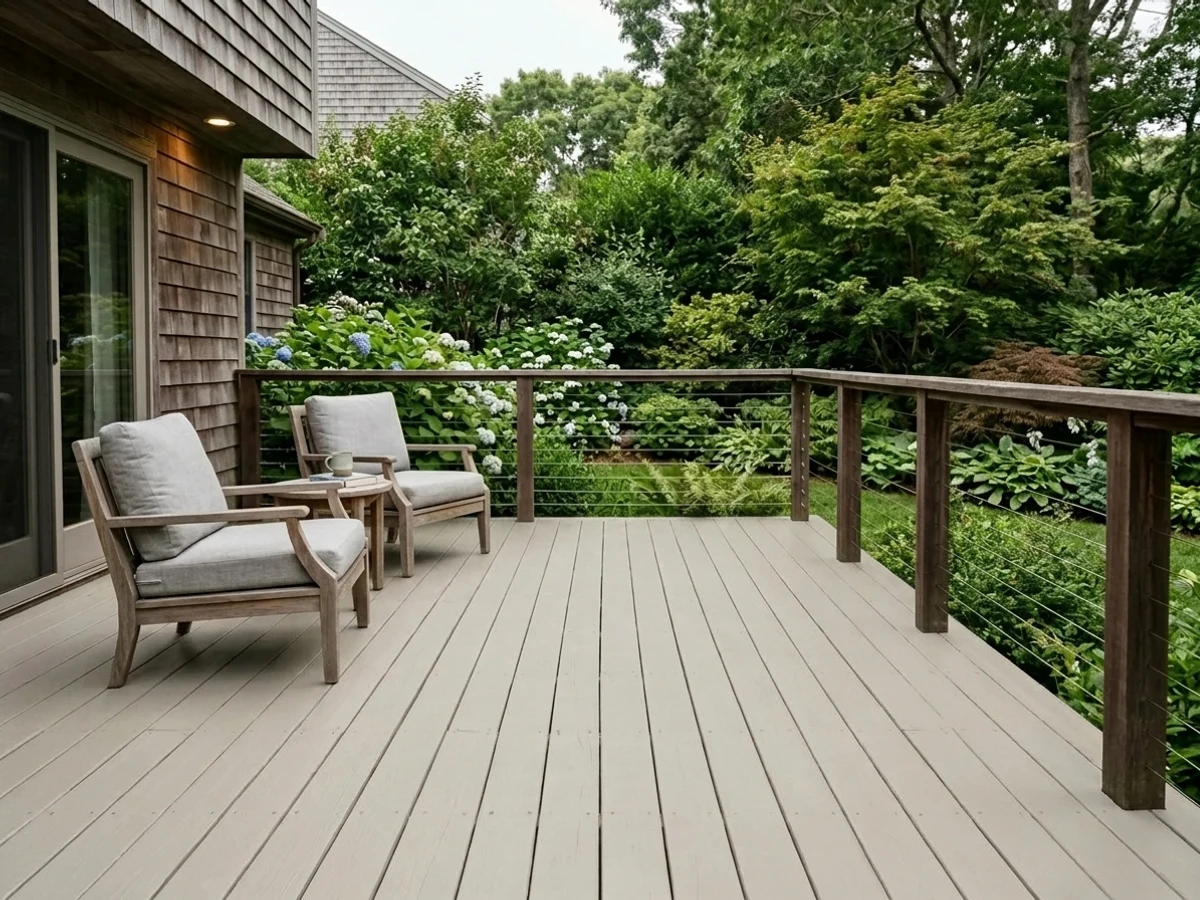
The famous greige, out on the boards — light driftwood without going cold.
Stain my deck in Agreeable Gray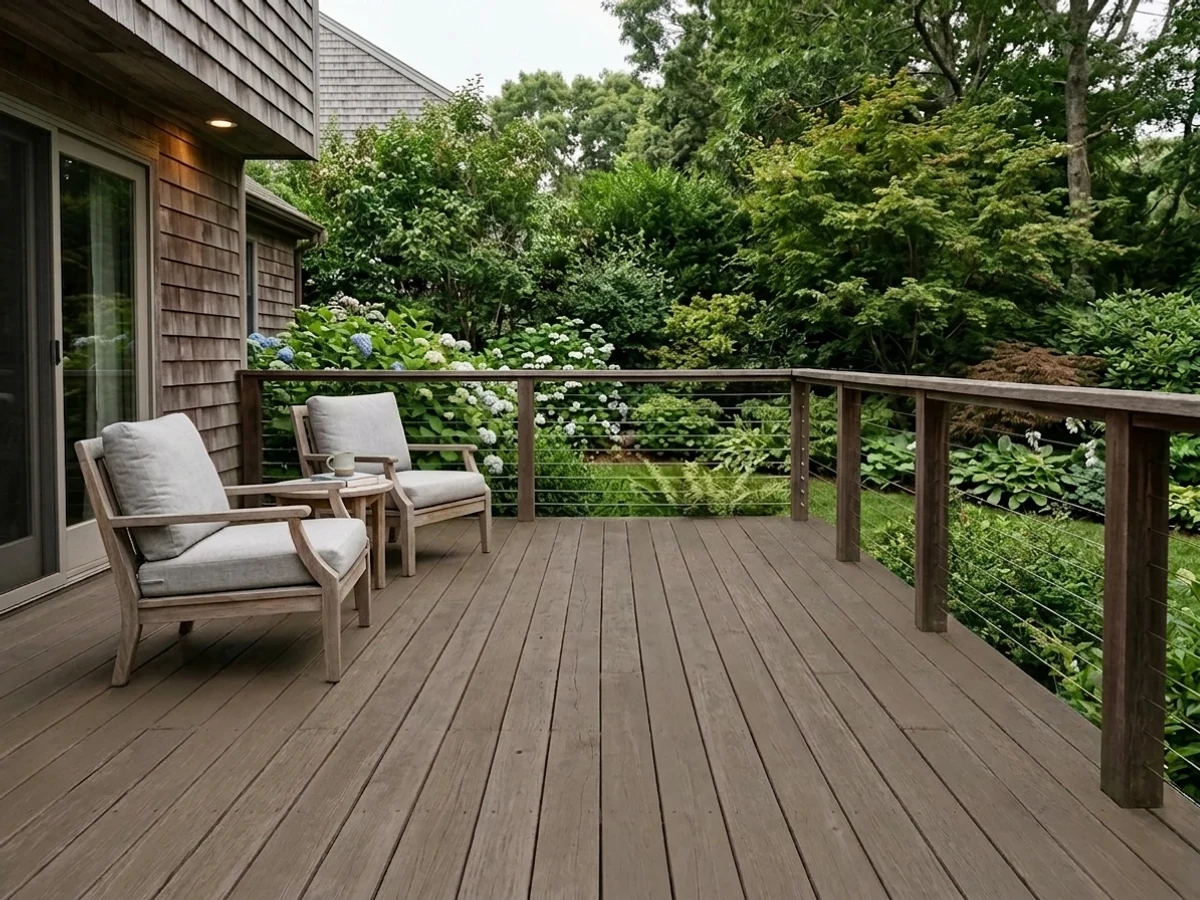
A true mid brown — the fresh-sealed-wood look that flatters every house color.
Stain my deck in Dixon Brown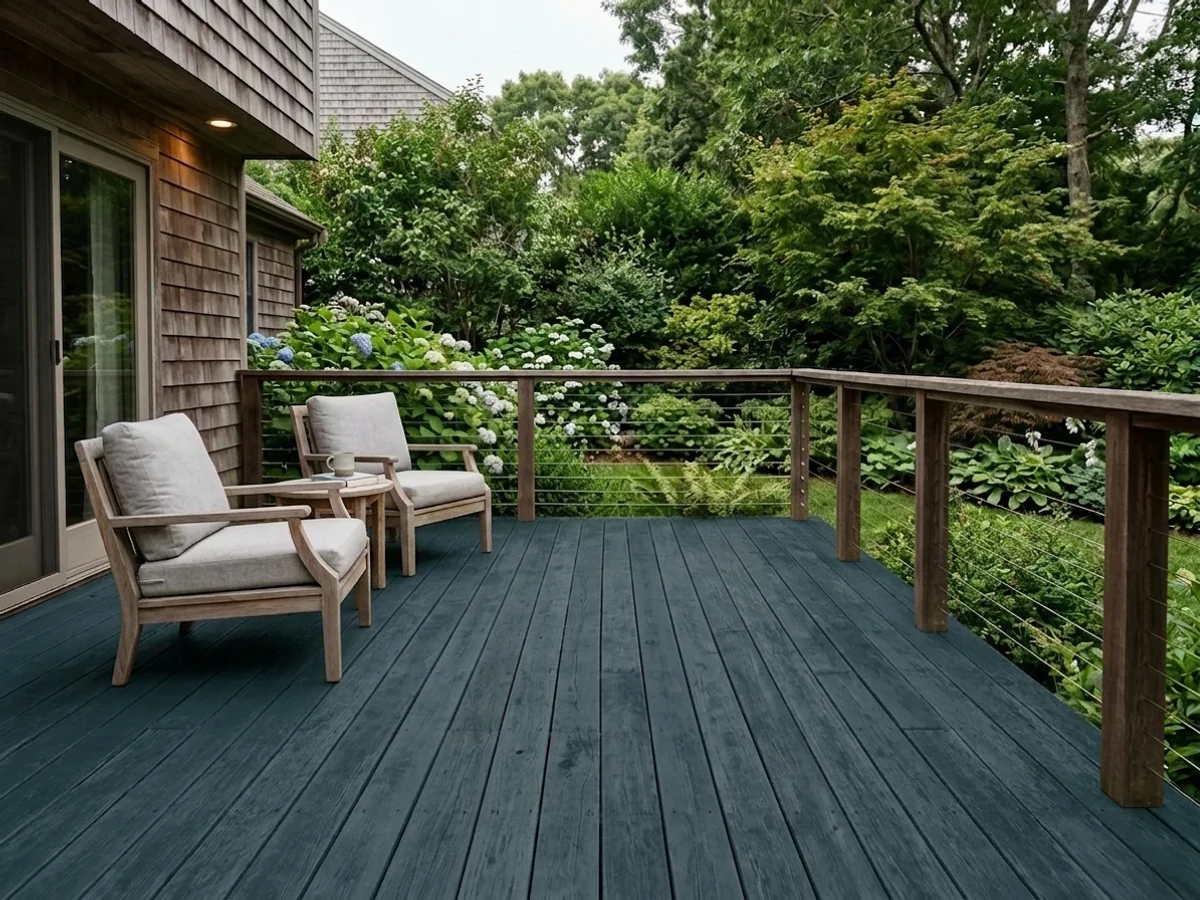
A deep teal-navy deck — the confident pick under a white or sage house.
Stain my deck in Moscow MidnightGrays & Driftwood
The deck-floor standard — a deep, warm gray that hides wear and dust.
Stain my deck in Gauntlet Gray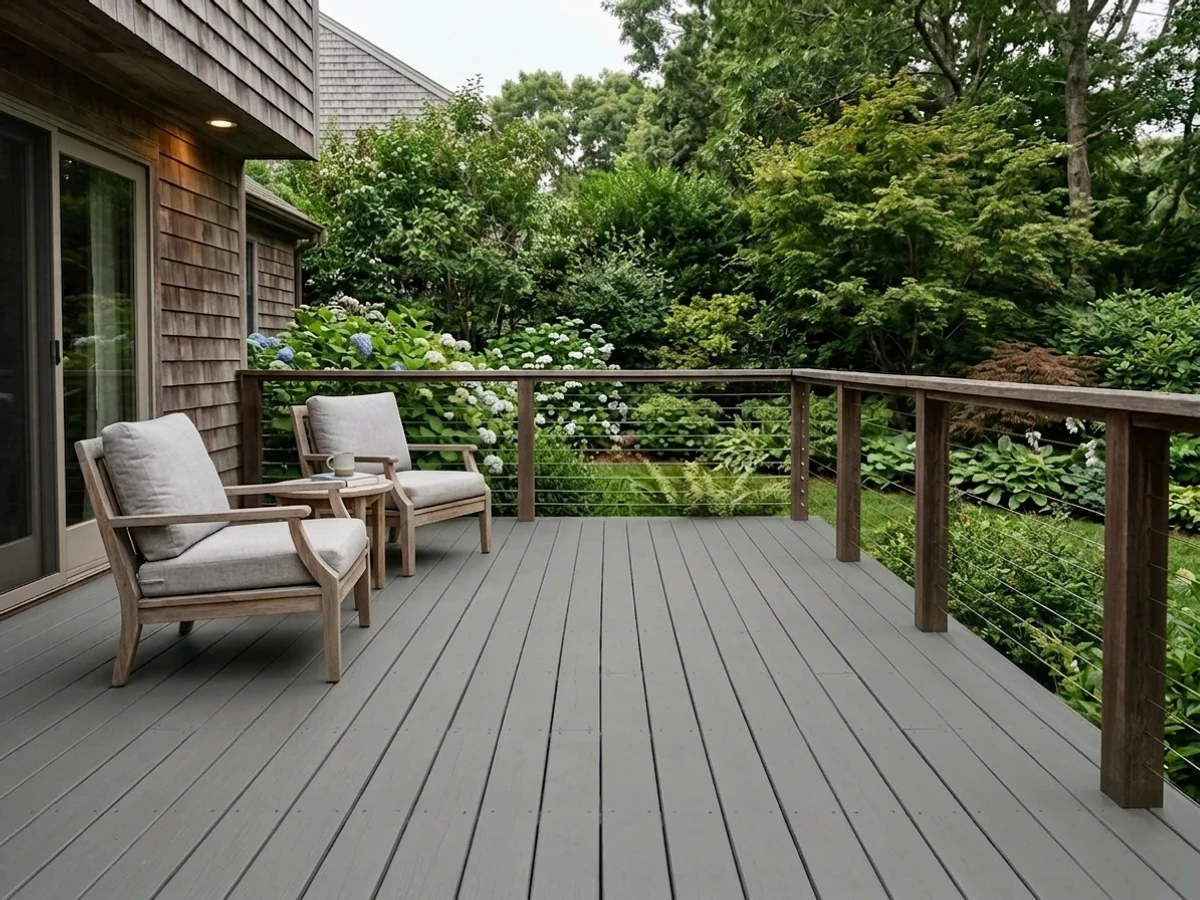
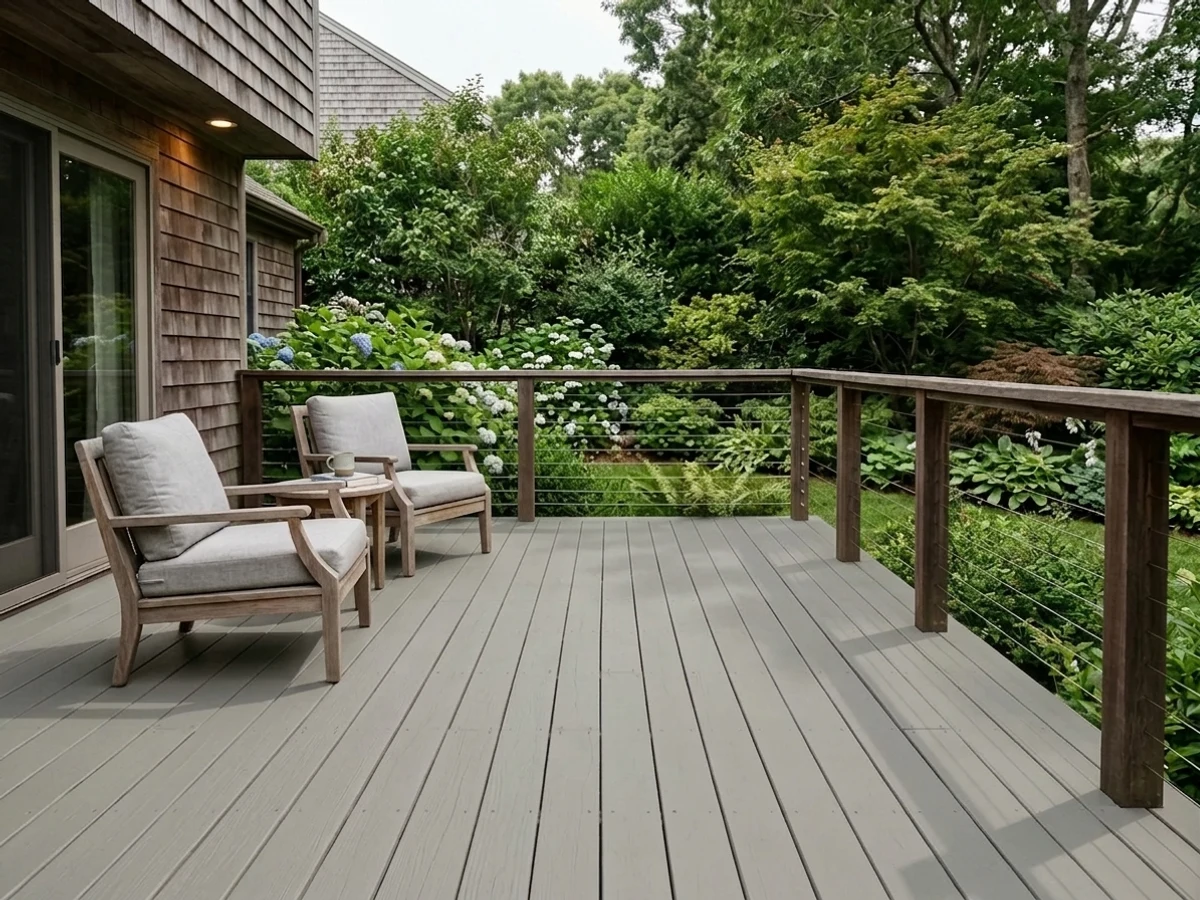
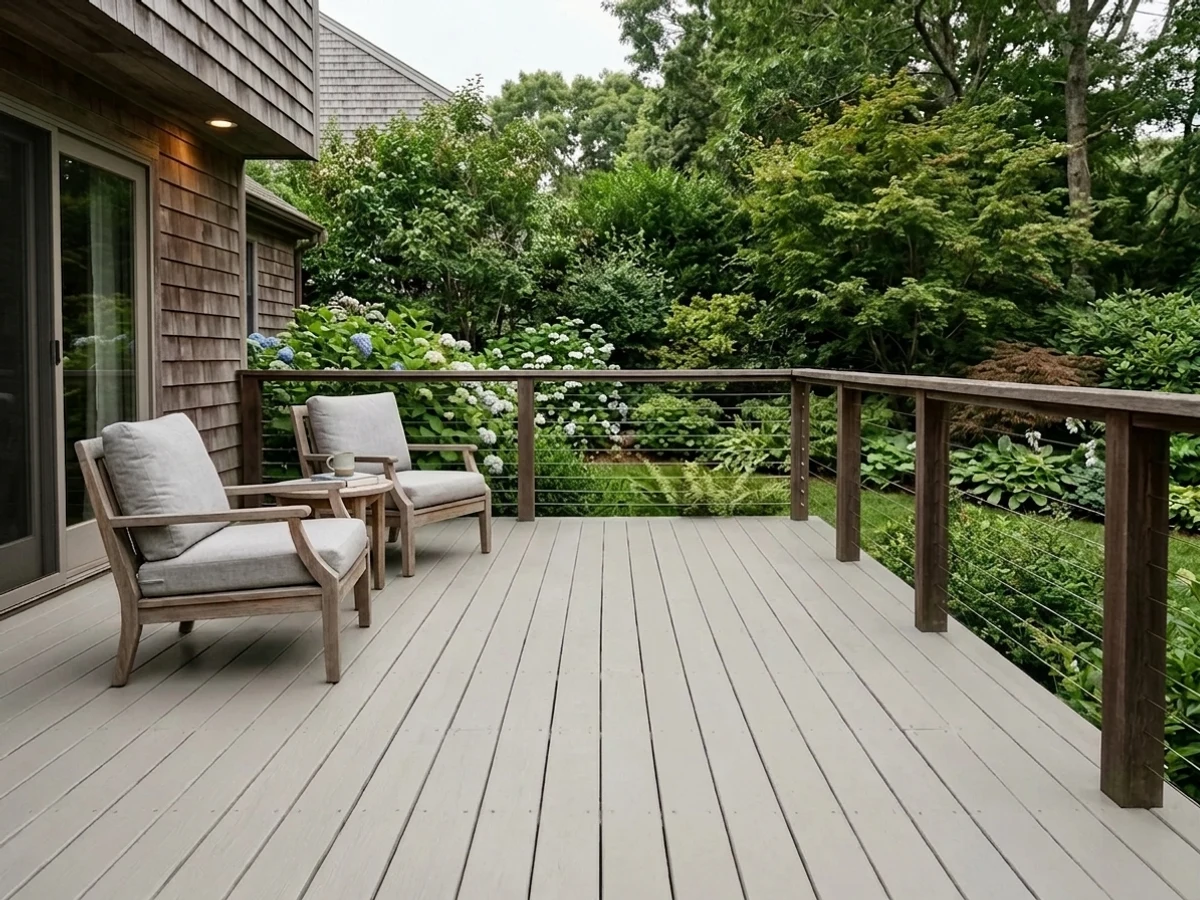
The famous greige, out on the boards — light driftwood without going cold.
Stain my deck in Agreeable Gray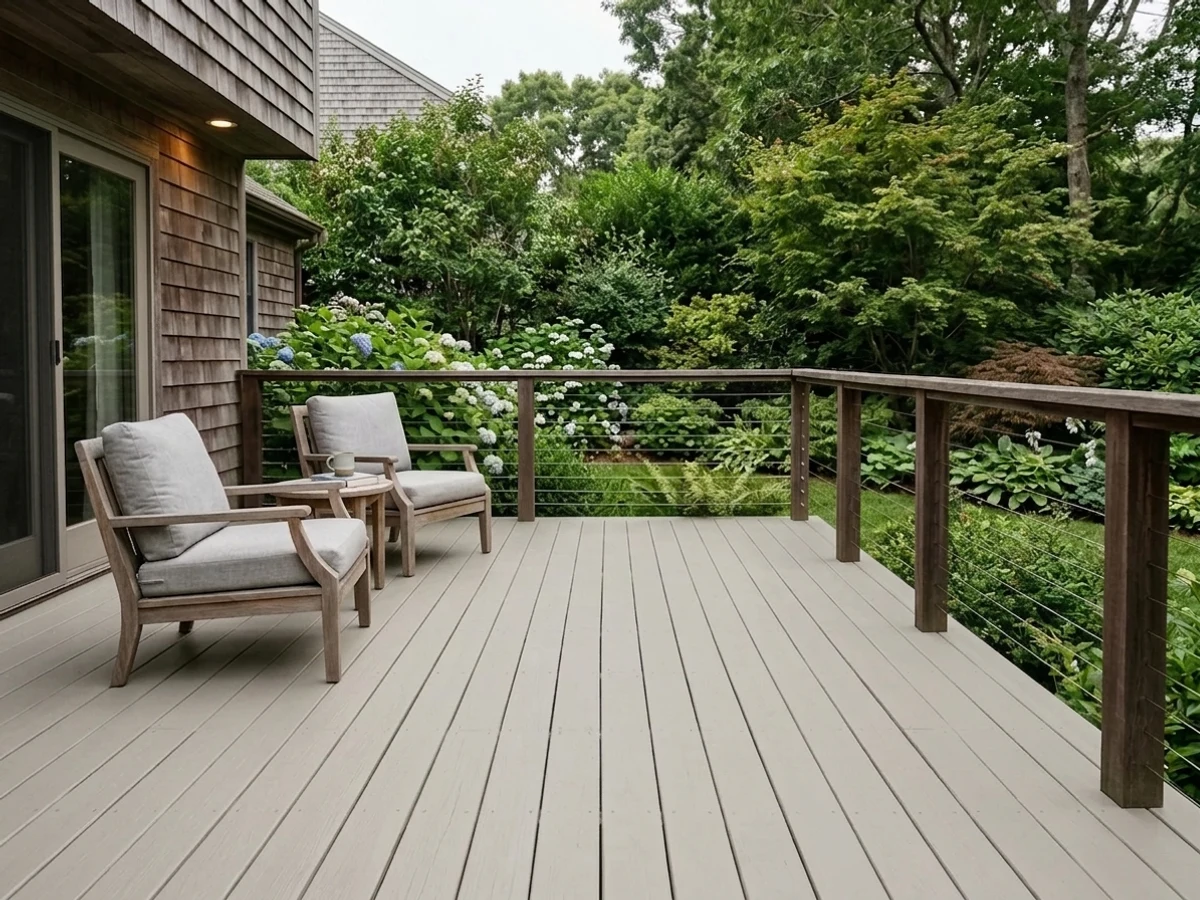
Warm Browns
A true mid brown — the fresh-sealed-wood look that flatters every house color.
Stain my deck in Dixon Brown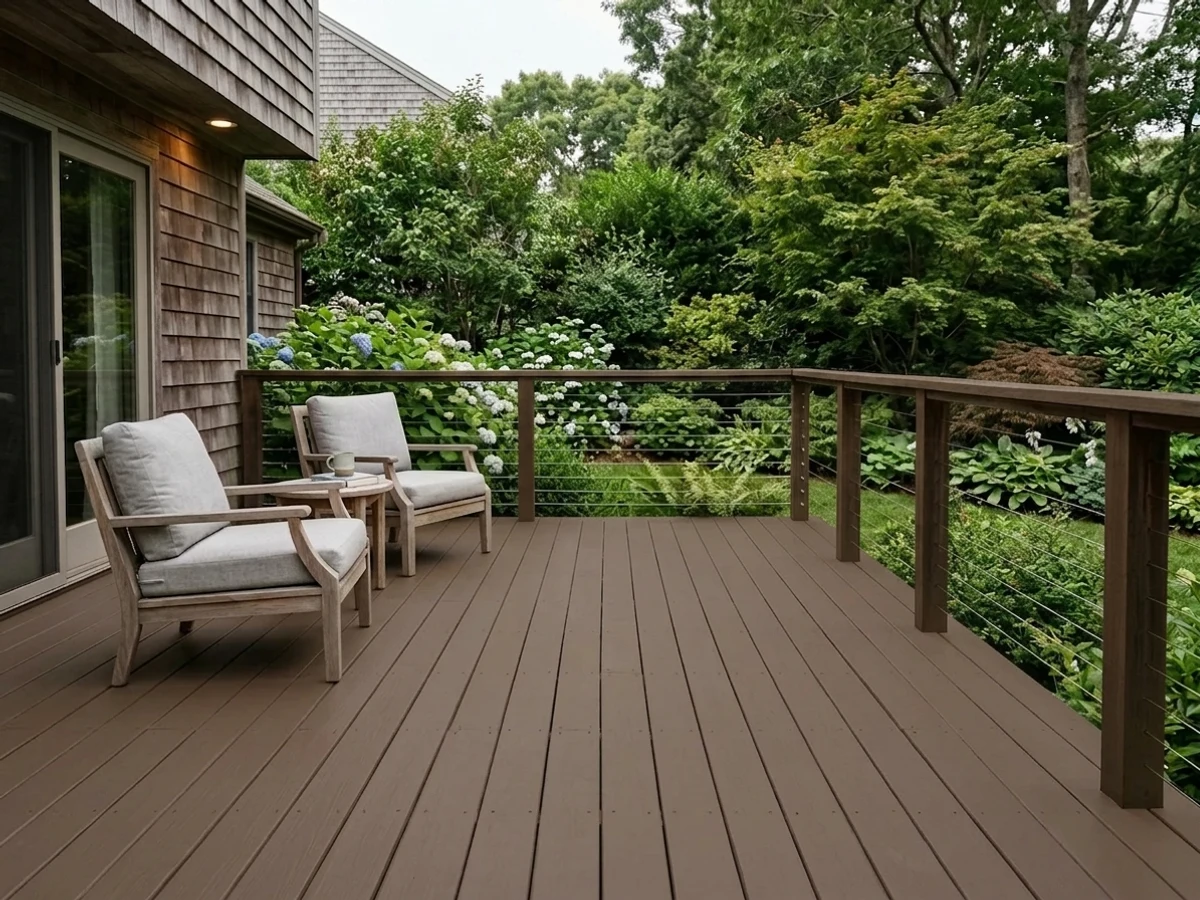
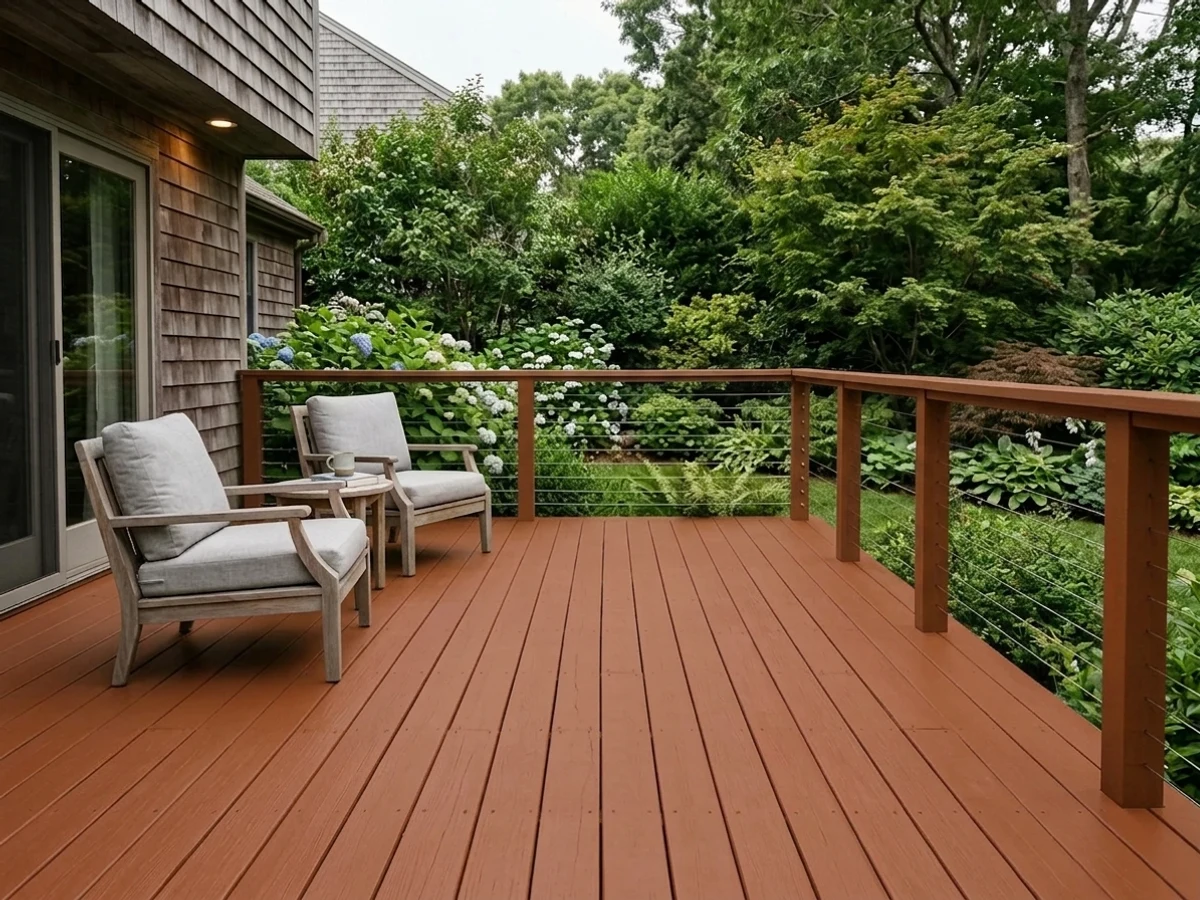
Bright cedar-orange — the color new cedar wishes it stayed.
Stain my deck in Fall Leaves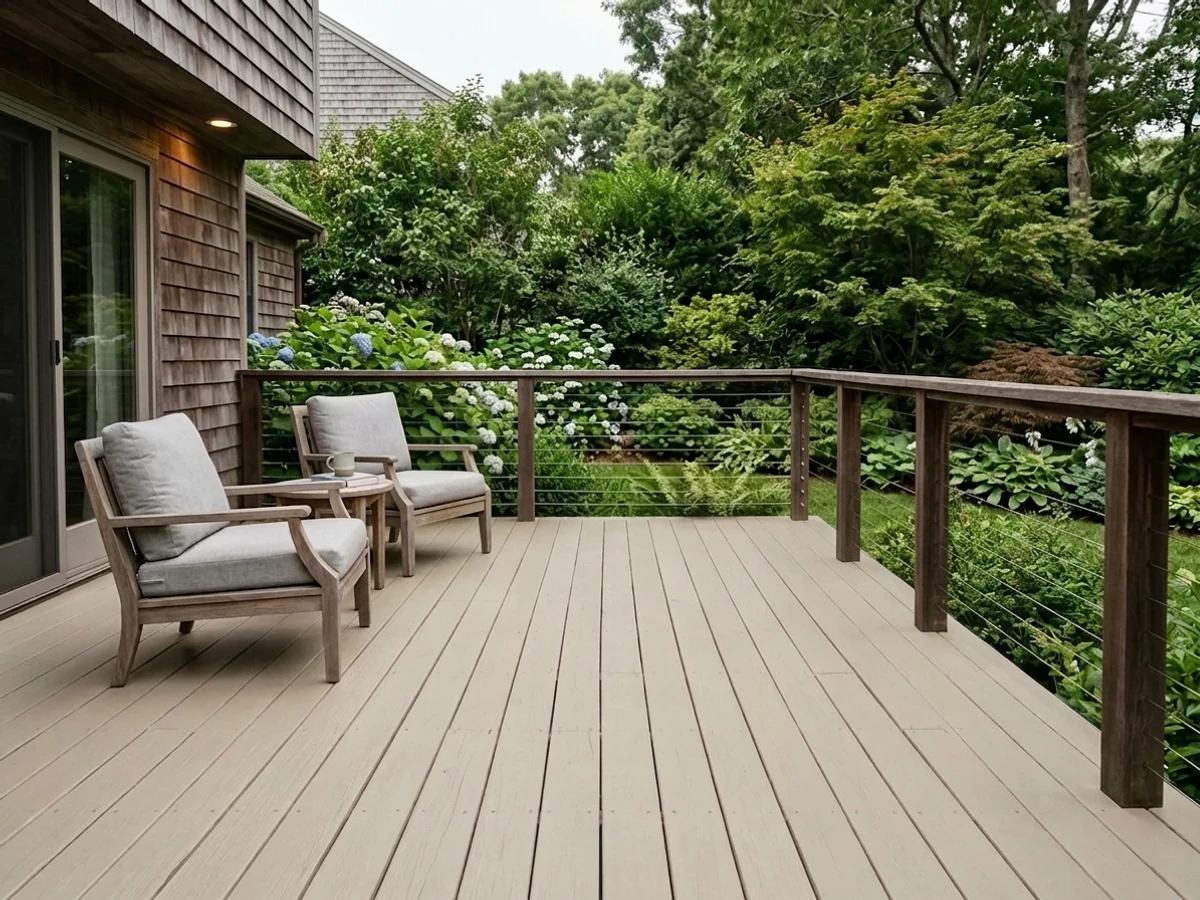
Dark & Bold
A deep teal-navy deck — the confident pick under a white or sage house.
Stain my deck in Moscow Midnight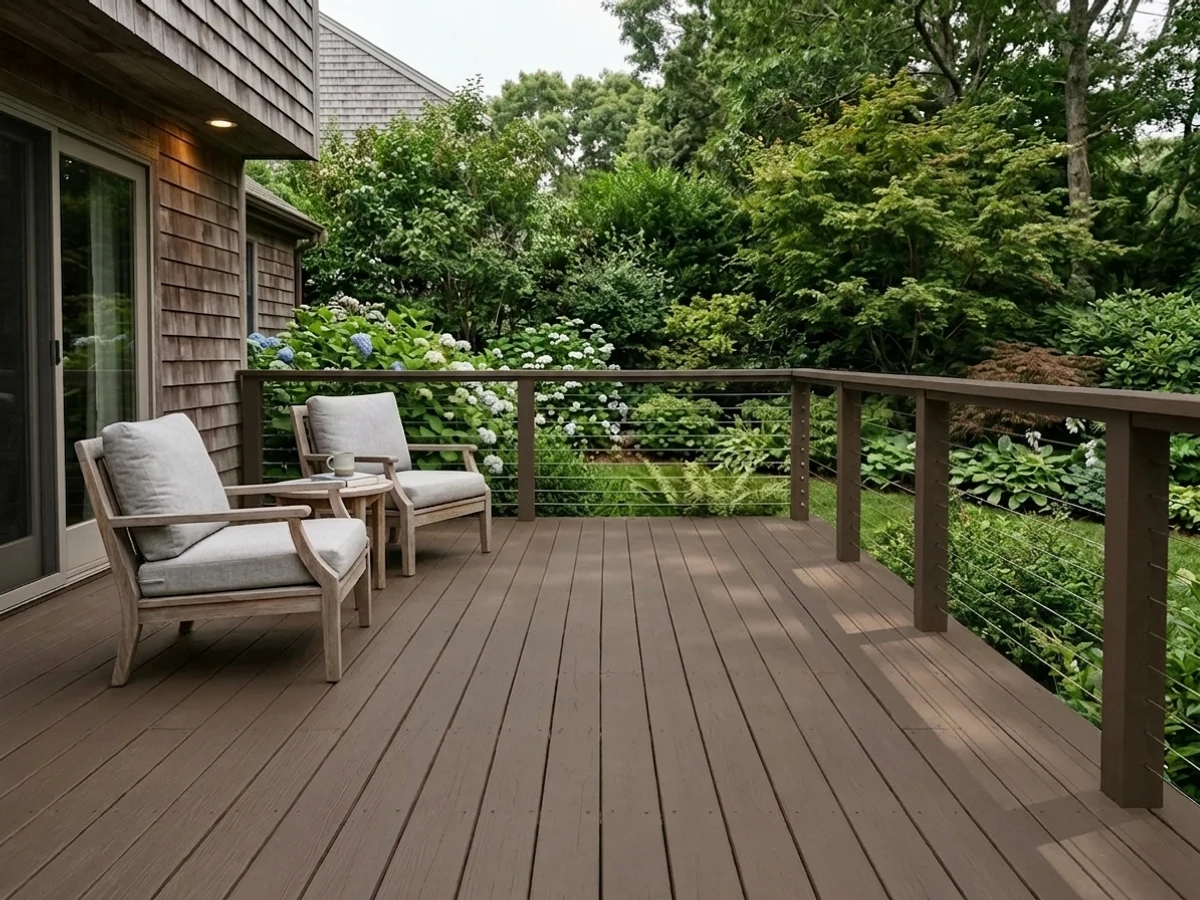
Deck Stain Colors by Tone
Deck stain comes down to four families. Stain shifts with the wood species, its age, and how many coats go on, which is exactly why a preview on your deck beats a color card at the store.
Warm Browns
The default deck look — reads as fresh-sealed wood. Safe with almost any house color, best with beige, cream, and brick exteriors.
Grays & Driftwood
The modern pick, and the most forgiving on older boards — gray hides weathering instead of fighting it. Pairs with white, gray, and blue houses.
Redwood & Cedar Reds
Classic and warm, but the strongest color commitment on this page — check it against your brick and your house color before you buy.
How Much Grain Do You Want to See?
The finish decides how much wood shows through. It matters as much as the color.
Transparent
Tints the wood, shows all the grain. For newer boards in good shape that you want to keep looking like wood.
grain visible ~92%Semi-Transparent
Color plus visible grain — the middle path, and the most popular choice on decks under ten years old.
grain visible ~55%Solid
Covers like paint but stays walkable. The honest answer for older decks, patched boards, or anything previously coated in solid color.
grain visible ~8%Match the Deck to the House
A deck the same color as the siding disappears. These four pairings are the ones that keep showing up on the best-looking houses.
One photo that shows both, and the visualizer paints each surface separately.
Three Steps, No App
Add a photo
Phone photo in daylight, deck in the frame. That is all.
Name the stain
Pick one above or type it: "Gauntlet Gray, semi-transparent".
Compare and buy
Slide before and after, try another, then buy the one you saw.
Deck Stain FAQ
Can I see the stain on my own deck before I buy?
Yes. Upload one photo of your deck, name the stain or pick one above, and the boards are re-stained in that color. The house, railing and yard stay untouched, so you judge the color in your own light.
Semi-transparent or solid?
Under ten years old and in good shape: semi-transparent keeps the grain. Older, patched or previously solid-coated boards: solid stain is the honest answer, and it is the one the preview can match most exactly.
Should the deck match the house or contrast it?
Usually contrast. A deck the same color as the siding disappears. The four pairings above are the ones that keep showing up on the best-looking houses.
Do I need to strip the old stain first?
Failing or peeling coats, yes. Sound semi-transparent stain can take another coat after cleaning and brightening. A deck cleaner lifts the gray dead fibers; a brightener resets the wood tone.