Cabin Paint Colors
A cabin is the one house where the body color is usually a stain, not a paint. Here are five complete schemes — logs, trim, sash and door — with verified codes, and a way to see each one on your own cabin.
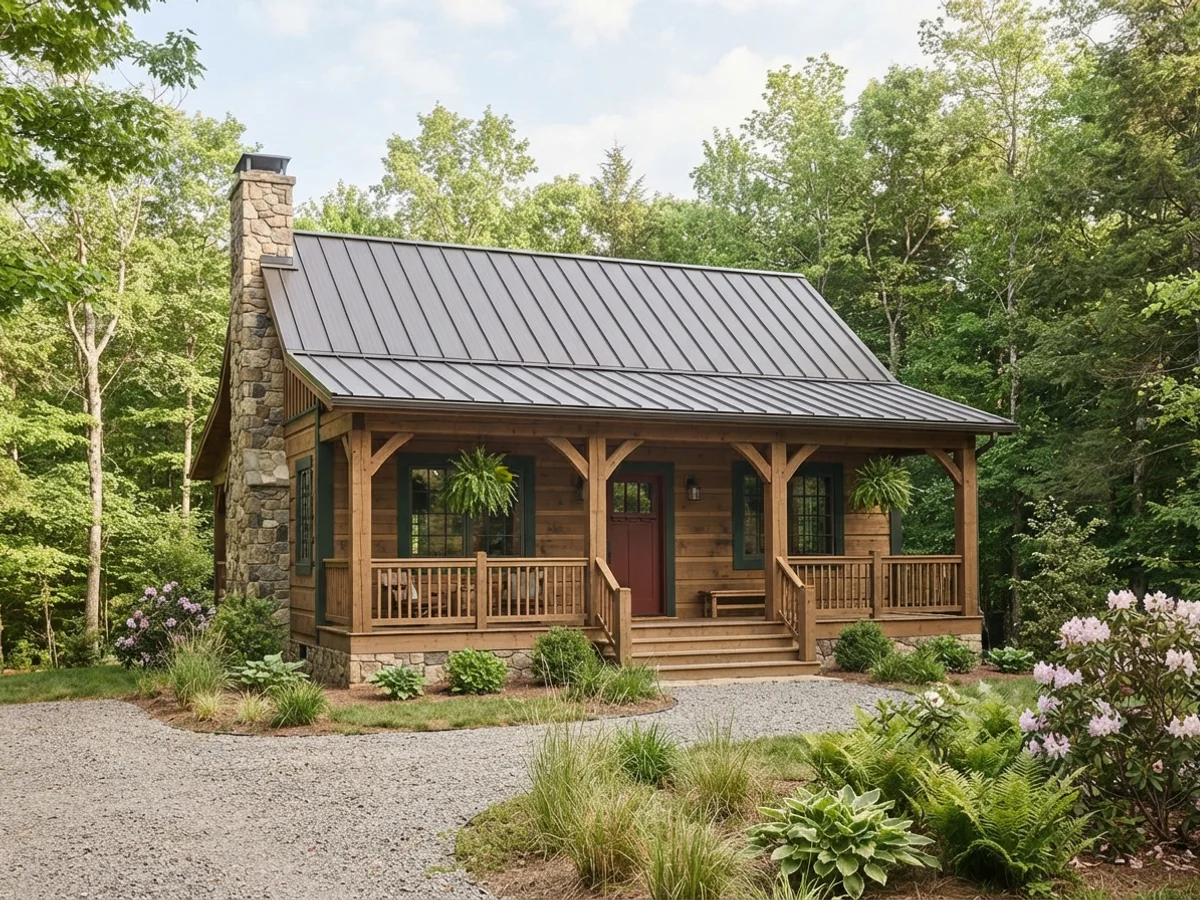
Five Complete Cabin Schemes
Each one is a full body, trim, sash and door set. Bodies are exterior stains where the wall is logs or rough timber; trim, sash and doors are paint. Codes are exact, but screen swatches are approximations — judge the scheme on a photo of your cabin, not on this page.
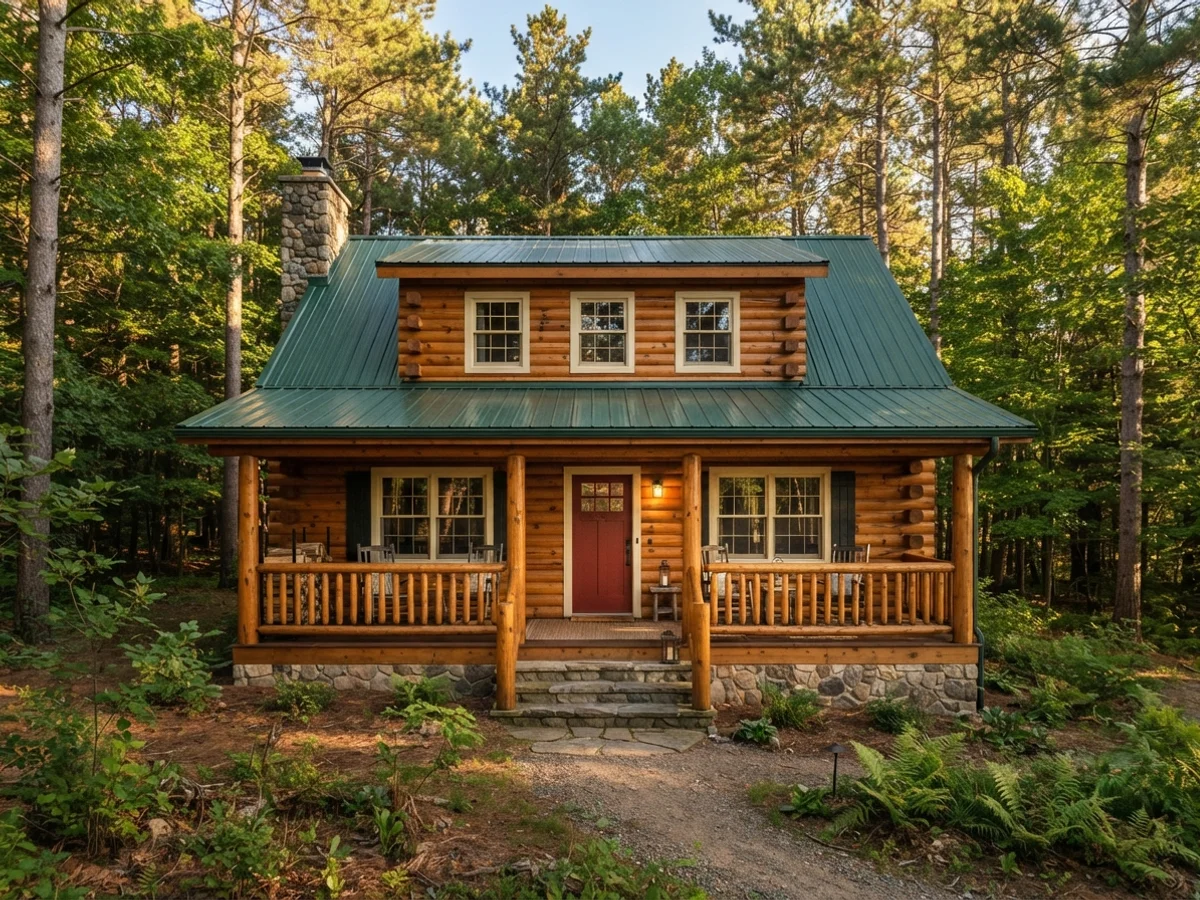
Honey Logs & Forest Green
The scheme most people mean by "log cabin": a warm honey-brown stain that still shows grain, then everything milled goes dark. Natural Cedartone is brown enough to keep the logs from reading orange. Essex Green on the corner boards and window casings is the classic cabin trim, and a barn-red plank door is the one bright note.
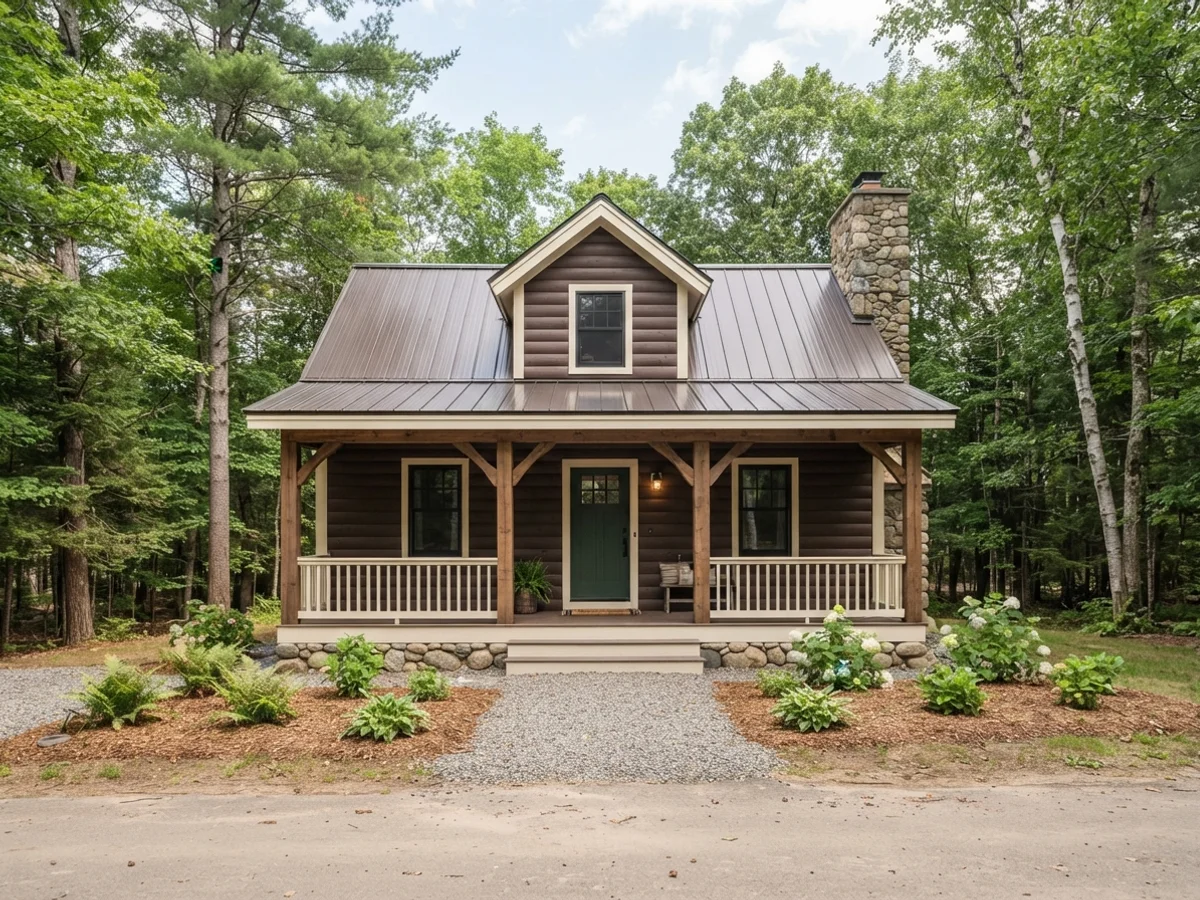
Dark Mahogany & Cream
The deep-walnut look that has taken over new log homes. Mahogany is a rich, almost chocolate stain that makes the wall recede and the wood grain read as texture rather than color. Cream trim is what keeps it from turning into a dark box: it draws every window and eave line. Black sash, forest-green door.
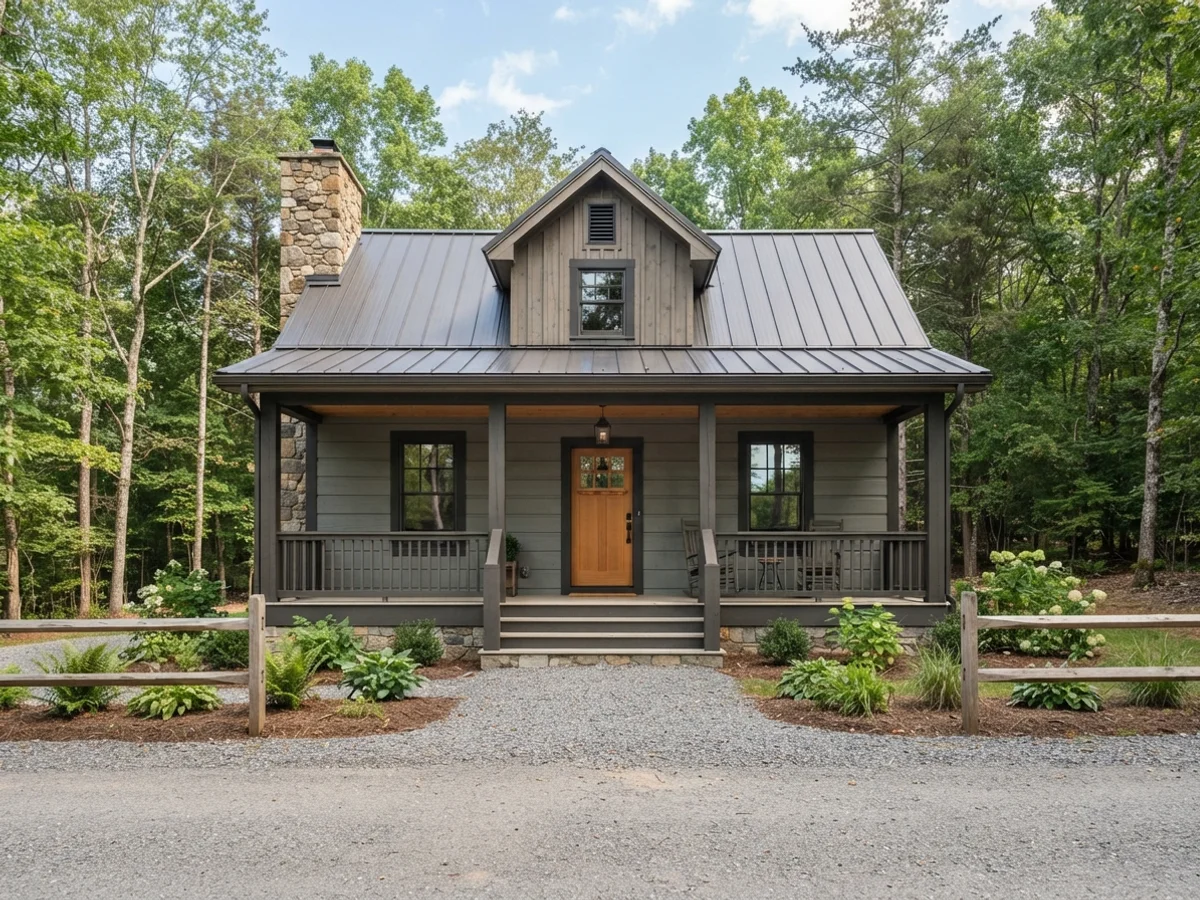
Weathered Gray & Black
The modern rustic version, and the fastest-growing cabin look of the last few years. Georgetown Gray is a driftwood stain that mimics the silver a wall goes on its own, except it is protected. Black trim and near-black sash sharpen the whole thing, and a natural cedar door keeps one piece of real wood color in the picture.
Forest Green & Off-White
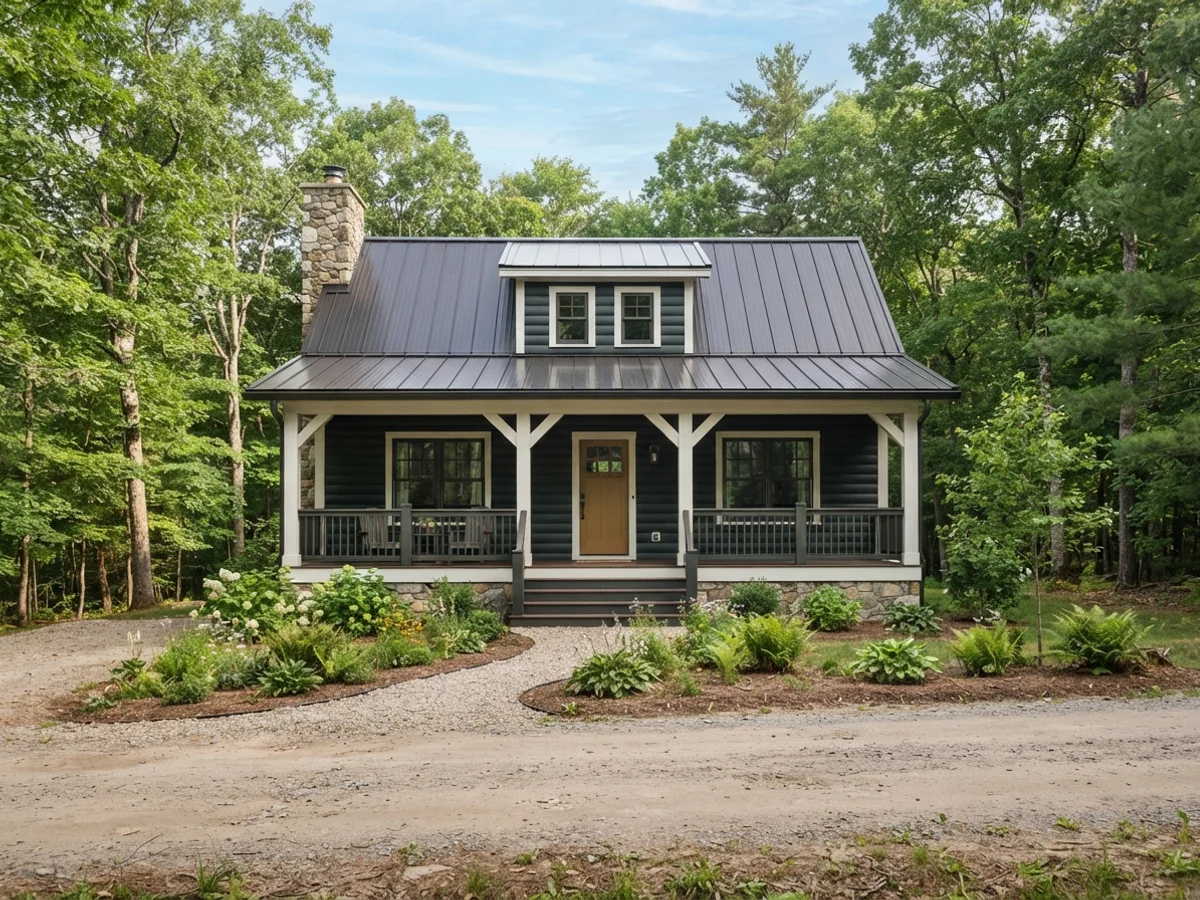
For a board-sided or frame cabin rather than a log one, where paint is on the table. Black Forest Green is so deep it reads as color only in direct sun; from the driveway the cabin just disappears into the treeline. Off-white trim does all the work, dark iron sash keeps the windows quiet, and a golden door is the small surprise.
The Red Cabin
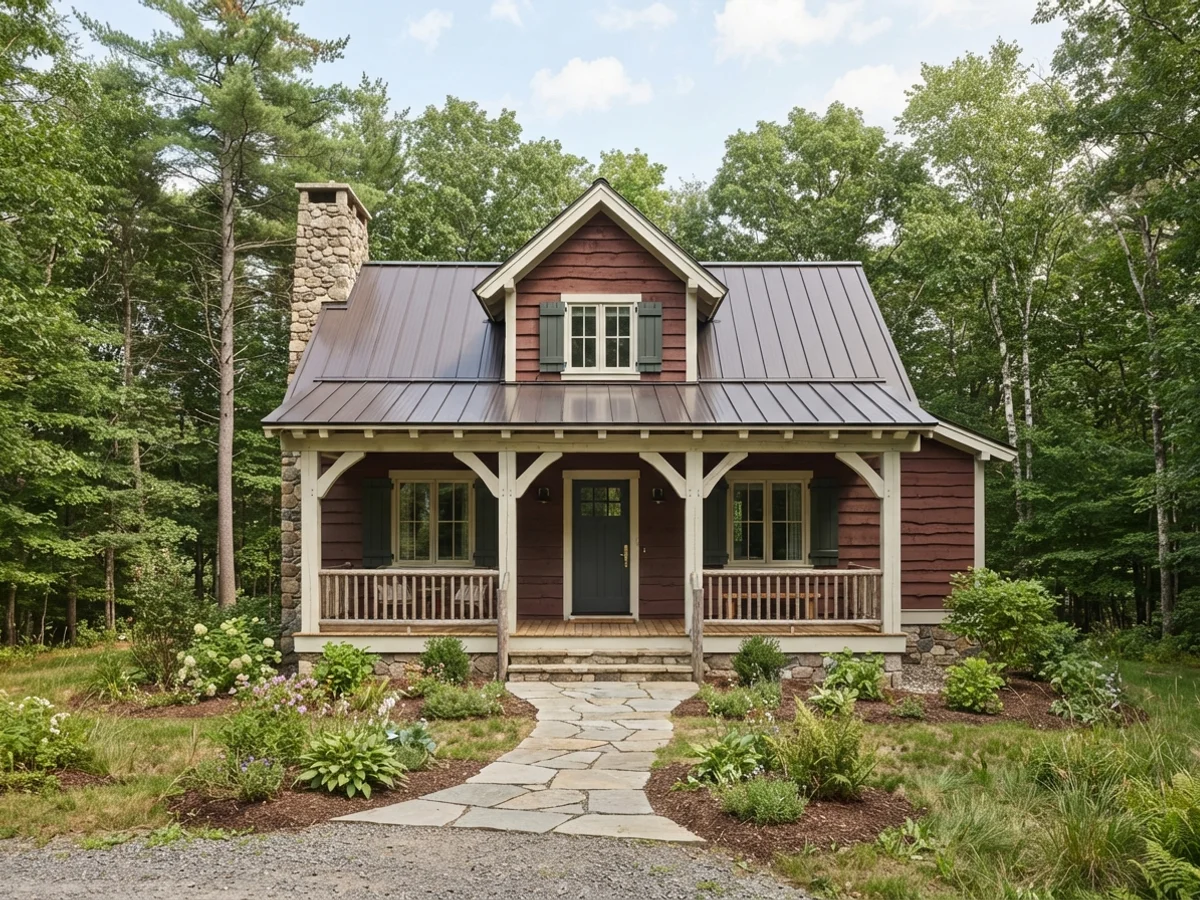
Old farm cabins and Scandinavian cottages were red for a cheap and practical reason, and the look outlasted the reason. New Pilgrim Red is a solid stain, so it covers a rough or previously coated wall without the sheen of paint. White trim, board shutters in hunter green, near-black door.
Logs, Trim, Sash, Door
The logs take the stain. Everything milled and flat takes paint. The two never share a color, and that contrast is what stops a cabin from looking like one brown lump from the road.
The body color is the log wall or the timber siding, and on a real log cabin it is a semi-transparent or semi-solid stain rather than a paint. Semi-transparent leaves the grain and the checks visible. Semi-solid hides more of the wood but still soaks in, which is the right answer on an older wall with patchy color or leftover coating. Either way the pigment is what blocks the UV that grays a log, so a clear sealer is not a color choice, it is a short-term one.
The trim color covers the corner boards, the fascia and bargeboards, the window and door casings, the porch posts and beams if they are milled, and the gable-end boards. This is paint, and it is almost always much darker than the logs. The sash color goes on the window frames and muntins only. On a cabin the windows are often the only crisp geometry in the whole facade, so a dark sash is what makes them read as windows and not as holes.
The chinking between logs is its own color and it is usually already decided: an off-white, tan or gray mortar line that runs the whole wall. Leave it out of the scheme and work around it. The front door is the one place to spend a color, and the deck should sit one step darker than the logs so the floor grounds the house instead of competing with it.
Upload the photo. The visualizer stains the walls and paints the trim separately, so you can swap one slot without starting over.
From Chinking White to Black Forest Green
Cabin bodies live low: most of the stains here sit under LRV 30, where a suburban greige would be 60. Pick a body from the middle, trim from either end, and remember that a stain on real wood always lands warmer than the chip.
Stain or Paint?
On a cabin this is not a taste question. It depends on what the wall is made of, and getting it backwards is the expensive mistake.
Stain, nearly always
- Soaks in instead of forming a film, so the wall can dry out after rain
- Fades rather than peels — recoating is wash and roll, not scrape and sand
- Semi-transparent keeps the grain and checks; semi-solid covers a patchy old wall
- Recoat every 3 to 5 years water-based, 5 to 7 oil-based
Paint is fine here
- Lap siding and board-and-batten are dimensionally stable and take paint well
- Trim, sash and doors are paint on every scheme on this page
- Solid stain is the middle ground: paint-like coverage that still breathes
- Never paint over a log wall to hide a failing stain
The reason to care: a painted log traps the moisture the log is still moving, and the rot starts on the inside where you cannot see it. By the time the paint bubbles, the damage is several seasons old. If a previous owner already painted the logs, that is a stripping job, not a repaint decision, and it is worth pricing before you pick any color.
Pick the roof color before the walls if the roof is changing too. Cabin roofs are usually metal in dark green, black or brown, they last thirty years, and they are the one surface you are not repainting on a whim. Everything else on this page is chosen to sit under one of those three. For the sheds, rails and gates around the cabin, the same logic carries over to the fence and the deck.
The Four Surfaces a Cabin Argues About
A cabin is not one coating job. These four go on in different products, in different colors, and usually on different schedules.
Logs
Semi-transparent or semi-solid exterior stain. Pigment is the sunscreen, so a clear finish is a two-year decision at best.
Chinking
Stays the light mortar line it already is. Do not stain across it: the contrast between dark logs and pale chinking is the whole texture of the wall.
Deck and steps
Deck stain, not wall stain, one step darker than the logs. Horizontal wood takes standing water and wears three times faster.
Metal roof
Dark green, black or brown, and chosen first. It outlives two stain cycles, so every wall color has to work under it.
More Cabin Colors That Work
Five more exterior stains for the log wall and three deep paints for trim and sash. Any of them can replace a slot above without breaking the scheme. Click one to try it on the walls.
Cabin Color FAQ
Should I stain or paint my log cabin?
Stain the logs. A log wall holds and releases moisture all year, and film-forming paint traps that moisture against the wood, which is how a log rots from the inside while the outside still looks fine. Stain soaks in and lets the wall breathe, and it fades instead of peeling, so recoating is a wash-and-roll job rather than a scrape-and-sand one. Paint is the right answer for milled lap or board-and-batten siding, and for trim, sash and doors on any cabin.
How often will I have to re-stain?
Plan on three to five years for a water-based stain and five to seven for an oil-based one. The south and west walls take the worst of the sun and often need attention every two to three years, so it is normal to recoat one or two walls between full cycles. Before you assume it has faded, wash it. A lot of "dull" log walls are just holding dust and pollen, and come back after a rinse.
How do I stop the logs from looking orange?
Most of the orange comes from the wood, not the stain. Pine and cedar both push warm, and a clear or golden stain only amplifies it. Pick a stain with brown or gray already in it — Natural Cedartone, Chestnut Brown or Spanish Moss instead of a straight honey — and go one step darker than the chip looks. The final color also depends on your log species and how the wall was prepped, so test on an actual log end on the sunny side before you buy gallons.
What trim color goes with honey-colored logs?
Go dark. Honey logs already sit at a middling lightness, so light trim washes out against them and the windows disappear. Deep green, bronze or near-black on the corner boards, fascia and window casings gives the wall an edge and makes the glass read as deep. Save the light color for the chinking, which is already there, and for the porch ceiling if you have one.
Related Styles and Surfaces
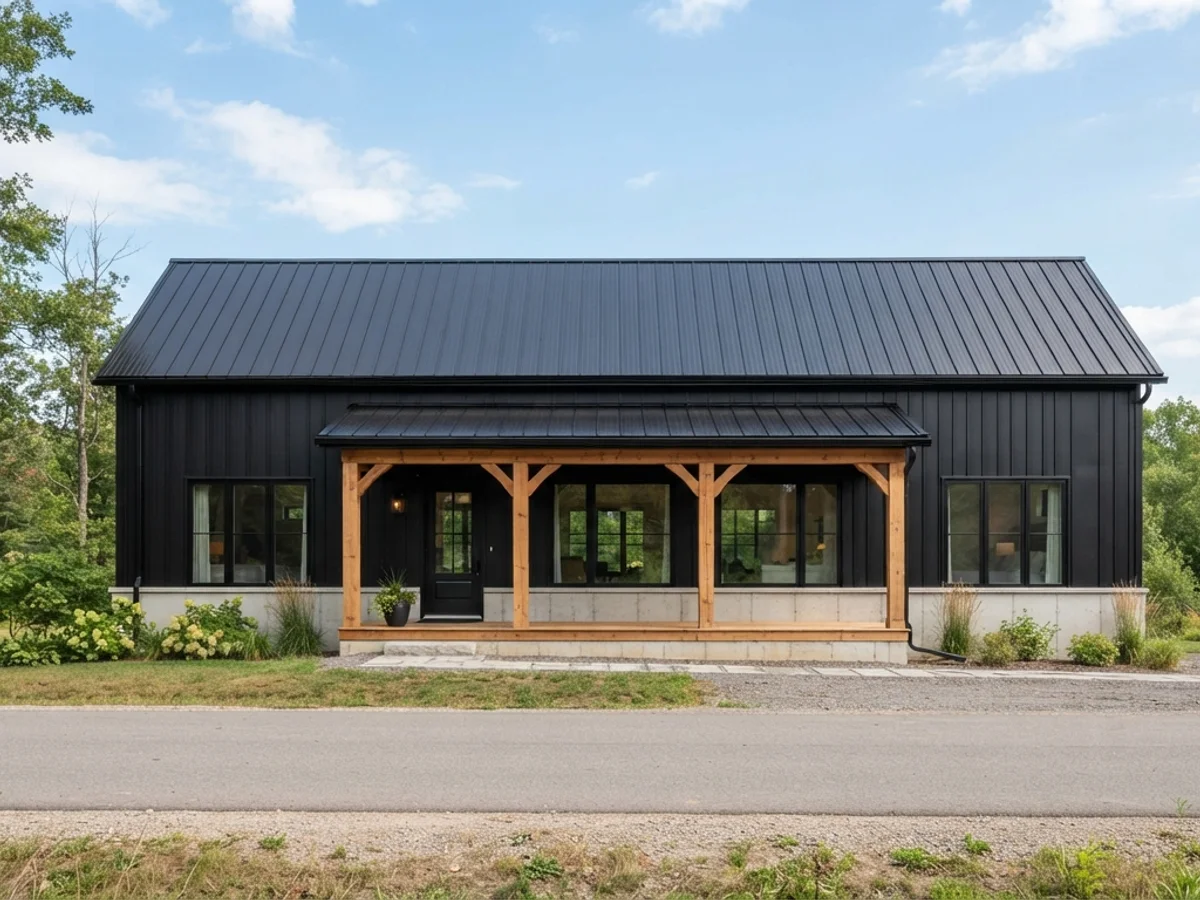
Metal siding colors with wood accents
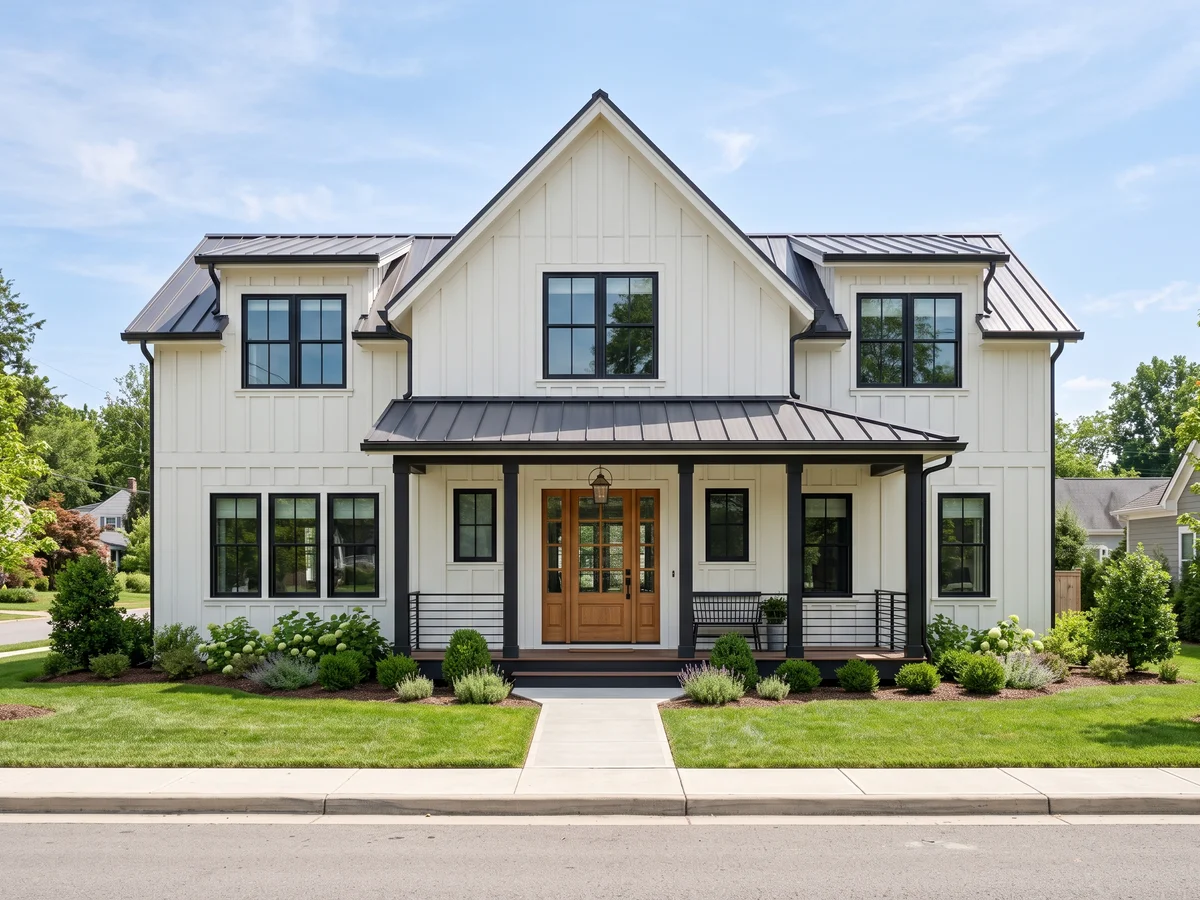
Crisp whites, black windows, board-and-batten
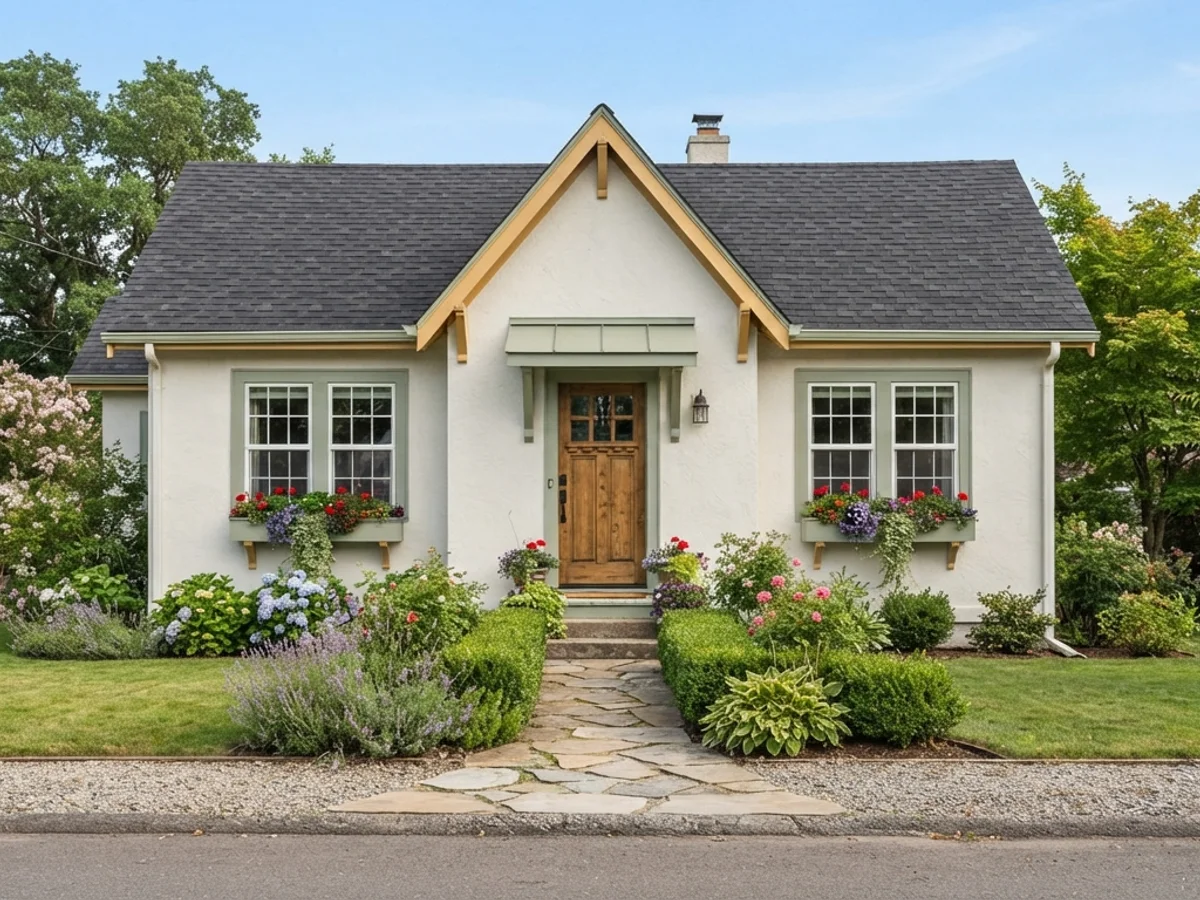
Soft, settled palettes for a small house
Five cabin schemes with real stain and paint codes, previewed on a photo of your own cabin. Free to start.