Barndominium Colors
Barndo color comes in two rounds: the panels — body, roof, trim — are factory finishes picked at build time, then everything you actually paint or stain: man doors, posts, wainscot, and the wood that keeps a steel building from reading as a warehouse. Five complete schemes, and a way to see each one on your own build.
Five Barndominium Color Schemes That Work
Each scheme pairs factory metal-panel colors with paint for the parts you brush or spray on site. The metal and stain swatches are screen approximations — match against your supplier's physical chart. The painted colors are real, buyable paints with exact codes.
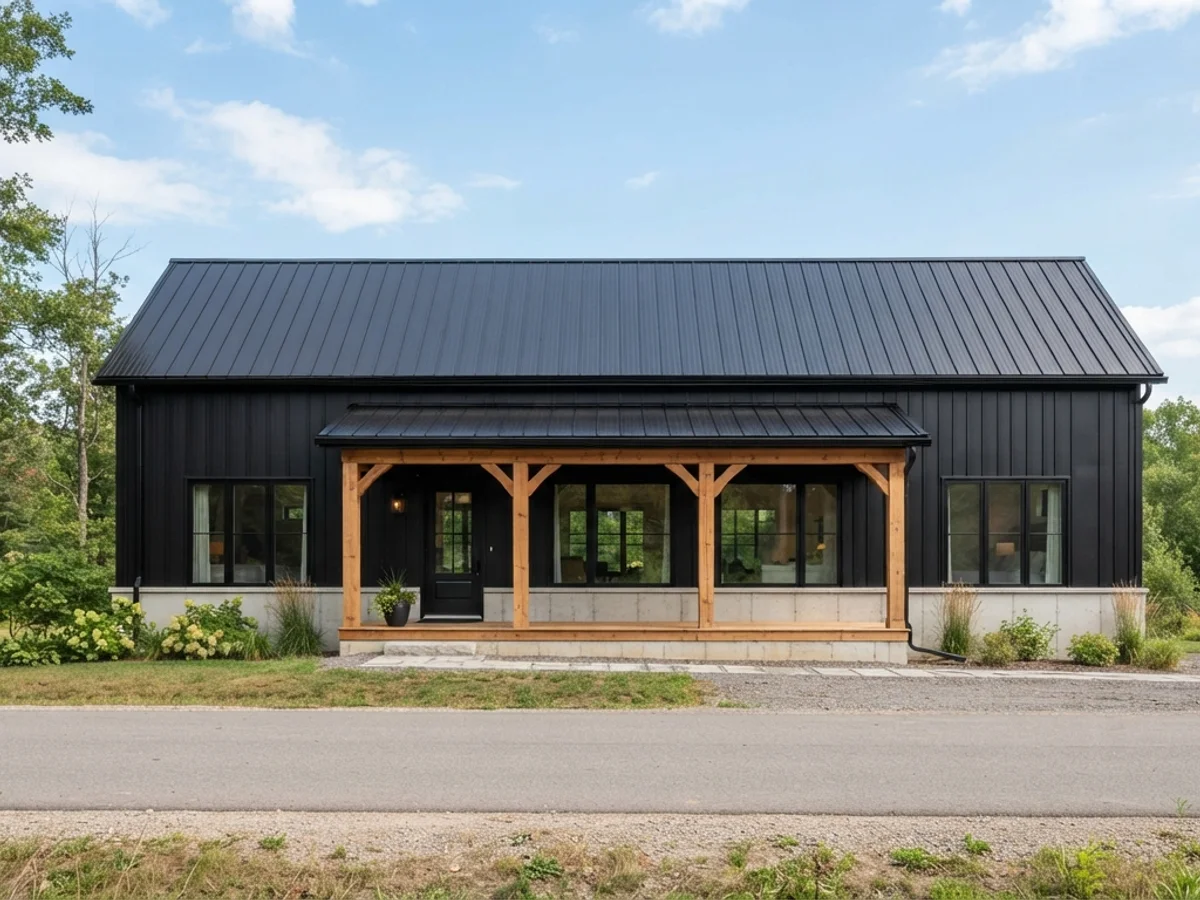
Black Metal + Cedar — the Defining Barndo Look
The scheme that made barndominiums a Pinterest category: matte black standing-seam panels with warm cedar posts, gable accents, and a wood garage or entry door. The black makes the building read as architecture instead of agriculture, and the cedar keeps it from feeling severe. Paint the man doors and any steel trim to match the panels so the wood is the only warm note.
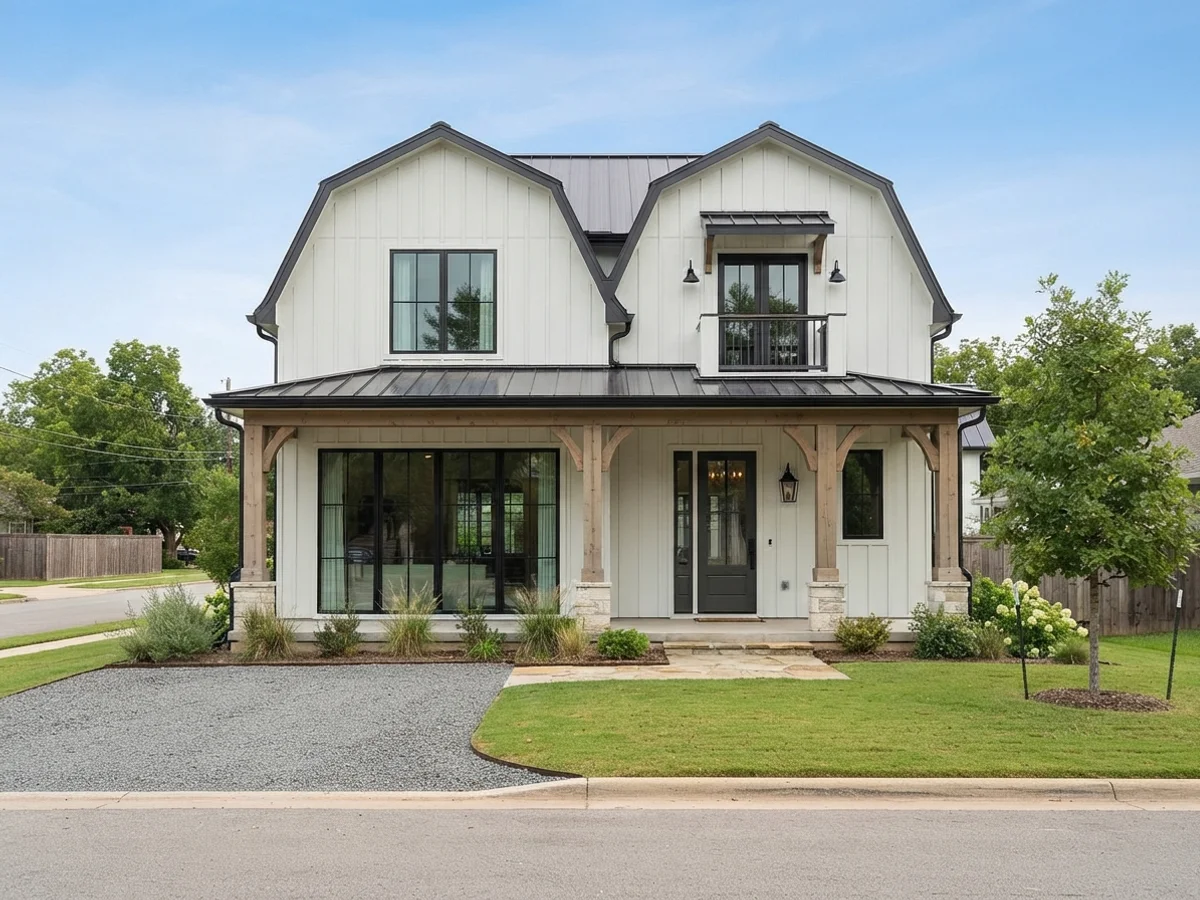
White Farmhouse Barndo
Board-and-batten-profile white panels, black window frames, and a black or deep-charcoal man door — a modern-farmhouse exterior executed in steel. It photographs beautifully and resells easily, but pure white metal shows red-dirt splash near the ground, so most builds add a wainscot or landscaping bed at the base. Painted wood posts and porch framing in Alabaster keep the whites agreeing.
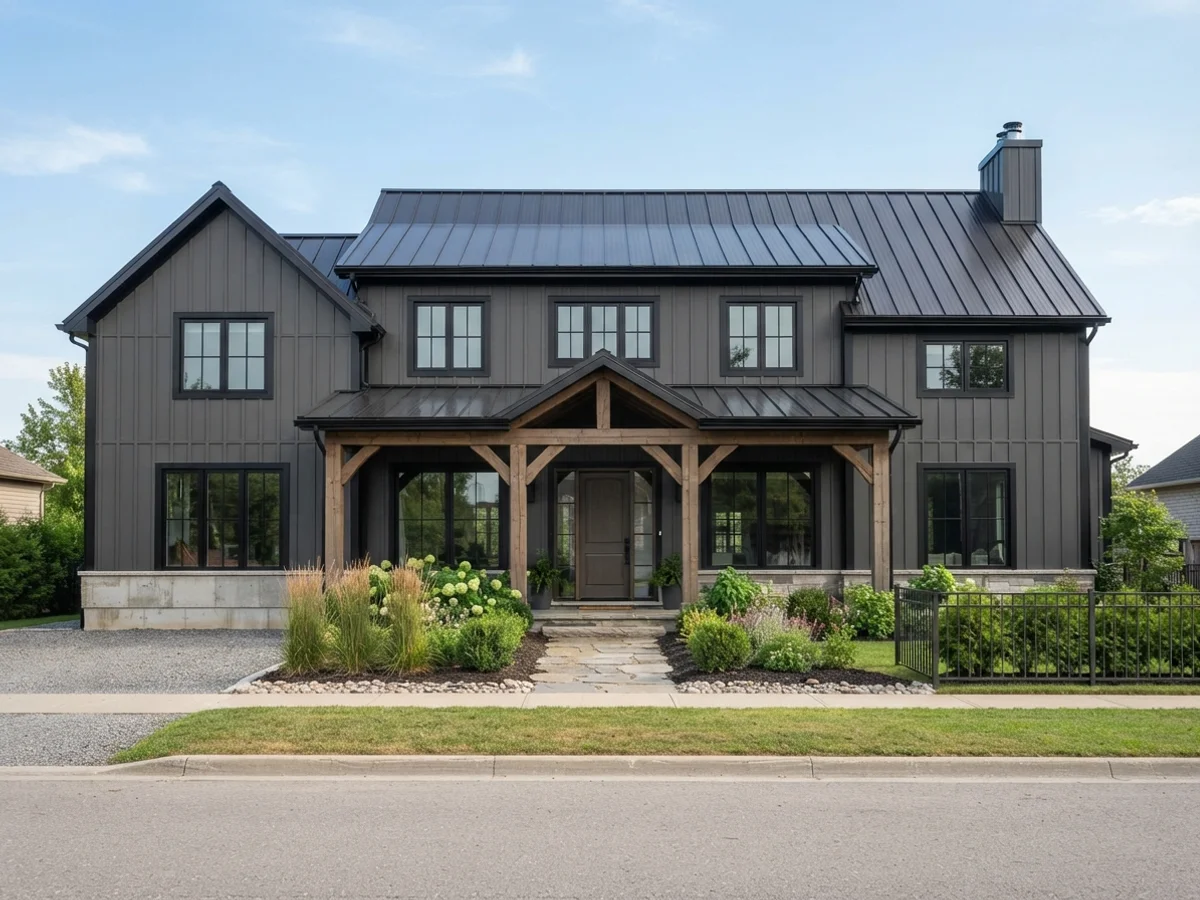
Charcoal + Black Trim Monochrome
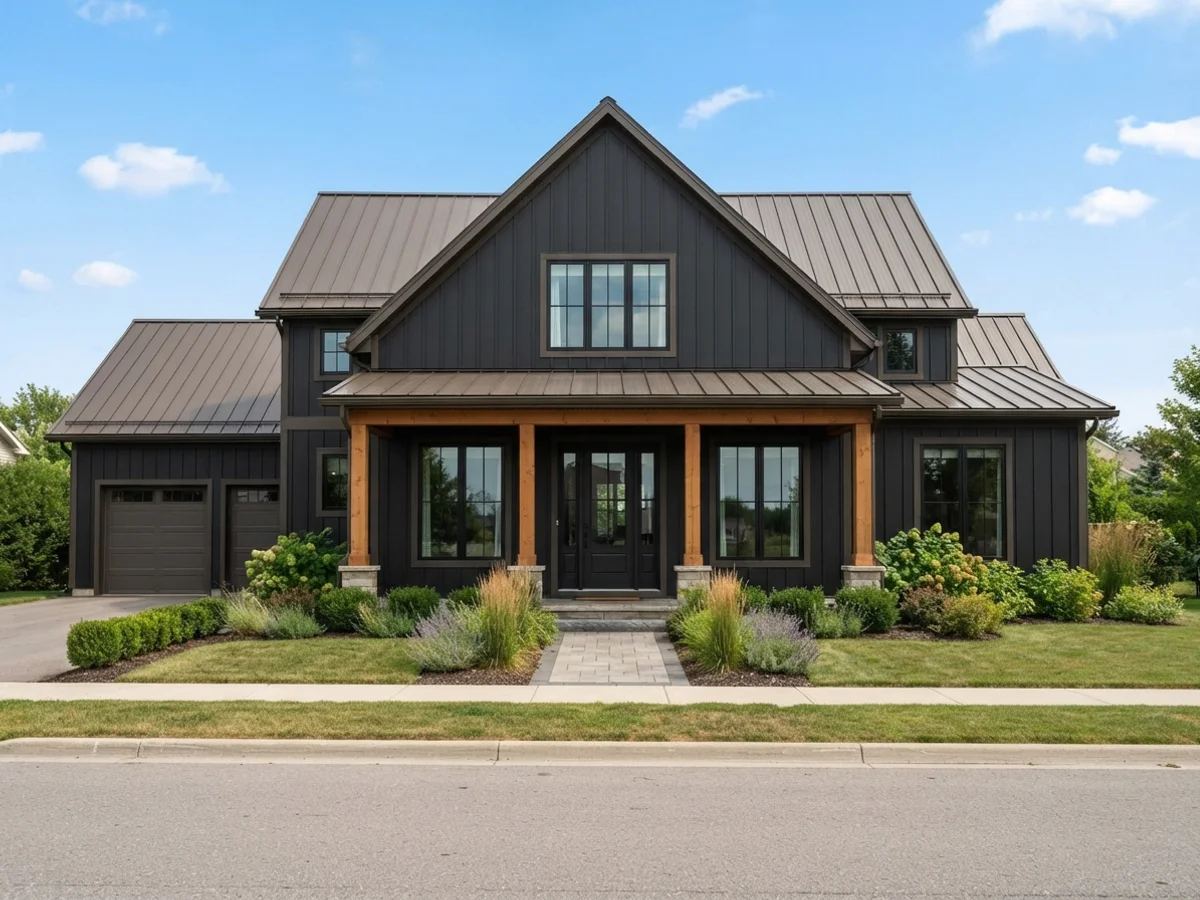
One step softer than all-black: charcoal-gray panels with black trim, black gutters, and doors painted in a near-black charcoal. Monochrome schemes live or die on texture, so this one wants a corrugated or ribbed panel profile and at least one slatted-wood or bronze accent to catch light. It hides dust and panel oil-canning better than true black and runs a little cooler in summer sun.
Green Metal + Stone
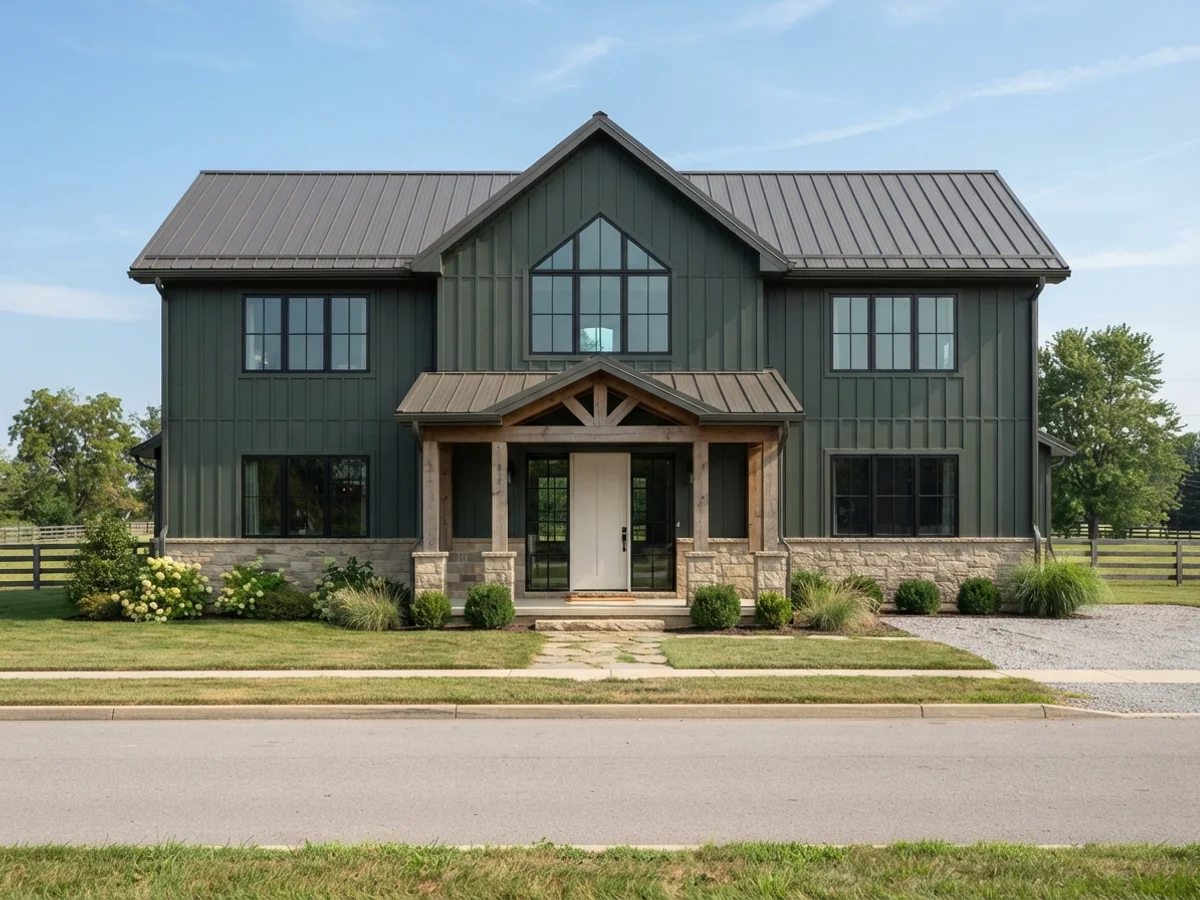
Deep evergreen panels over a stone or cultured-stone wainscot — the barndo scheme that sits best on acreage, because the building borrows its palette from the tree line behind it. Burnished-slate trim bridges the green and the stone. Paint the man doors a soft white so entries read clearly from the driveway; on a dark green building a white door is wayfinding, not just decoration.
Galvalume + Light Gray + Wood
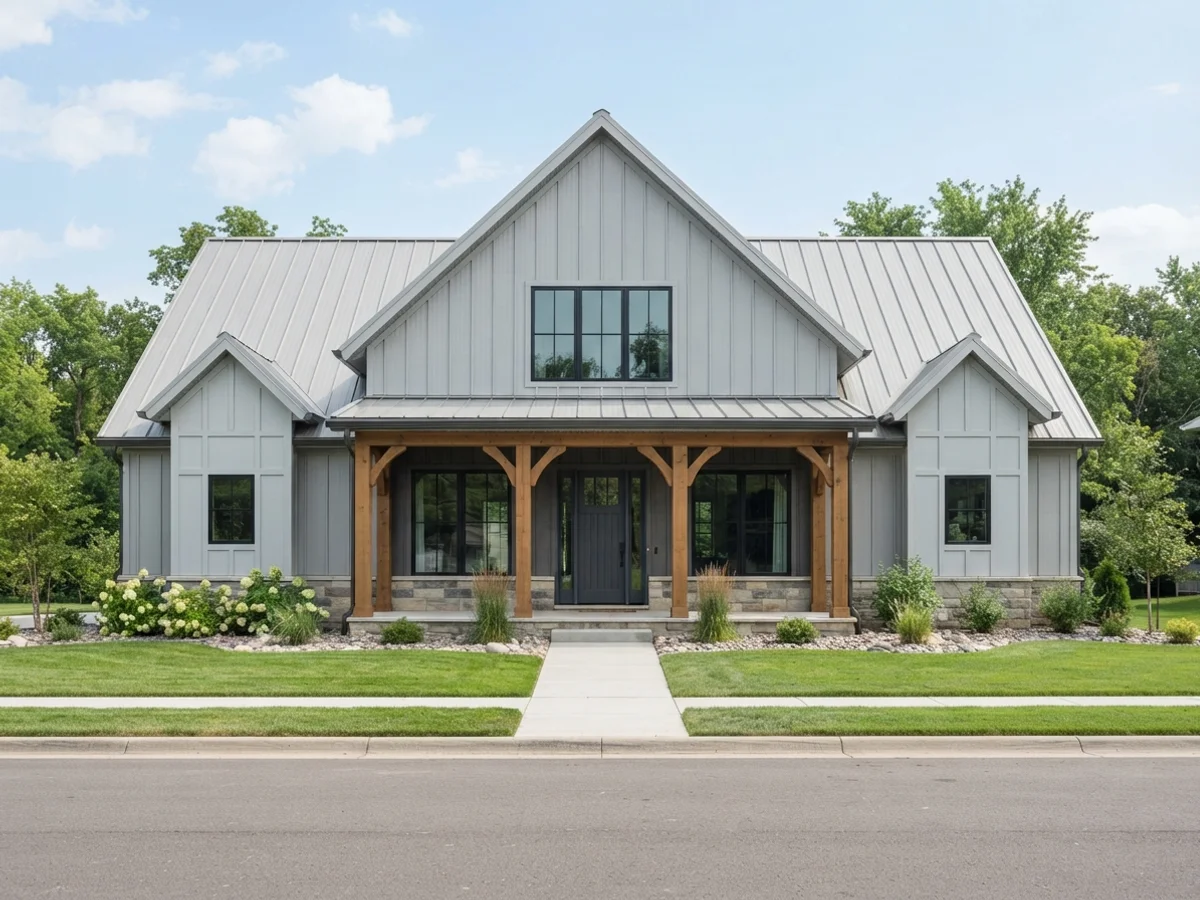
Bare Galvalume or a light silver-gray panel with warm wood accents is the budget-smart scheme: unpainted Galvalume is usually the cheapest panel on the order sheet and its weathered-industrial look is entirely intentional now. Pair it with a light gray secondary panel or trim, generous wood at the porch, and a navy man door for one saturated moment against all that silver.
Panel, Trim, Wood, Door
Panel colors cover the field — body and trim. Wood is the accent that supplies the warmth steel cannot. The door is usually the one purely painted element that ties the two together.
Panel colors are baked on at the factory, which is why they hold up for decades and why no paint fan deck carries them. Order physical panel samples and look at them outdoors, at your site — the color chart in the office lighting is lying to you a little. Everything else — steel man doors, overhead-door frames, wood posts, batten trim, a painted wainscot — is ordinary exterior paint or stain, chosen from the same decks as any house.
The biggest wood statement on most barndos is the door wall: a wood-look overhead door or a stained oversized entry can carry the whole front elevation. If yours will be painted steel instead, treat it like any front door color decision — one saturated, deliberate color against the panels. Wood tones that look rich against black panels can turn orange against green ones, and the visualizer shows you that in seconds. Barndos borrow freely from their neighbors, too — the farmhouse and ranch palettes translate directly to metal panels.
Upload the photo. The visualizer paints each surface separately, and you can swap any one slot without starting over.
Five Barndominium Looks, Rendered
Curated looks from our exterior render set. Each one opens the visualizer with its siding, trim and door colors already loaded.
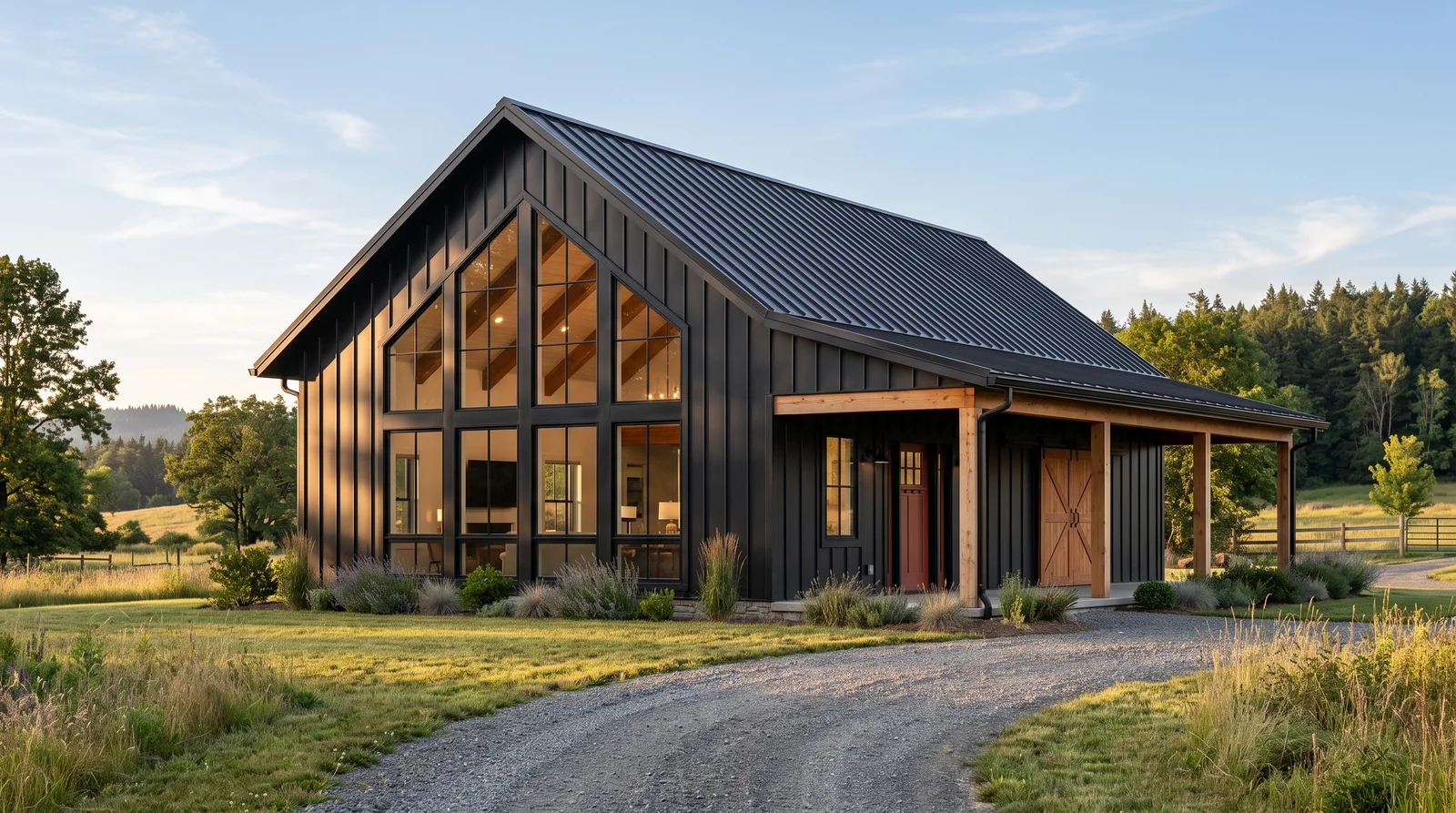
The look everyone is chasing: flat black metal, warm cedar posts, and a clay-red door that keeps it from feeling severe.
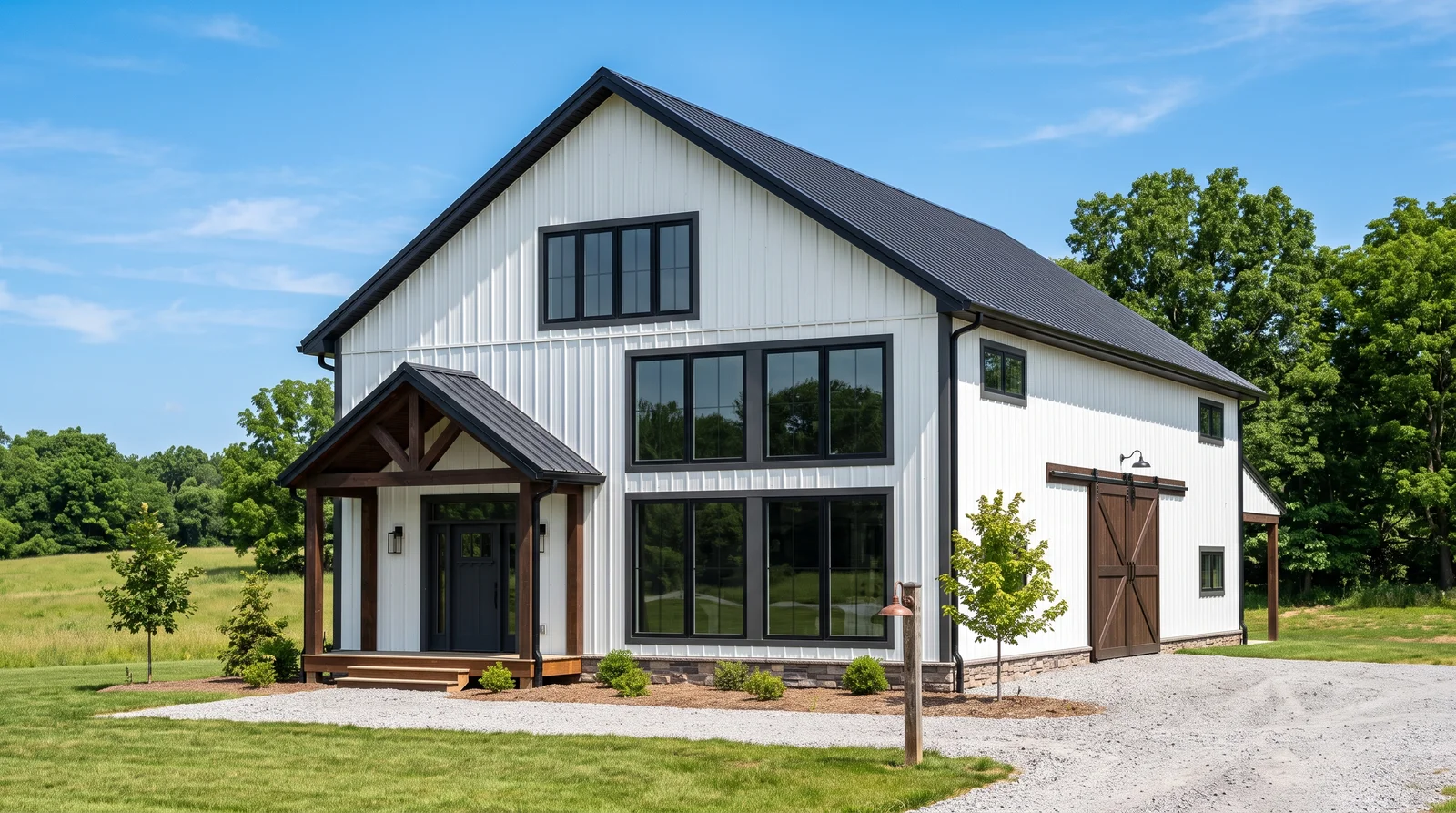
Clean white metal with black window frames and a dark timber slider, for the barndo that should look crisp instead of rustic.
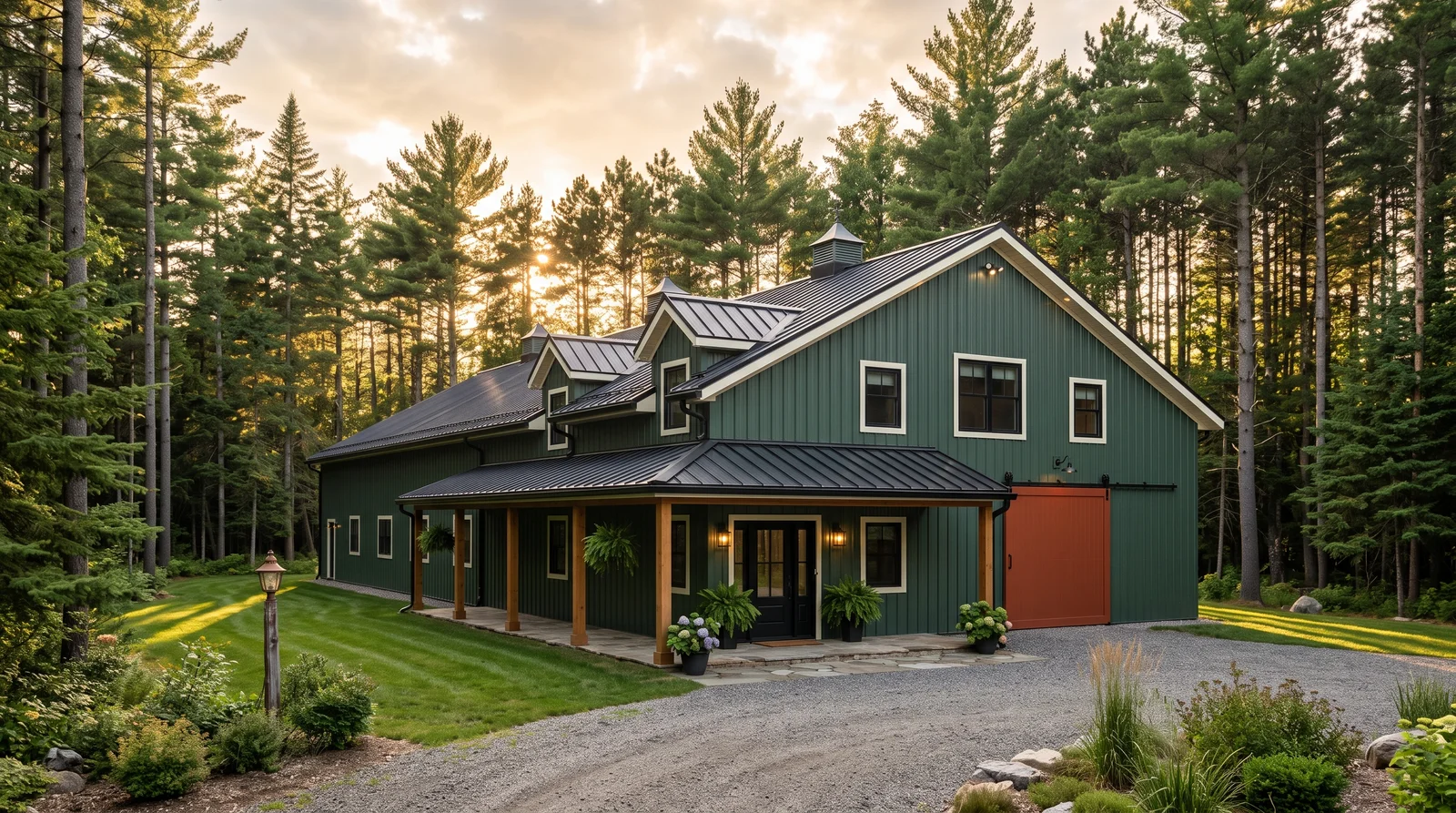
A near-black green that disappears into the treeline in shade and shows its color the moment the sun hits it.
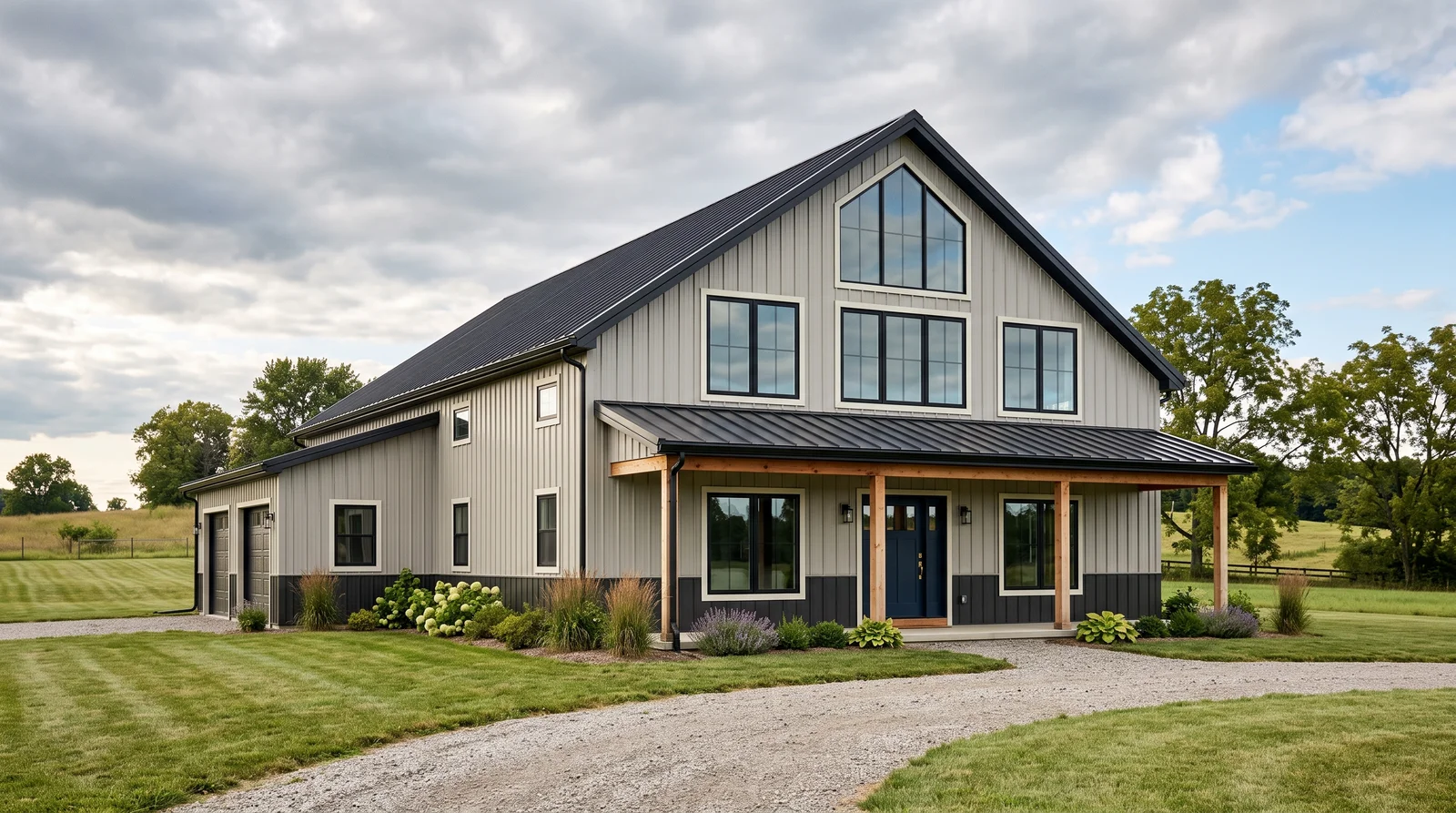
Light gray up top, charcoal on the bottom four feet: the most practical barndo scheme there is.
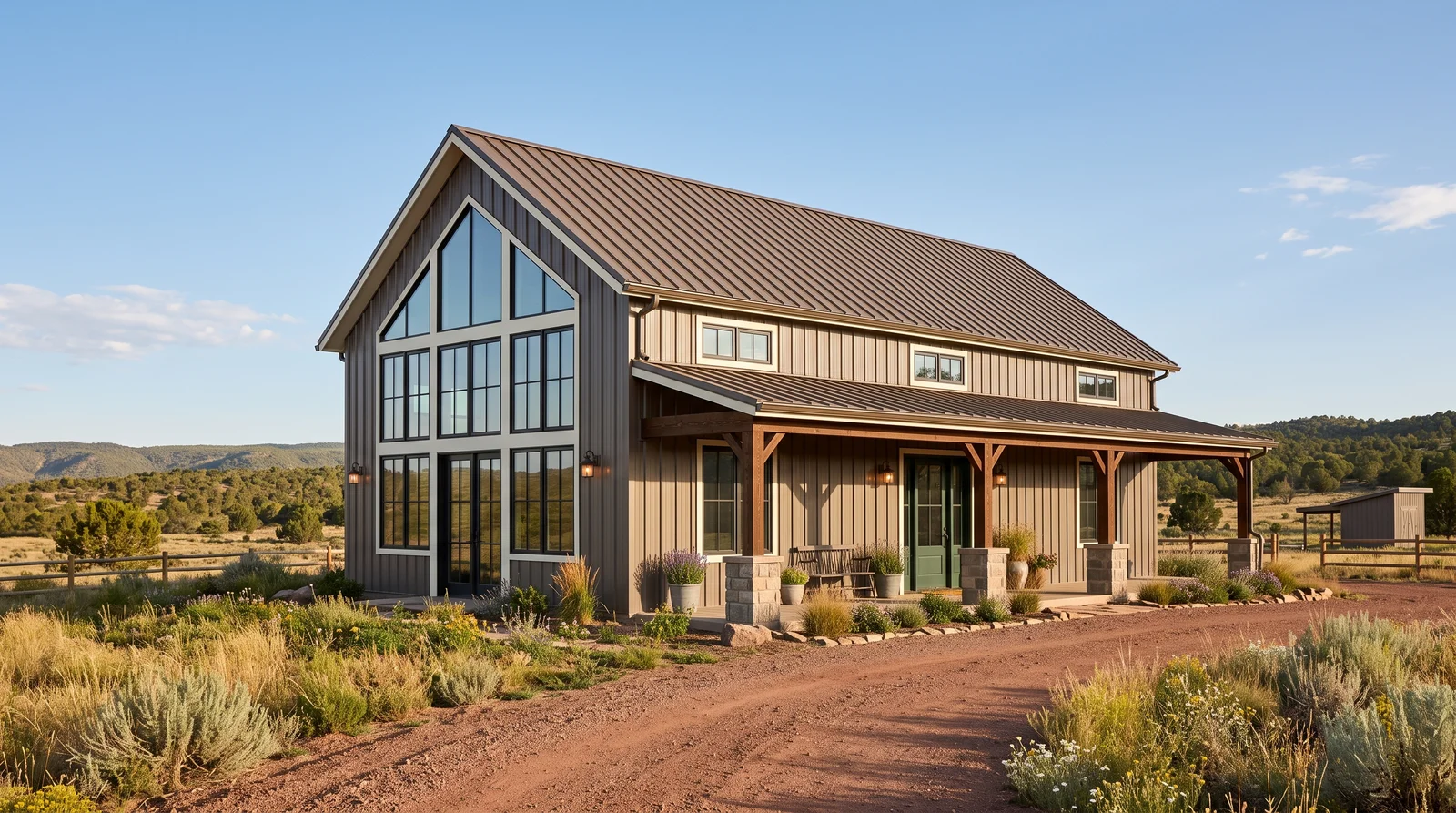
A warm brown-gray bronze with creamy trim, the scheme that looks right in dry Western light and on a red-dirt lot.
From Galvalume to Tricorn Black
A darker wainscot band over the bottom three or four feet hides mower scuffs and rain splash and breaks a tall steel wall into house-like proportions. Hover for the name, click to try it.
Metal Colors vs. Paint Colors
A barndo's palette comes from two completely different places, and knowing which is which decides how you shop for it.
A Factory Finish, Not a Fan Deck
- Baked on as SMP or PVDF/Kynar — no paint code exists for it
- Holds color for decades, longer than any topcoat
- Order a physical sample and judge it outdoors, at your site
- A build-time decision, close to permanent
Ordinary Paint, Real Codes
- Man doors, overhead-door frames, wood posts, batten trim, wainscot
- Chosen from the same SW/BM/Behr decks as any house
- A wainscot band hides mower scuffs and grounds a tall steel wall
- Redo-able in an afternoon, unlike the panels
Can you paint metal siding later? Yes — an existing steel building repaints fine if you respect the prep: wash off the chalking, scuff the old finish, prime bare or rusted spots with a rust-inhibiting metal primer, topcoat with an acrylic rated for exterior metal. It will not match a factory bake for longevity, but it is the standard, proven way to take a faded tan barn to charcoal without new panels — which also means a wrong panel color on a building you are buying is a fixable problem, not a life sentence.
Pick the Panel Color Like It's Permanent, Because It Is
House paint is a ten-year opinion; a panel color is closer to a verdict. Four things worth knowing before you order.
The Finish Outlives the Repaint
A good PVDF coating is still holding its color when a brushed-on topcoat is due for its second recoat. Preview the panel choice hardest, on your photo, more than once, in more than one light.
Matte Hides Oil-Canning
Matte and low-gloss finishes hide the faint waviness in flat panel faces far better than gloss, which turns every ripple into a highlight.
Black Runs Hot, But Manageable
Black metal genuinely runs hot in southern sun. The answer is insulation and a well-ventilated assembly — plenty of black barndos sit comfortably in Texas heat because the envelope was built for it.
Cedar Ages, By Design or Not
Skip the UV oil and cedar silvers to driftwood gray within a couple of seasons. Silvered cedar against black panels is a legitimate look, but decide which one you are signing up for.
More Barndominium Colors That Work
More verified paint colors that hold their own next to cedar and metal panels — matte blacks, charcoals, deep greens, and warm whites for doors, posts, and wainscot.
Barndominium Color FAQ
Can I repaint metal siding later?
Yes. Wash off the chalking, scuff the old finish, prime bare or rusted spots with a rust-inhibiting metal primer, then topcoat with an acrylic rated for exterior metal. It will not match a factory bake for longevity, but it is the standard, proven way to change a panel color without new panels.
Why does the panel color matter more than a normal house paint choice?
A factory-baked panel finish — a polyester (SMP) coating or the longer-lasting PVDF/Kynar — will outlive any repaint you could put over it. House paint is a ten-year opinion; a panel color is closer to a verdict, so it is the one choice worth previewing hardest, on your photo, at your site, in more than one light.
Does black metal siding get too hot?
It runs hotter in southern sun, but the answer is insulation and a well-ventilated assembly, not the color. Plenty of black barndos sit comfortably in Texas heat because the envelope was built for it. Know too that black hides dirt from the road but keeps a diary up close — pollen, dust, and hard-water spray all show, so plan the occasional rinse.
Will cedar accents stay the same color?
Not without upkeep. Skip the UV oil and cedar silvers to driftwood gray within a couple of seasons. Silvered cedar against black panels is a legitimate look, but it is a different one — decide which you are signing up for, and if it is the warm one, put the re-oiling on the calendar now.
Related Styles and Surfaces
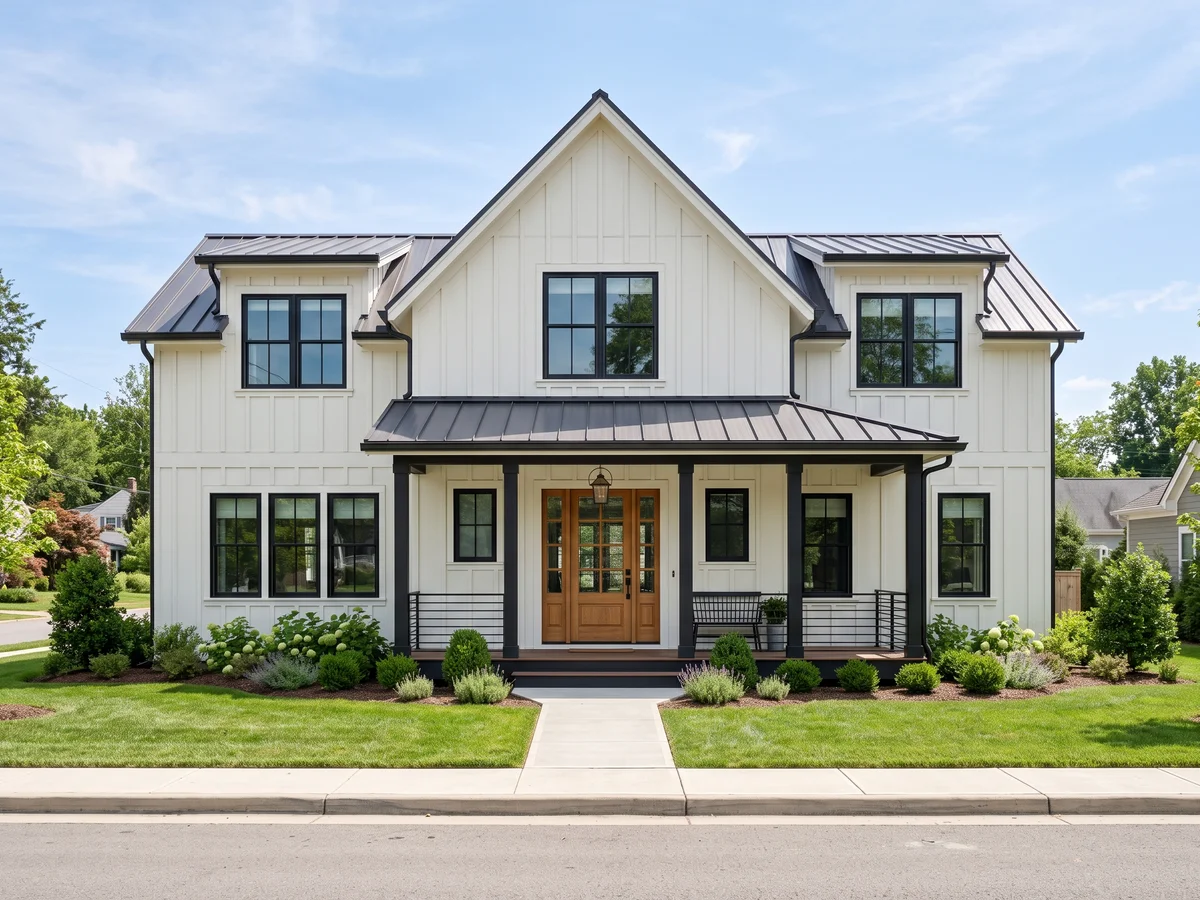
The white-and-black formula that translates to metal panels
Single-body colors with presence
Budget-smart color transformations
One photo of your build, every scheme on this page — free to start.